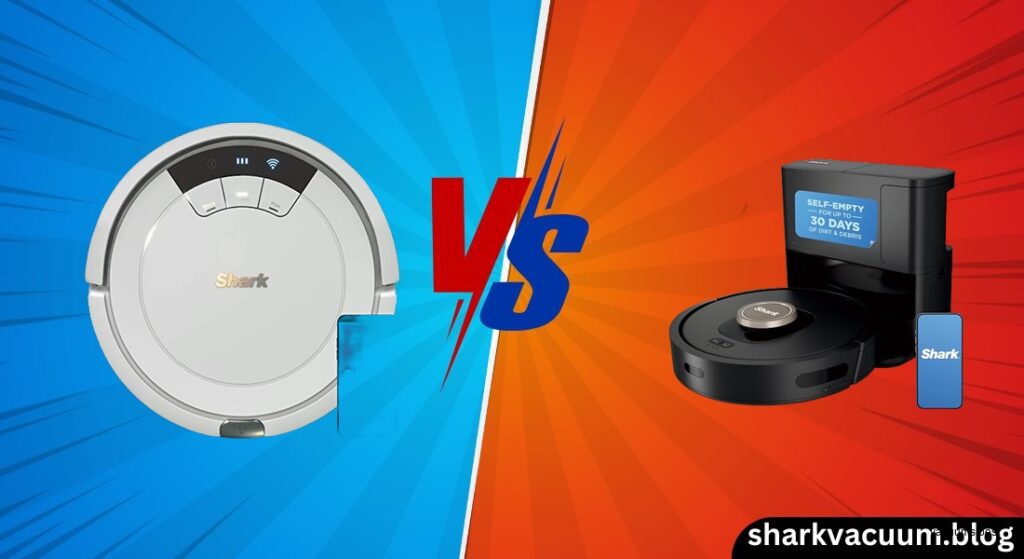
When shopping for a smart robot vacuum that balances performance, price, and pet-friendly features, the Shark Ion Robot 750 vs 850 comparison is a critical decision point for many households. Both models fall within the budget-to-mid-range category and offer Wi-Fi connectivity, voice control, and strong suction—on paper. But in practice, they serve very different needs. The Shark Ion Robot 750 (RV750) is designed as a quiet, affordable maintenance cleaner for hard floors and light debris, while the Shark Ion Robot R85 (RV850) is a powerhouse built for pet owners, deep carpet cleaning, and homes with mixed flooring. Understanding the real-world differences in suction, navigation, noise, and maintenance helps you pick the right tool for your home. This in-depth comparison breaks down every key factor—cleaning performance, battery life, smart features, and value—so you can decide whether peace and quiet or raw power matters more in your daily routine.
1. Introduction
Robotic vacuums have evolved from novelty gadgets into essential home appliances, especially for pet owners and busy households. Shark has carved out a strong niche in this market by offering models that deliver high performance without the premium price tags of brands like iRobot or Roborock. Among their lineup, the Shark Ion Robot 750 (RV750) and Shark Ion Robot R85 (RV850) represent two distinct philosophies: one prioritizes quiet, hands-off maintenance, while the other emphasizes brute-force cleaning power and advanced sensor technology. Though both are marketed as “smart” vacuums with app control and voice assistant compatibility, their target audiences and use cases differ significantly.
This comparison matters because consumers often assume that higher model numbers just mean minor upgrades. In reality, the jump from the 750 to the 850 is substantial. The 850 isn’t just a newer version—it’s a re-engineered machine with triple the suction power, smarter obstacle detection, and a self-cleaning brush roll designed to handle pet hair without constant maintenance. Yet, the 750 still holds appeal for those who value silence, simplicity, and a lower upfront cost.
The core conflict comes down to this: do you need a robot that can deeply clean thick carpets and handle large debris, or are you looking for a silent sweeper that tidies up daily dust and pet hair on hard floors? The 750 excels in the latter, while the 850 dominates the former. Neither uses modern LiDAR or camera-based mapping, relying instead on random navigation—a shared limitation that impacts cleaning efficiency. But the 850’s enhanced “Smart Sensor Navigation 2.0” reduces the downsides of this system.
This article aims to cut through marketing claims and provide a real-world, side-by-side analysis of the Shark robot vacuum 750 vs 850. We’ll evaluate them across key metrics like cleaning performance, battery life, noise, smart features, and long-term value. By the end, you’ll know exactly which model is the better fit based on your floor types, pet situation, and cleaning expectations.
2. Product Overviews
Shark Ion Robot 750 (RV750)
The Shark Ion Robot 750 (RV750) is Shark’s original entry into the smart robot vacuum market, designed as an affordable, Wi-Fi-enabled option for budget-conscious buyers. It’s essentially the connected sibling of the non-Wi-Fi Shark Ion Robot 720 (RV720), sharing nearly identical hardware and cleaning performance. The “750” designation simply means it includes Wi-Fi and app/voice control, which adds convenience at a slightly higher price.
This model is positioned as a maintenance cleaner—ideal for daily touch-ups on hard floors and low-pile carpets. It’s not built for deep cleaning or heavy debris but excels at picking up surface dust, pet hair, and small crumbs. Its standout feature is ultra-quiet operation, making it one of the quietest robot vacuums in its class. This makes it perfect for homes where noise is a concern, such as apartments, homes with light-sleeping pets, or people working from home.
Key features include Wi-Fi connectivity via the SharkClean App, compatibility with Amazon Alexa and Google Assistant, and a washable HEPA-style filter that captures allergens. It uses a mechanical sweeping system with dual side brushes and a single roller brush to agitate and collect debris. The 0.6L dustbin is easy to empty, and the unit returns to its dock automatically when the battery runs low.
However, the 750 has notable limitations. It uses random “pinball” navigation, meaning it bounces around unpredictably, often missing spots or cleaning the same area repeatedly. It struggles with transitions between flooring types—especially thick carpet edges—and can get stuck in small rooms or closets. While it has a claimed 180-minute battery life, real-world use shows only about 60 minutes of runtime, limiting its effectiveness in larger homes.
Despite these drawbacks, the 750 remains a solid choice for small spaces with mostly hard floors and minimal debris. Its low price, quiet operation, and pet hair performance make it a popular budget pick.
Check the latest price of [Shark Ion Robot 750] on Amazon [link]
Shark Ion Robot R85 (RV850)
The Shark Ion Robot R85 (RV850) is a significant step up from the 750, positioned as a mid-range powerhouse for homes with pets, mixed flooring, and higher cleaning demands. While it shares the same random navigation philosophy, it’s engineered for maximum cleaning performance rather than quiet simplicity.
What sets the R85 apart is its 20 CFM (cubic feet per minute) suction power in Max mode—triple that of the 750. This makes it one of the strongest suction robots under $500, outperforming even some premium models like the Roomba 980. It features three suction modes—Quiet (12 CFM), Normal (15 CFM), and Max (20 CFM)—giving you control over power and noise depending on the task.
The R85 introduces Smart Sensor Navigation 2.0, an upgraded sensor suite that improves obstacle avoidance and allows the robot to climb ¾-inch thresholds and navigate black carpets without mistaking them for drop-offs—a common failure point for the 750. This makes it far more reliable in homes with dark rugs or uneven flooring.
Another major upgrade is the self-cleaning hybrid brush roll, which combines bristles and rubber fins to pick up both fine dust and large debris while actively shedding pet hair. This dramatically reduces the need for manual cleaning, a huge advantage for pet owners.
The XL dustbin holds approximately 2 cups (~0.5L), slightly less than the 750’s 0.6L, but its high capacity still reduces emptying frequency. The battery is user-replaceable (part number RVBAT850), a key feature for long-term ownership. Runtime varies by mode: 88 minutes on Low, 61 minutes on Max, and about 50 minutes on average according to Consumer Reports.
Like the 750, the R85 connects to the SharkClean App, supports Alexa and Google Assistant, and uses physical boundary strips for no-go zones. But its app offers more control, including suction mode selection and detailed cleaning history.
In short, the R85 is built for homes that need real cleaning power, not just surface sweeping. It’s louder than the 750 but still quiet for its class (61 dB on Max), and its combination of high suction, smart sensors, and anti-tangle tech makes it a true step up in capability.
See current deals on [Shark Ion Robot R85] here [link]
3. Comparison Criteria
To determine which robot vacuum delivers better value and performance, we’ll evaluate the Shark Ion 750 vs 850 across six key criteria:
- Cleaning Performance: How well each model picks up pet hair, fine dust, and larger debris on hard floors and carpets. This includes suction power (measured in CFM), edge cleaning, and deep-cleaning ability.
- Navigation & Intelligence: Evaluation of the random navigation system, obstacle avoidance, threshold climbing, and ability to handle black carpets. We’ll also look at coverage efficiency and self-recovery when stuck.
- Battery & Runtime: Real-world battery life per charge, recharge time, and whether the battery is user-replaceable—a critical factor for long-term ownership.
- Design & Build Quality: Physical dimensions, dustbin capacity, noise levels (in dB), and overall durability. This includes how easy it is to empty the bin and clean the brushes.
- Smart Features & Usability: App functionality, voice control reliability, scheduling options, and maintenance requirements like filter cleaning and brush tangles.
- Value for Money: Price-to-performance ratio, initial cost, and cost of ownership (replacement parts, battery longevity). We’ll assess which model offers the best long-term value based on your cleaning needs.
These metrics reflect real-world use cases rather than just marketing specs. For example, while both robots claim long battery life, actual performance varies significantly. Likewise, the lack of mapping in both models is a shared limitation, but the 850’s smarter sensors reduce the impact. By focusing on these practical factors, we can determine which robot truly earns its place in your home.
4. Head-to-Head Comparison
A. Cleaning Performance: Suction vs. Sweeping
The most dramatic difference between the Shark 750 and 850 is their cleaning philosophy. The 750 relies on mechanical sweeping—using aggressive side brushes and a roller to sweep debris into the bin with moderate suction. The 850, in contrast, uses a high-suction hybrid system with 20 CFM of airflow in Max mode, making it one of the most powerful robots in its price range.
On hard floors, both models perform well with fine dust and pet hair. The 750’s side brushes are effective at pulling debris from edges, but it can struggle with larger crumbs or litter, sometimes requiring multiple passes. The 850, with its superior suction and sealed design, picks up the same debris in a single pass, even from crevices.
On carpets, the difference is even more pronounced. The 750 works fine on low-pile rugs but lacks the power to extract deeply embedded dirt or sand. In testing, it scored poorly on deep-cleaning tasks. The 850, however, achieved a 76% deep clean score in carpet tests—the highest in its class—thanks to its hybrid brush roll and strong airflow. It effectively lifts pet hair, sand, and cereal from medium-pile carpets, making it a far better choice for homes with carpeted areas.
For pet owners, the 850 is clearly superior. Its self-cleaning brush roll prevents hair wrap, a common pain point with the 750’s standard roller. While the 750 does a decent job collecting surface hair, the 850 goes further by agitating and extracting it from carpet fibers.
Pro Tip: If you have cats or dogs that shed heavily, the 850’s self-cleaning brush and high suction will save you hours of maintenance over the 750’s tangle-prone roller.
🏆 Section Winner: Shark Ion Robot R85 (RV850)
The 850’s 20 CFM suction and hybrid brush roll deliver dramatically better deep-cleaning performance on carpets and better debris pickup on hard floors.
B. Navigation and Sensor Technology
Both the 750 and 850 use random navigation, meaning they don’t create maps or clean in systematic patterns. Instead, they move unpredictably, bouncing off walls and furniture until coverage is complete. This leads to inefficiencies like repeated passes and missed spots—common to most budget robots.
However, the 850’s Smart Sensor Navigation 2.0 is a major improvement. It includes enhanced cliff sensors that don’t mistake black carpets for drop-offs, a known flaw in the 750. Many users report their 750 refusing to clean dark rugs, while the 850 handles them without issue.
The 850 also climbs ¾-inch thresholds—a rare ability in this price range—allowing it to move between rooms with raised doorways or thick area rugs. The 750 often gets stuck on these transitions, requiring manual help.
Both robots use infrared sensors for obstacle detection, slowing down before impact to protect furniture. But the 850’s algorithm is smarter, reducing the number of times it gets trapped in corners or closets. It also has better self-recovery, meaning it’s less likely to need human intervention.
Neither model supports virtual no-go zones in the app. Both require physical magnetic boundary strips to block off areas like pet beds or fragile decor.
Good to Know: If your home has dark flooring, thick thresholds, or a complex layout, the 850’s navigation upgrades make it significantly more reliable.
🏆 Section Winner: Shark Ion Robot R85 (RV850)
Its ability to handle black carpets, climb thresholds, and avoid false cliff detections makes it far more dependable than the 750.
C. Battery Life and Power Management
Battery performance is where the 750’s marketing claims diverge sharply from reality. Shark advertises up to 180 minutes of runtime, but real-world testing and user reports consistently show around 60 minutes—barely enough to clean a small apartment.
The 850, in contrast, delivers more consistent performance: 88 minutes on Low, 61 minutes on Max, and about 50 minutes on average (per Consumer Reports). While its Max mode runtime is similar to the 750’s total runtime, the 850 offers flexibility with multiple suction settings.
A critical advantage of the 850 is its user-replaceable battery (RVBAT850). When the battery degrades after a few years, you can buy a replacement (~$20–$65) instead of retiring the entire robot. The 750’s battery (RVBAT700) is also replaceable, but it uses a 3-prong connector that limits third-party options, making replacements slightly harder to source.
Both robots automatically return to their dock when the battery is low, but the 850’s longer runtime on Eco mode makes it better suited for larger homes.
Pro Tip: If you plan to use your robot for years, the 850’s replaceable battery ecosystem adds significant long-term value.
🏆 Section Winner: Shark Ion Robot R85 (RV850)
Longer real-world runtime, multiple suction modes, and easier battery replacement give it a clear edge.
D. Noise Levels and Acoustics
If quiet operation is your top priority, the 750 wins hands down. It’s frequently described as “whisper-quiet,” making it ideal for use during TV time, work calls, or while babies sleep. You can run it without disturbing household activities.
The 850 is louder, especially in Max mode, but still impressively quiet for its power level. It measures 61 dB on Max, which is quieter than many lower-suction robots. The noise difference between its modes is minimal (only 2–3 dB), so even on Quiet mode, it’s not as silent as the 750.
That said, the 850’s noise is a fair trade-off for its performance. It’s not disruptive during daytime use and can be scheduled for off-peak hours.
Use Case: In a studio apartment or home office, the 750’s silence may be worth the performance trade-off. In larger homes with pets, the 850’s noise is a small price for better cleaning.
🏆 Section Winner: Shark Ion Robot 750 (RV750)
It’s the quieter of the two by a significant margin, ideal for noise-sensitive environments.
E. Maintenance and Durability
Maintenance is where the 850’s self-cleaning brush roll shines. Unlike the 750’s standard roller, which requires weekly hair removal, the 850’s hybrid brush actively sheds pet hair as it spins, drastically reducing tangles. This is a game-changer for pet owners.
Both models have washable HEPA-style filters (750: RVFFK700/950; 850: 1172FK870/RVFFK950), which should be rinsed monthly to maintain suction.
The dustbin on the 750 is slightly larger (0.6L vs. ~0.5L), but the 850’s “XL” bin is still spacious and easy to empty. Some users note a slight learning curve with the 850’s release mechanism, but it’s not a major issue.
Both robots are durable and repairable, with a wide range of replacement parts available—brushes, filters, wheels, and batteries. The 850’s modular design, with serviceable motors and sensors, suggests a longer lifespan.
Good to Know: Third-party accessory kits (brushes, filters, batteries) are widely available for both models, keeping long-term costs low.
🏆 Section Winner: Shark Ion Robot R85 (RV850)
Its self-cleaning brush roll reduces maintenance dramatically, especially for pet owners.
5. Pros and Cons Table
| Feature | Shark Ion Robot 750 (RV750) | Shark Ion Robot R85 (RV850) |
|---|---|---|
| Pros | • Extremely quiet operation • Very affordable price point • Excellent for surface pet hair • Simple, intuitive app • Washable filters |
• 3x Suction Power (20 CFM Max) • Self-cleaning brush roll (anti-tangle) • Smart Sensor Nav 2.0 (better avoidance) • Handles black carpets & thick thresholds • Longer runtime on eco mode (88 mins) |
| Cons | • Random navigation is inefficient • Struggles with large debris • No suction modes • Gets stuck on transitions often • Short battery life (60 mins) |
• More expensive than the 750 • Louder than the 750 (though still quiet) • No virtual mapping (physical strips only) • Dustbin release has a learning curve |
| Best For | Small apartments, hard floors, noise-sensitive homes. | Pet owners, mixed flooring, carpets, larger debris loads. |
6. Best Use Case Recommendation
Choose the Shark Ion 750 If:
- You live in a small apartment or studio with primarily hard floors.
- Your top priority is silence—you work from home, have light-sensitive pets, or want to run the robot during quiet hours.
- You’re on a strict budget and only need to pick up daily dust and surface pet hair.
- You don’t mind supervising the robot occasionally to unstick it from rug transitions or thresholds.
- You don’t have thick carpets or dark flooring that could trigger false cliff detection.
Choose the Shark Ion R85 (RV850) If:
- You have pets that shed heavily—the self-cleaning brush and high suction make pet hair cleanup effortless.
- Your home has mixed flooring or thick area rugs—the 850 climbs ¾-inch thresholds and cleans deep into carpet fibers.
- You have dark or black carpets—the 850’s sensors won’t mistake them for drop-offs.
- You want a more “set it and forget it” experience with less chance of getting stuck.
- You deal with crumbs, sand, or litter and need stronger suction for daily cleanup.
7. Conclusion
The Shark robot vacuum 750 vs 850 comparison reveals two very different machines serving distinct needs. While both use random navigation and lack virtual mapping, the Shark Ion Robot R85 (RV850) is a significant technological leap over the 750. It delivers triple the suction power, smarter sensors, better threshold climbing, and a self-cleaning brush roll that eliminates the most common pain point for pet owners.
The 750 remains a viable budget option—but only for very specific scenarios. If you live in a small, hard-floor-only space and prioritize silence above all else, it’s a solid choice. However, its inefficient navigation, short battery life, and struggles with transitions make it less practical for most homes.
For the majority of users, especially those with pets, carpets, or mixed flooring, the R85 is the clear winner. The extra cost—typically $100–$150 more—buys you a robot that feels like a real cleaning tool rather than just a floor sweeper. Its combination of power, reliability, and low maintenance makes it one of the best values in the sub-$500 robot vacuum market.
Final Verdict:
* Overall Winner: Shark Ion Robot R85 (RV850). It offers superior cleaning, smarter navigation, and better long-term durability.
* Budget Pick: Shark Ion Robot 750, but only for noise-sensitive, hard-floor-only homes with minimal cleaning demands.
In closing, if you want a robot that truly cleans—not just sweeps—the Shark Ion Robot 850 is the smarter investment. For most households, it strikes the best balance of performance, features, and value in Shark’s lineup.