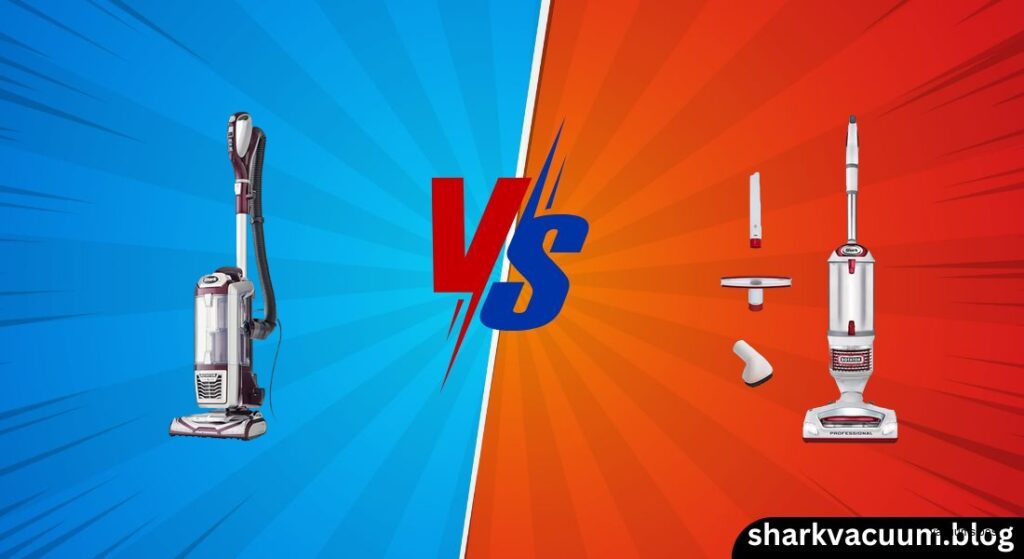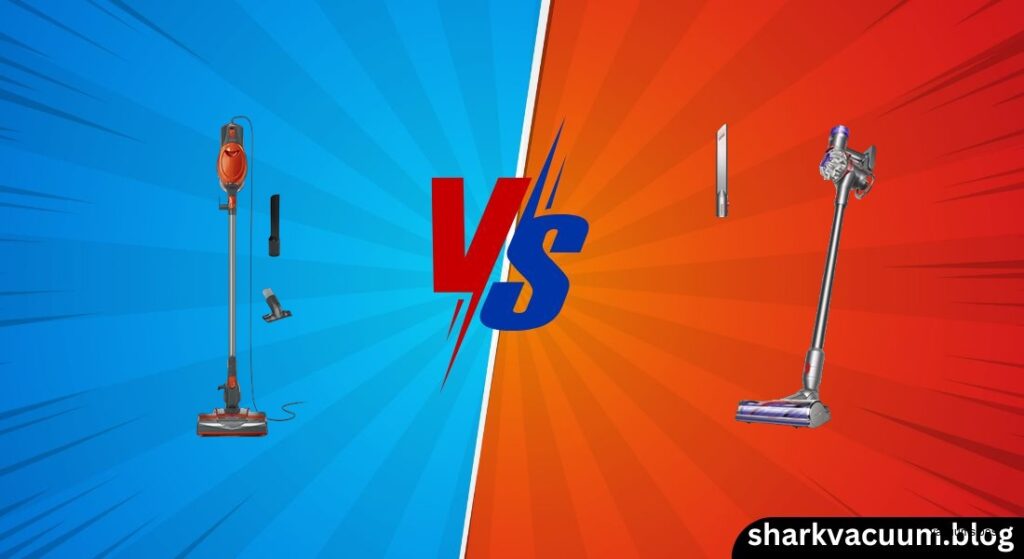
The battle between the Shark HV301 Rocket and the Dyson V8 isn’t just a comparison of two popular stick vacuums—it’s a microcosm of a larger shift in home cleaning technology. On one side, you have the Shark HV301, a corded powerhouse built on the promise of unlimited runtime and aggressive carpet cleaning, favored by budget-conscious households with large, carpet-heavy spaces. On the other, the Dyson V8 represents the modern standard: cordless freedom, sealed HEPA filtration, and intelligent anti-tangle engineering tailored for pet owners and allergy sufferers. At the heart of this showdown lies a fundamental question: Is continuous corded power still relevant in an age where cordless convenience and health-focused filtration dominate?
Both vacuums bring credible strengths to the table. The Shark HV301 delivers deep agitation on carpets thanks to its dual-motor design, allowing it to punch above its weight class in raw cleaning performance—especially on medium-pile rugs. It’s lightweight for a corded machine, highly maneuverable, and comes packed with thoughtful attachments for cleaning stairs, furniture, and high-reach areas. Meanwhile, the Dyson V8 counters with a more refined, hygienic experience. Its digital motor spins at 110,000 rpm, generating 115 Air Watts of suction, and its 15 cyclones maintain consistent power as the bin fills. More importantly, its fully sealed filtration system captures 99.99% of particles as small as 0.3 microns—making it a top choice for homes where air quality matters.
But beyond the specs, real-world usability tells a different story. The Dyson V8 offers true portability: no cords to manage, effortless transitions between floors, and a wall-mounted dock that keeps everything charged and organized. The Shark, while powerful, drags a 25–30 ft cord that limits mobility and can’t be detached during handheld use. And while the Shark’s 5-year warranty is impressive, its unsealed filtration system and known internal hose durability issues raise long-term concerns. This article dives deep into every aspect—cleaning performance, filtration, usability, durability, and value—to help you decide whether the Shark’s budget-friendly endurance or the Dyson’s premium convenience better fits your home.
2. Product Overviews
Shark Rocket HV301: The Corded Workhorse
The Shark Rocket HV301 is engineered as a 3-in-1 hybrid vacuum, blending the upright’s cleaning strength, the canister’s agility, and the handheld’s portability into a single 9-pound chassis. Its core appeal lies in its dual-motor system: one motor powers suction, while a second independently drives the brush roll. This setup ensures strong agitation on carpets without relying on suction drag, a feature particularly beneficial for deep-cleaning medium-pile rugs. With a 25–30 ft power cord, the HV301 eliminates battery anxiety, making it ideal for users who need to clean large areas without interruption.
Designed for versatility, the HV301 converts seamlessly from a stick vacuum to a handheld unit, allowing you to clean stairs, furniture, and ceiling fans with the included twistable dusting brush. It comes with a robust set of tools: a crevice tool, stair nozzle, lint pickers, and a contoured dusting brush—all attachable to the metal wand for hands-free storage. The unit features fingertip controls, swivel steering for tight spaces, and a lifetime geared belt that never needs replacing. Despite its strong performance and 5-year warranty, the HV301 has notable flaws: an unsealed filtration system that risks dust leakage and an internal flexible hose prone to splitting over time. It’s best suited for users who prioritize deep carpet cleaning and unlimited runtime over air quality and long-term mechanical reliability.
Check the latest price of [Shark HV301] on Amazon [link]
Dyson V8: The Cordless Standard
The Dyson V8 is a benchmark in the cordless vacuum category, designed for whole-home cleaning with a focus on pet hair removal, allergen capture, and ergonomic usability. Weighing just 5.8 lbs, it features the Dyson Digital Motor V8 spinning at 110,000 rpm and delivering up to 115 Air Watts of suction. Its 15 cyclones work in parallel to maintain fade-free performance as the bin fills, ensuring consistent cleaning power from start to finish. The vacuum runs up to 40 minutes in standard mode and about 10–15 minutes in high-power “Boost” mode, with a full charge taking approximately 5 hours.
Available in two main variants—Dyson V8 Absolute and the standard V8—the Absolute model includes both the Motorbar™ and Fluffy™ cleaner heads, making it more versatile for mixed flooring. The Motorbar™ head uses 43 de-tangling vanes to prevent hair wrap, while the Fluffy™ head is optimized for hard floors with soft woven nylon and carbon fiber filaments. All models include the Hair Screw Tool, crevice tool, combination tool, and a wall-mounted docking station for charging and storage. The V8’s standout feature is its fully sealed HEPA filtration system, which captures 99.99% of particles down to 0.3 microns, making it ideal for allergy and asthma sufferers.
Despite its premium price—around $540 for the standard model and $590 for the Absolute—the V8 delivers a refined, low-maintenance cleaning experience. Its “point-and-shoot” bin emptying mechanism is hygienic and mess-free, and the balanced center of gravity makes it easy to use from floor to ceiling. However, battery degradation over time and the 2-year warranty (shorter than Shark’s) are considerations. The Dyson V8 is best for pet owners, multi-level homes, and anyone prioritizing air quality and convenience.
See current deals on [Dyson V8] here [link]
3. Comparison Criteria
To deliver a thorough, Rtings-style evaluation of the Shark HV301 and Dyson V8, we’ll assess both vacuums across six critical dimensions that matter most to real-world users:
- Cleaning Performance – How well each vacuum removes debris from carpets, hard floors, and edges. We’ll examine suction power, brush roll effectiveness, and real-world pickup efficiency on different surfaces.
- Filtration & Air Quality – A crucial factor for health-conscious buyers. We’ll compare the Shark’s unsealed system with the Dyson’s fully sealed HEPA filtration to determine which truly traps allergens and prevents exhaust pollution.
- Usability & Ergonomics – This includes weight, balance, maneuverability, cord management (for the Shark), battery life (for the Dyson), and ease of emptying the dust bin—key factors in daily convenience.
- Durability & Build Quality – We’ll analyze known failure points: the Shark’s internal hose splitting issue versus the Dyson’s battery lifespan. Warranty length and repairability will also be considered.
- Pet Hair Handling – Given how many homes have pets, we’ll evaluate how each vacuum manages hair on carpets, upholstery, and stairs, including resistance to tangling and ease of maintenance.
- Value Proposition – Finally, we’ll weigh the upfront cost against long-term benefits, performance, and ownership experience to determine which vacuum offers better value for different types of users.
Each category will be supported by direct comparisons, user feedback, and technical data to ensure a fair and actionable analysis.
4. Head-to-Head Comparison
A. Cleaning Performance
When it comes to actual cleaning results, both the Shark HV301 and Dyson V8 perform well, but their strengths lie in different areas—largely dictated by their power source and brush roll technology.
Carpet Cleaning
The Shark HV301 excels in carpet deep-cleaning thanks to its dual-motor advantage. Because the brush roll is powered by a separate motor, it maintains consistent agitation regardless of suction levels or floor transitions. This independence allows it to dig deep into medium-pile carpets, lifting embedded dirt and pet hair effectively. Users report that a single pass removes most debris, with a second pass leaving carpets nearly spotless. The brush roll features stiff bristles and a lifetime geared belt, reducing maintenance needs. However, it lacks the Dyson’s advanced de-tangling engineering, leading to more frequent hair wrap on the internal spindle.
The Dyson V8, equipped with the Motorbar™ cleaner head, uses stiff nylon bristles to drive deep into carpet fibers and carbon fiber filaments to capture fine dust. Its 115 Air Watts of suction, combined with 15 cyclones, ensures powerful, fade-free cleaning. While it doesn’t have a dual-motor system, the digital motor’s high speed (110,000 rpm) compensates with strong overall performance. On ground-in dirt and pet hair, the V8 holds its own against the Shark, especially with its 43 de-tangling vanes that automatically lift hair into the bin—requiring far less manual intervention.
Verdict: The Shark has a slight edge in raw agitation due to its dual-motor design, but the Dyson matches it in real-world carpet cleaning while offering superior anti-tangle performance.
🏆 Section Winner: Dyson V8 – For delivering comparable deep-cleaning with far less maintenance.
Hard Floor Performance
On hard floors like hardwood and tile, the Shark HV301 performs adequately but with limitations. Its brush roll has a sparse bristle pattern, which can miss fine dust and debris compared to denser designs. While it includes a fluffy strip behind the brush bar to reduce “snowblowing” (pushing debris ahead), larger particles like cereal or sand can still be scattered if not approached carefully. The lack of a dedicated hard floor head means the same motorized brush is used across all surfaces, which may wear down over time.
The Dyson V8 Absolute, in particular, shines here thanks to the Fluffy™ cleaner head—a soft-roller design with anti-static carbon fiber filaments that attract and lock in fine dust. This head is gentle on hardwood but highly effective at picking up both large debris and microscopic particles. Even the standard V8, using the Motorbar™ head, performs well on hard floors due to its carbon fiber filaments. The Fluffy™ head’s design minimizes scattering and ensures a streak-free clean.
Verdict: The Dyson’s specialized hard floor head gives it a clear advantage.
🏆 Section Winner: Dyson V8 – Especially the Absolute model with the Fluffy™ head.
Edge & Corner Cleaning
Edge cleaning is where design details matter. The Shark HV301 has a notable flaw: its asymmetric power head. While the brush bar reaches well on the front and right side, the left side is obstructed by the internal dry belt housing, limiting its ability to clean flush against walls. This makes left-side edge cleaning inconsistent, requiring multiple passes or the crevice tool for full coverage.
The Dyson V8 features a more balanced, flusher design that allows the brush bar to reach closer to walls on both sides. Combined with tapered edges on the cleaner heads, it performs well in corners and along baseboards. The Fluffy™ head, in particular, maintains close contact with edges, making it effective for dusting along skirting.
Verdict: The Dyson’s symmetrical design wins for consistent edge cleaning.
🏆 Section Winner: Dyson V8
Pro Tip: If you have a lot of baseboard cleaning, the Dyson’s edge performance will save you time and effort.
B. Filtration & Air Quality (Critical Differentiator)
This is the most significant differentiator between the two vacuums—and a dealbreaker for many users.
The Shark HV301 uses washable sponge and pad filters in both pre-motor and post-motor stages. However, neither filter is sealed with gaskets. This lack of sealing allows fine dust and allergens to bypass the filtration media entirely, potentially reaching the motor and being exhausted back into the room. While Consumer Reports notes it as “efficient at trapping dust,” technical teardowns confirm that microscopic particles escape, compromising indoor air quality. This makes the Shark a poor choice for allergy or asthma sufferers.
In stark contrast, the Dyson V8 features a fully sealed 5-stage HEPA filtration system that captures 99.99% of particles down to 0.3 microns. The entire airflow path—from intake to exhaust—is sealed, ensuring that dust, pet dander, and allergens are trapped inside the bin. The exhaust air is cleaner than what you breathe in, making it one of the best vacuums for sensitive individuals.
Verdict: There’s no contest.
🏆 Section Winner: Dyson V8 – A must-have for health-conscious households.
C. Usability: Corded Freedom vs. Cordless Convenience
Runtime & Power Source
The Shark HV301 offers unlimited runtime—a major advantage for large homes or deep cleaning sessions. You can clean for hours without interruption. However, you’re tethered to a 25–30 ft power cord, which limits mobility and requires frequent outlet changes in larger spaces. The cord also cannot be detached when using the handheld mode, making it cumbersome to carry.
The Dyson V8 provides true cordless freedom with up to 40 minutes of runtime (standard mode) and about 10–15 minutes in Boost mode. While sufficient for most homes, users with large or multi-level houses may need to recharge mid-clean. The 5-hour charge time means planning is required, but the vacuum can be left on the dock to stay ready.
Weight & Maneuverability
At 9 lbs, the Shark is lightweight for a corded vacuum, but the cord adds drag, especially on stairs or when switching rooms. The Dyson V8, at 5.8 lbs, feels significantly lighter and more balanced, with the motor and battery positioned around the handle for optimal center of gravity. Its swivel steering and slim profile make it easier to navigate tight spaces.
Bin Emptying
The Shark HV301 has a non-removable bin, meaning you must carry the entire unit to the trash. The internal spindle collects hair, making emptying messy and requiring frequent cleaning. The Dyson V8 features a hygienic “point-and-shoot” mechanism—press a button, and the bin ejects debris cleanly without touching dirt.
Verdict: The Dyson wins on every usability metric.
🏆 Section Winner: Dyson V8 – Lighter, cordless, and easier to empty.
D. Durability & Maintenance
Known Failure Points
The Shark HV301 has a documented issue with its internal flexible hose, which is prone to splitting over time—especially in older Shark models. A split hose causes immediate suction loss and requires repair or replacement. Additionally, the plastic screws on the sole plate can wear out with frequent cleaning.
The Dyson V8’s main concern is battery degradation. After 2–3 years, runtime may decrease, and replacement batteries cost around $100. However, the battery is user-replaceable, extending the vacuum’s lifespan.
Maintenance
The Shark requires frequent cleaning of the plastic spindle inside the bin, where hair accumulates. The brush roll is accessible via coin-accessible screws, making it easy to clear blockages. Filters are washable but must be fully dried before reinsertion.
The Dyson has tool-free brush roll removal and a monthly filter wash recommendation. The Hair Screw Tool and Motorbar™ head are designed for low maintenance, with minimal hair wrap.
Warranty
The Shark HV301 comes with a 5-year warranty, reflecting confidence in its build despite known issues. The Dyson V8 has a 2-year limited warranty, shorter but backed by strong customer support.
Verdict: Shark wins on warranty length, but Dyson wins on real-world durability and ease of maintenance.
🏆 Section Winner: Dyson V8 – Fewer recurring issues and better long-term usability.
E. Pet Hair Performance
Pet owners face constant battles with hair on carpets, furniture, and stairs.
The Shark HV301 includes lint pickers and a motorized brush that effectively lifts hair. However, the plastic spindle inside the bin attracts and traps long hair, requiring frequent manual cleaning. Hair wrap on the brush roll is also common, though easier to clear thanks to coin-accessible screws.
The Dyson V8 is engineered specifically for pet hair. The Motorbar™ head’s 43 de-tangling vanes and Hair Screw Tool are designed to prevent缠绕, automatically guiding hair into the bin. Users report significantly less maintenance and better pickup on upholstery and stairs.
Verdict: The Dyson’s anti-tangle technology is superior.
🏆 Section Winner: Dyson V8 – A game-changer for pet owners.
F. Noise Levels
The Shark HV301 is described as noisy, with the motor positioned close to the user’s ears in stick mode. Consumer Reports rates it as “moderate,” but subjective feedback leans toward loud.
The Dyson V8 operates at 75 dB, typical for high-performance cordless vacuums. While not quiet, it’s acoustically engineered with foam and felt to reduce vibration noise. It’s louder in Boost mode but generally more tolerable than the Shark.
Verdict: The Dyson is slightly quieter and better engineered.
🏆 Section Winner: Dyson V8
5. Pros and Cons Table
| Feature | Shark Rocket HV301 | Dyson V8 |
|---|---|---|
| Power Source | Corded (Unlimited Runtime) | Cordless (Up to 40 mins) |
| Weight | 9 lbs | ~5.8 lbs |
| Filtration | Unsealed (Dust leakage risk) | Fully Sealed HEPA (99.99%) |
| Carpet Agitation | Excellent (Dual Motor) | Very Good (Motorbar™) |
| Pet Hair | Good (but spindle clogs) | Excellent (Anti-tangle tech) |
| Bin Emptying | Messy (Non-removable bin) | Hygienic (Point & Shoot) |
| Durability Risk | Internal hose splitting | Battery degradation |
| Warranty | 5 Years | 2 Years |
| Price Point | Budget-Friendly (~$200) | Premium (~$540-$590) |
| Best For | Deep cleaning carpets on a budget | Allergy sufferers & Pet owners |
6. Best Use Case Recommendation
Choose the Shark HV301 If:
- You’re on a tight budget and want maximum cleaning power per dollar.
- Your home is primarily carpeted, and you need deep agitation for embedded dirt.
- You have large areas to clean where a 40-minute battery limit would be restrictive.
- You don’t have severe allergies or asthma, as the unsealed filtration may affect air quality.
The Shark is a solid performer for users who prioritize raw cleaning power and unlimited runtime and are willing to accept compromises in filtration and long-term hose durability.
Choose the Dyson V8 If:
- You have pets—the anti-tangle technology is unmatched.
- You or a family member has allergies or asthma—the sealed HEPA system is essential.
- You live in a multi-story home or frequently clean cars, stairs, and upholstery.
- You value lightweight design, cordless freedom, and hygienic emptying over extended runtime.
The Dyson V8 is the better long-term investment for modern households seeking a clean, convenient, and healthy cleaning experience.
7. Conclusion
The Shark HV301 Rocket and Dyson V8 represent two very different philosophies in vacuum design. The Shark HV301 is a corded workhorse, delivering excellent carpet cleaning, unlimited runtime, and a strong 5-year warranty at a budget-friendly price. It’s a capable machine for those who prioritize deep-cleaning power and don’t mind managing a cord. However, its unsealed filtration system and internal hose splitting issue are serious drawbacks—especially for health-conscious users or those seeking long-term reliability.
The Dyson V8, while more expensive and limited by battery life, offers a refined, hygienic, and versatile cleaning experience. Its fully sealed HEPA filtration, anti-tangle technology, lightweight design, and cordless convenience address the real pain points of modern homeowners—pet hair, allergens, and mobility. Despite the 5-hour charge time and battery replacement cost, its engineering and usability make it a superior appliance for most users.
Final Verdict:
– Overall Winner: Dyson V8. Its advantages in filtration, pet hair handling, ergonomics, and overall user experience make it the better choice for the majority of households.
– Runner Up / Budget Pick: Shark HV301. A viable option only for those who specifically need corded endurance for large carpeted areas and are willing to compromise on air quality and long-term durability.
For most users, the Dyson V8’s premium price is justified by its superior performance, health benefits, and daily convenience. But if you’re cleaning a large carpeted home on a budget and don’t have allergies, the Shark HV301 still has its place.