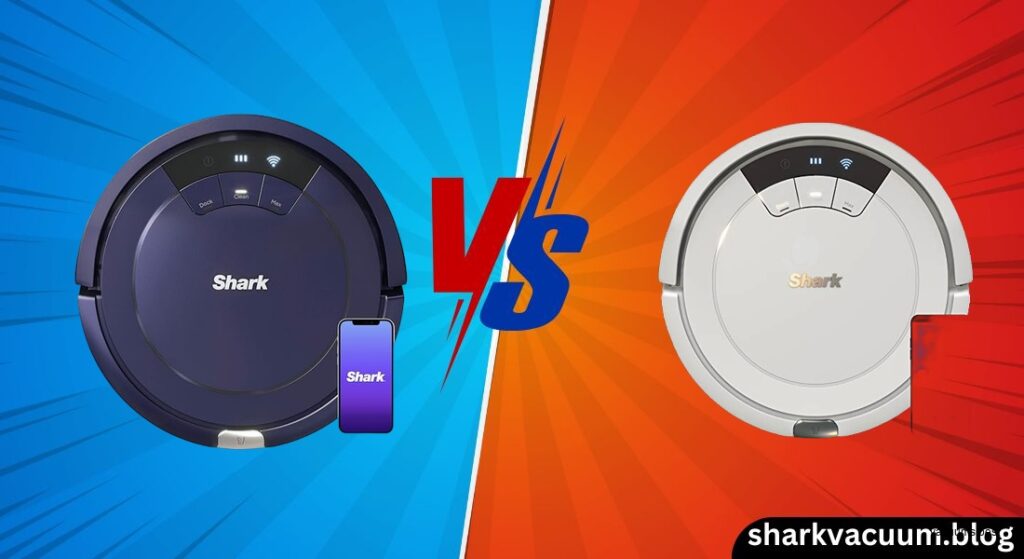
In the world of budget robotic vacuums, it’s easy to get lost in a sea of models that promise big but deliver little. Two standouts from Shark’s ION lineup—the Shark ION Robot RV761 and the Shark ION Robot RV750—have built loyal followings by focusing on practical, no-frills cleaning with smart features at accessible price points. Both run on Wi-Fi, connect to voice assistants, and handle daily debris with ease, but they approach the task in fundamentally different ways. If you’re trying to decide between these two, you’re not just choosing a robot vacuum—you’re choosing a cleaning philosophy.
The RV761 leans into mechanical aggression. It’s built for homes where carpets dominate and clutter is unavoidable, using its compact size and powerful brush system to dig deep into fibers and navigate tight spaces. Meanwhile, the RV750 prioritizes peace and convenience. Engineered for quiet operation, it’s ideal for hard floor dwellers, pet owners, and anyone who wants a robot that runs unnoticed in the background. While both fall under the umbrella of “random-pathing” bots (meaning they don’t map your home like higher-end models), their differences in design, performance, and maintenance needs are significant enough to sway your decision.
This in-depth comparison of the Shark ION Robot RV761 vs. RV750 will break down every critical factor—from suction and noise to hair handling and edge cleaning—so you can make a confident choice based on your home’s unique demands. Whether you’re battling embedded carpet grime or scattered pet hair on hardwood, one of these robots is better suited to your lifestyle.
2. Product Overviews
Shark ION Robot RV761 (R76)
The Shark ION Robot RV761, also known as the R76, is engineered for homes where deep carpet cleaning and maneuverability matter most. At its core, this robot relies on mechanical agitation rather than raw suction power to deliver results. With a suction rating of just 0.27 kPa and airflow at 11 CFM, the numbers may seem underwhelming, but real-world performance tells a different story. Its Tri-Brush System—featuring a multi-surface brush roll, channel brushes, and a single side brush—works aggressively to loosen and extract deeply embedded debris from carpets, often outperforming bots with stronger specs.
One of the RV761’s standout traits is its compact, low-profile design, estimated at around 3.3–3.4 inches tall, allowing it to slip under sofas, beds, and other low-clearance furniture where dust and allergens accumulate. This makes it a strong contender for cluttered living rooms or kid-friendly homes. It uses Auto-Sense Navigation, a form of random pathing that adjusts suction when it detects higher debris levels, helping it focus on dirtier spots. While it doesn’t create a map of your home, it navigates obstacles effectively, rarely getting stuck and handling thresholds with ease.
Connectivity-wise, the RV761 supports Wi-Fi and the SharkClean app, enabling scheduling, remote start/stop, and maintenance alerts. It also integrates with Google Home, though it lacks Alexa support. The dustbin is bagless and straightforward to empty, though some users find the mechanism slightly unintuitive. Despite its affordable positioning, it includes useful accessories like a duster tool, filter, and side brushes.
The RV761 is best suited for users who prioritize deep carpet cleaning, live in cluttered environments, or need a robot that can access tight under-furniture spaces. However, it comes with trade-offs—particularly in edge cleaning and hair maintenance—that are important to consider.
Check the latest price of [Shark ION Robot RV761] on Amazon [link]
Shark ION Robot RV750
In contrast, the Shark ION Robot RV750 is designed for quiet, reliable daily maintenance on hard floors and low-pile rugs. Marketed as “whisper-quiet,” this model shines in noise-sensitive environments like apartments, homes with sleeping infants, or households where the vacuum runs during work or entertainment hours. Its standout feature is its extremely low noise output, consistently rated as one of the quietest in its class—so much so that pets often ignore it entirely.
Instead of relying on strong suction, the RV750 uses dual side brushes and a self-cleaning brush roll to sweep and lift debris, making it especially effective at managing pet hair. This design significantly reduces hair wrap compared to the RV761, though it’s not entirely tangle-proof. The large dustbin (0.5L–0.6L) is another major advantage, allowing fewer emptying cycles—ideal for busy households or larger cleaning runs.
Like the RV761, the RV750 uses random navigation with intelligent sensors to avoid obstacles and navigate clutter. It handles thresholds well and rarely gets caught on rug tassels, thanks to its 3.6-inch height and smooth bumper design. It automatically returns to the dock when the battery runs low, though it lacks a resume function, meaning it won’t finish a job if the battery dies in a large space.
Smart features include Wi-Fi, the SharkClean app, and compatibility with both Alexa and Google Home, giving users more voice control options than the RV761. However, the app has received mixed reviews, with some users reporting connectivity hiccups or delayed commands. There’s no physical remote, so control depends entirely on the app or voice assistants.
The RV750 is ideal for hard floor homes, pet owners, and noise-sensitive users who want a low-maintenance, set-and-forget robot. While it doesn’t deep-clean thick carpets as effectively as an upright vacuum, it excels at daily upkeep and surface-level debris removal.
See current deals on [Shark ION Robot RV750] here [link]
3. Comparison Criteria
To determine which robot better suits your needs, we’ll evaluate the Shark ION RV761 and RV750 across six key categories:
- Cleaning Performance: How well each model picks up debris on carpets and hard floors, with a focus on deep-cleaning ability vs. surface efficiency.
- Hair Management: Ability to collect pet and human hair, and the frequency of tangling that requires manual cleaning.
- Navigation & Coverage: Pathing logic, obstacle avoidance, and effectiveness in cleaning edges and corners.
- Noise Levels: Operational decibel output and suitability for quiet environments.
- Battery & Runtime: Cleaning duration per charge, recharge time, and auto-return functionality.
- Usability & Maintenance: Dustbin capacity, filter access, app reliability, and overall ease of ownership.
Each category reveals meaningful differences that can heavily influence your satisfaction with the robot over time. Let’s dive into the head-to-head analysis.
4. Head-to-Head Comparison
Cleaning Performance: Agitation vs. Surface Sweep
When it comes to cleaning, the RV761 and RV750 take opposite approaches—one favors brute-force agitation, the other relies on sweeping efficiency.
The RV761 defies its modest suction specs (0.27 kPa) with exceptional carpet performance. In stress tests involving 30 grams of embedded debris, it recovered 7 grams over three passes, proving its ability to pull deeply trapped dirt from carpet fibers. This is thanks to its multi-surface brush roll and channel brushes, which create strong mechanical agitation. On hard floors, it performs well on open surfaces, using a backtracking method to improve coverage over time. However, it struggles with crevices and gaps, failing to extract debris from narrow floorboard cracks due to low suction pressure.
The RV750, while not a deep-cleaning powerhouse, excels at surface-level cleaning on hard floors. Lab tests rate its hard floor performance at 4.8 out of 5, effectively capturing dust, sand, and crumbs without scattering. Its dual side brushes sweep debris toward the center suction path, and the self-cleaning brush roll lifts it efficiently. On carpets, it handles low to medium pile adequately for daily maintenance but lacks the aggressive agitation needed for deep cleaning. It’s better suited for light carpet upkeep than heavy-duty soil removal.
Pro Tip: If you have wall-to-wall carpeting or thick rugs, the RV761’s mechanical cleaning action will yield visibly better results. For tile, wood, or laminate, the RV750’s sweeping precision is more effective.
🏆 Section Winner: RV761 for carpets; RV750 for hard floors
Hair Management: Tangle Resistance
Pet hair and long human hair are common pain points for robot vacuums, and here, the RV750 clearly outperforms the RV761.
The RV761 picks up 100% of hair from the floor, but 70–80% of it tangles around the main brush roll and side brushes. This high tangling rate means you’ll likely need to cut or peel hair off the brushes after every few runs, especially in homes with shedding pets or long-haired individuals. While the design allows for easy removal, the frequency is a maintenance burden.
The RV750 features a self-cleaning brush roll and a comb-like intake structure that guides hair into the bin with minimal wrapping. While not completely tangle-proof, it drastically reduces maintenance. Users report only needing to clean the brush roll once every few weeks, even in homes with long-haired dogs. The included hair removal tool helps, but most of the time, a quick manual check is all that’s needed.
For pet owners, this difference is game-changing. The RV750’s hair-resistant design translates to less downtime and more consistent performance.
🏆 Section Winner: RV750
Navigation and Edge Cleaning
Both robots use random pathing, meaning they don’t map your home or clean in systematic rows. Instead, they bounce around obstacles in a zigzag pattern. However, their edge-cleaning capabilities differ significantly.
The RV761 navigates cluttered rooms exceptionally well. Its compact size lets it weave between chair legs and clean under furniture with ease. It rarely gets stuck and handles thresholds smoothly. However, its edge cleaning is a major weakness. It approaches walls head-on, lacking a parallel wall-following mode. Combined with a single-bundle side brush, this results in missed spots along baseboards and corners. The side brush doesn’t sweep debris effectively into the suction path, leaving dust and crumbs behind.
The RV750 also uses random navigation but performs much better on edges. Its dual side brushes extend further and sweep debris from both directions, funneling it toward the center. While it may scatter debris slightly before pickup, it ultimately covers more perimeter area. It also handles transitions between floor types well and rarely gets caught on rug tassels.
In terms of overall navigation, the RV761 wins in tight spaces, but the RV750 delivers superior edge cleaning—a critical factor for thorough home maintenance.
🏆 Section Winner: RV750 for edge cleaning; RV761 for clutter navigation
Noise Levels
If quiet operation is a priority, the RV750 is in a class of its own.
The RV761 is generally quiet compared to average robot vacuums, but users report variable noise levels. On hard floors or when the “dirt detect” feature activates, it can become noticeably louder, disrupting TV watching or light sleep.
The RV750, in contrast, is consistently rated as “whisper-soft”. It operates at a significantly lower decibel level, making it ideal for running during work hours, late at night, or while sleeping. Pet owners frequently note that their cats and dogs don’t react to it, unlike louder models. This acoustic performance is achieved without sacrificing cleaning power, making it the top choice for noise-sensitive households.
🏆 Section Winner: RV750
Battery and Runtime
Both models are designed for homes up to ~1,000 sq. ft., but their battery performance is similar with slight differences.
The RV761 offers approximately 60 minutes of runtime, covering around 525 sq. ft. in real-world conditions. It recharges in about 1 hour and reliably returns to the dock when the battery is low.
The RV750 provides 60–70 minutes of runtime, giving it a slight edge for larger spaces. It also features auto-return but lacks a resume function, meaning if it runs out of battery mid-clean, it won’t finish the job after recharging. This can be a drawback in homes over 1,000 sq. ft.
While the RV750 has a marginal runtime advantage, both are limited by their random pathing, which can lead to inefficient coverage in open layouts.
🏆 Section Winner: RV750 (slight advantage)
Usability and Maintenance
When it comes to daily use, small details make a big difference.
The RV761 has a standard-sized dustbin that’s easy to remove but can be slightly tricky to empty due to its design. The filters require regular cleaning, and the high hair tangling rate increases maintenance frequency. The SharkClean app works well for scheduling but has occasional connectivity issues.
The RV750 boasts a larger dustbin (0.5L–0.6L), meaning fewer emptying trips—a major quality-of-life improvement. However, the release latch can be stiff, requiring firm pinching to open. The self-cleaning brush roll reduces maintenance, but the app has similar reliability issues, and the lack of a physical remote can be frustrating if the Wi-Fi drops.
Good to Know: Replacement parts (filters, brushes, batteries) are widely available and affordable for both models, thanks to a strong third-party market.
🏆 Section Winner: RV750 (due to larger bin and lower maintenance)
5. Pros and Cons Table
| Feature | Shark ION RV761 | Shark ION RV750 |
|---|---|---|
| Primary Strength | Deep carpet agitation & clutter navigation | Quiet operation & pet hair management |
| Navigation Style | Random Path (Auto-Sense) | Random Path (Intelligent Sensors) |
| Side Brushes | Single-bundle (Weak on edges) | Dual side brushes (Better corner coverage) |
| Hair Handling | High tangling (70-80%) | Self-cleaning brush roll (Low tangling) |
| Noise Level | Moderate (Variable) | Very Low (Whisper-quiet) |
| Dustbin Size | Standard | Large (0.5L – 0.6L) |
| Smart Features | Wi-Fi, App, Google Home | Wi-Fi, App, Alexa, Google Home |
| Major Weakness | Poor edge cleaning; Hair tangles | Weak on deep carpets; No physical remote |
| Best Surface | Mixed floors with heavy carpet | Hard floors & Low-pile rugs |
6. Best Use Case Recommendation
Choose the Shark ION RV761 If:
- You have mostly carpeted floors: Its aggressive brush roll is superior for pulling dirt out of carpet fibers.
- Your home is cluttered: Its compact size and agile navigation make it the best choice for rooms filled with chair legs, toys, and obstacles.
- You have low furniture: Its slim profile allows it to clean under sofas and beds where taller bots get stuck.
- Budget is the primary concern: It often sits at a lower price point than the 750.
Choose the Shark ION RV750 If:
- You have pets: The self-cleaning brush roll and dual side brushes handle pet hair much better with less maintenance.
- You have primarily hard floors: It excels at sweeping debris from tile, wood, and laminate without scattering.
- Noise is a dealbreaker: If you plan to run the vacuum while working from home, watching movies, or sleeping, this is the only option.
- You want less frequent emptying: The larger dustbin capacity is a significant quality-of-life upgrade.
7. Conclusion
The choice between the Shark ION Robot RV761 and RV750 comes down to your specific floor plan and tolerance for maintenance.
The RV761 is a specialized tool for carpet-heavy, cluttered homes. It sacrifices raw suction power and edge-cleaning finesse for mechanical agitation that genuinely deep-cleans carpets. However, be prepared to cut hair out of the brushes frequently.
The RV750 is the superior all-rounder for modern living. With its whisper-quiet operation, larger bin, and tangle-resistant design, it offers a much smoother user experience, particularly for pet owners and those with hard flooring. While it won’t deep-clean thick carpets like an upright vacuum, its reliability and low-noise profile make it the better value for most households.
Final Verdict: For 80% of users, the Shark ION RV750 is the recommended purchase due to its versatility, quieter operation, and significantly lower maintenance requirements. The RV761 remains a niche recommendation strictly for those with high-pile carpets and very cluttered rooms on a tight budget.
View [Shark ION Robot RV750] on Amazon [link]
View [Shark ION Robot RV761] on Amazon [link]