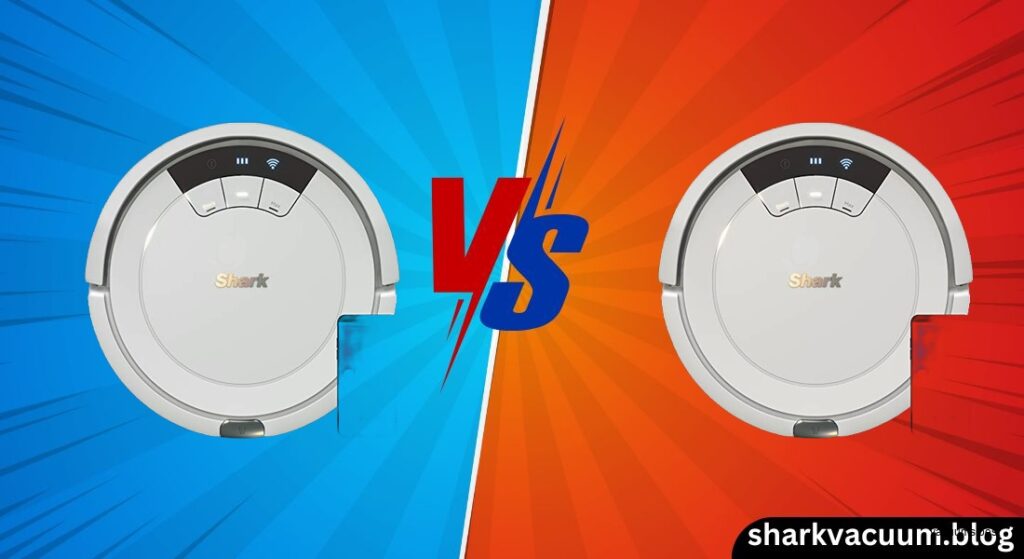
Shark ION Robot R87 vs. R76 – Is Laser Mapping Worth the Upgrade?
Choosing between the Shark ION Robot R87 and R76 isn’t just about picking a vacuum—it’s about deciding what kind of cleaning experience you want. Do you prefer a robot that bounces around like a pinball, eventually covering the floor? Or one that maps your home, cleans in straight lines, and remembers where it left off? These two models—the R87 (RV871R) with its LaserSmart® navigation and the R76 (RV761) with its random pathing—represent different generations of robotic vacuum tech. Both are from Shark’s ION line, both target pet owners and multi-surface homes, and both offer Wi-Fi and voice control. But their core navigation philosophy is worlds apart. In this deep comparison, we’ll break down every key factor—suction, navigation, pet hair handling, battery life, and smart features—to answer the big question: Is the upgrade to laser mapping worth it? Spoiler: for most people, the answer leans heavily toward yes. But if you’re on a tight budget and prioritize deep carpet cleaning over precision, the R76 might still have a place in your home.
Product Overviews
Shark ION Robot R87 (RV871R)
The Shark ION Robot R87 (RV871R) is the more advanced of the two, built around the idea of systematic, intelligent cleaning. Its standout feature is LaserSmart® Technology, a LIDAR-based mapping system that scans your home and creates an accurate floor plan. This allows the R87 to clean in straight, methodical rows—like a human would—instead of bouncing randomly. It knows where it’s been and where it hasn’t, which drastically improves coverage efficiency, especially in larger or cluttered spaces.
Under the hood, it packs 2300 Pa of suction power, automatically boosting on carpets and reducing on hard floors to save battery. The Tri-Brush System includes dual side brushes, channel brushes for larger debris, and a multi-faceted roller that grabs fine dust and pet hair without scattering it. It’s equipped with a HEPA filter to trap allergens and a 0.5L dustbin, though it’s often sold in a bundle with a self-emptying base that holds up to 60 days of debris in a 1.5L bag.
Smart features are where the R87 shines: Wi-Fi connectivity powers the SharkClean app, letting you schedule cleanings, set virtual no-go zones, and select specific rooms. It works with Alexa and Google Assistant for voice control and includes “Recharge & Resume”—a game-changer for homes over 1,000 sq. ft. If the battery runs low, it returns to the dock, recharges, and picks up exactly where it left off.
Despite its strengths, the R87 comes at a higher price and may feel overly complex for users who just want a simple “set it and forget it” robot. The app setup can be finicky, and some users report occasional mapping errors in very dark or reflective rooms.
Check the latest price of [Shark ION Robot R87] on Amazon [link]
Shark ION Robot R76 (RV761)
The Shark ION Robot R76 (RV761) is the older, budget-friendly sibling. It doesn’t map your home or clean in straight lines—in fact, it doesn’t know where it is at all. Instead, it relies on random navigation with bump and anti-drop sensors, bouncing around the room like a Roomba from the early 2010s. This makes it less efficient, especially in larger homes, but it’s surprisingly effective at deep cleaning thanks to strong mechanical agitation.
While its suction pressure is modest at 0.27 kPa (230 Pa) and airflow at 11 CFM, the rubber-edged multi-surface brush roll digs deep into carpets, lifting the nap and pulling out embedded dirt. In real-world tests, it recovered 7 grams of fine debris from a 30-gram test load on carpet after three passes, proving that repeated random coverage can still deliver a thorough clean.
It includes Wi-Fi and app control (via SharkClean), voice support for Alexa and Google, and a handy physical “Max Mode” button to boost suction on demand. However, the app has reported connectivity issues—some users say it drops Wi-Fi, making scheduled cleanings unreliable. For boundary control, it uses included magnetic strips, which are effective but less convenient than virtual walls.
The R76 is quieter than the R87, operating at around 60 dB, making it ideal for running during work or sleep. It runs for 90–120 minutes on a charge and has “Recharge & Resume”, though without mapping, its resume function is less precise—it starts over randomly instead of continuing from a specific spot.
Its main weaknesses? Poor edge cleaning (it rarely moves parallel to walls) and frequent brush roll tangling with long human or pet hair. Still, at a lower price point, it offers solid value for small apartments or carpet-heavy homes where navigation isn’t a top priority.
See current deals on [Shark ION Robot R76] here [link]
Comparison Criteria
To determine which robot is right for you, we’ll evaluate both models across seven key categories:
- Navigation & Coverage: Can the robot clean your entire home efficiently, or will it miss spots?
- Cleaning Performance: How well does it pick up dust, debris, and pet hair on carpets and hard floors?
- Pet Hair Handling: Does the brush design resist tangling, and is filtration effective?
- Battery & Autonomy: How long does it run, and how well does “Recharge & Resume” work?
- Smart Features & Connectivity: Is the app reliable, and can you control boundaries virtually?
- Maintenance & Durability: How easy is it to empty, clean brushes, and replace filters?
- Value for Money: Does the performance justify the price, especially when on sale?
Let’s dive into each category.
Head-to-Head Comparison
Navigation: LaserSmart Mapping vs. Random Pathing
The biggest difference between the R87 and R76 is how they navigate your home—and it’s not even close. The R87 uses LaserSmart® Technology, a LIDAR-based system that spins at the top of the robot, scanning walls and furniture to create a real-time map. This allows it to clean in straight, back-and-forth rows, covering the entire floor systematically. It remembers the layout, avoids re-cleaning the same spot, and can even detect new obstacles mid-clean. In homes over 1,200 sq. ft., this efficiency is a game-changer.
The R76, on the other hand, uses random navigation—a “bumper car” approach where it moves forward until it hits an obstacle, then changes direction. While it eventually covers the floor (especially after multiple passes), it’s inefficient. It often misses corners, re-cleans the same area, and can get stuck in tight spaces. It has no memory, so every clean starts from scratch.
When it comes to boundary control, the R87 wins hands down. Its app lets you draw virtual no-go zones, perfect for blocking off pet food bowls, fragile decor, or doorways. The R76 relies on physical magnetic strips, which work but are less flexible. You can’t adjust them remotely, and they’re visible on the floor.
Pro Tip: If you hate seeing your robot get stuck or miss half the living room, LaserSmart mapping isn’t just a luxury—it’s a necessity.
🏆 Section Winner: Shark ION R87
The laser-guided navigation provides efficient, reliable, and intelligent coverage that the R76 simply can’t match.
Cleaning Performance: Suction and Surface Adaptation
On paper, the R87’s 2300 Pa suction sounds far stronger than the R76’s 230 Pa (0.27 kPa). But specs don’t tell the whole story. The R76 compensates with mechanical brush agitation—its rubber-edged roller churns deep into carpet fibers, lifting dirt and making the carpet feel fluffier. In stress tests, it pulled 7 grams of fine debris from a carpet after three random passes, proving it can deliver a deep clean despite lower suction numbers.
On hard floors, the R87 has the edge. Its systematic pattern ensures it doesn’t skip patches, and its auto-adjusting suction keeps it efficient. The R76 does well on open tile or hardwood but can miss narrow gaps near walls due to poor edge cleaning.
Where the R76 truly falters is edge and corner cleaning. Its random pathing means it rarely runs parallel to walls. Even with side brushes, it struggles to sweep debris from baseboards. The R87, however, tracks along walls during its methodical passes, and its dual side brushes effectively push debris into the suction path.
On carpet transitions and area rugs, both models handle them well, but the R87’s auto-boost on carpets gives it a slight advantage in pickup consistency.
🏆 Section Winner: Shark ION R87
While the R76 impresses on deep carpet cleaning, the R87 delivers more consistent, reliable performance across all surfaces, especially on edges and hard floors.
Pet Hair and Filtration
Both robots are marketed to pet owners, and both include HEPA filters that trap 99.9% of dust, dander, and allergens. In this regard, they’re essentially tied—both are excellent for reducing airborne pet allergens.
But when it comes to hair removal and tangling, the story differs. The R87’s Tri-Brush System—with its multi-faceted roller and side brushes—is designed to minimize tangles. While it still requires weekly brush cleaning, it handles short and medium pet hair well. Long human hair can still wrap around the roller, but less frequently than on older models.
The R76’s rubber-edged brush roll is also marketed as tangle-free, but real-world testing tells a different story. In homes with long-haired pets or humans, 70–80% of hair wraps around the side brushes and main roller. While the hair is easy to remove manually, you’ll likely need to clean the brushes every few days—a chore that can become tedious.
The R87’s systematic cleaning also means it covers more ground per run, reducing the chance of pet hair being scattered or missed. The R76’s random pattern can sometimes kick up hair instead of grabbing it, especially on the first pass.
🏆 Section Winner: Shark ION R87
Slightly better brush design and consistent coverage make the R87 more pet-hair-friendly, though both require regular maintenance.
Battery Life and Autonomy
Battery life is another area where mapping makes a huge difference. The R87 offers up to 120–180 minutes of runtime, depending on the cleaning mode (eco mode extends it). The R76 provides 90–120 minutes, which is respectable for its class.
But the key differentiator is autonomy—specifically, how well each robot handles “Recharge & Resume.” The R87 excels here. Because it maps your home, it knows exactly where it left off when the battery runs low. It returns to the dock, recharges, and resumes cleaning from the same spot, ensuring full coverage even in large homes.
The R76 can also recharge and resume, but without a map, it has no memory of its previous path. When it restarts, it begins a new random cleaning cycle, which can lead to redundant cleaning or missed areas. In homes over 1,000 sq. ft., this often means the entire floor isn’t cleaned in one session.
Additionally, the R87’s efficient navigation uses less battery per square foot, allowing it to clean larger areas on a single charge.
🏆 Section Winner: Shark ION R87
The mapping-enabled resume function provides true whole-home cleaning autonomy, a major advantage over the R76.
Smart Features and Connectivity
Both robots support Wi-Fi, app control (SharkClean), and voice commands via Alexa and Google Assistant. On the surface, they seem equal. But in practice, the R87 offers a far superior smart experience.
The SharkClean app on the R87 is intuitive and reliable, with features like:
– Room selection (clean only the kitchen or bedroom)
– Custom cleaning schedules
– Virtual no-go zones
– Real-time cleaning map and status
The R76’s app, while functional, has reported connectivity issues. Some users say it drops Wi-Fi, making scheduled cleanings unreliable. One verified buyer noted they stopped using the app entirely and now rely on the physical buttons.
The R87’s app also provides better feedback, showing cleaning history, battery usage, and filter replacement reminders. The R76’s app is more basic, with less detailed insights.
And while both have voice control, the R87’s integration feels more seamless because the robot is consistently connected.
🏆 Section Winner: Shark ION R87
The R87 delivers a modern, reliable smart home experience; the R76 feels outdated and occasionally glitchy.
Maintenance and Durability
Maintenance is similar for both models, but there are key differences.
Both have top-mounted dustbins (0.5L on R87, 0.6L on R76) that are easy to remove and empty. Both use HEPA filters that should be cleaned monthly and replaced every 6–12 months. Both require brush roll cleaning to remove hair tangles.
However, the R76’s brush roll tends to tangle more frequently, especially with long hair, meaning you’ll spend more time on maintenance. The R87’s design reduces tangles, though it’s not immune.
The R87’s self-emptying base option is a major convenience upgrade—emptying the bin every 60 days means almost no hands-on maintenance. The R76 has no self-empty option, so you’ll need to empty it after every few runs.
Both robots are durable and built to last, with solid plastic bodies and reliable motors. Replacement parts (batteries, brushes, filters) are available for both.
🏆 Section Winner: Shark ION R87
Especially when paired with the self-emptying base, the R87 offers significantly lower maintenance over time.
Value for Money
Here’s where the R76 shines. It’s typically sold at a lower price point—often found discounted under $200—making it a high-value option for budget-conscious buyers.
It delivers strong carpet cleaning, quiet operation, and basic smart features at a fraction of the cost of premium robots. If you live in a small apartment, have mostly carpet, and don’t care about perfect edge cleaning, the R76 is a solid buy.
The R87, meanwhile, sits in the mid-range price bracket. While more expensive, it justifies the cost with laser mapping, better navigation, virtual boundaries, and optional self-emptying. For homes over 1,000 sq. ft., the time and frustration saved make the upgrade worthwhile.
But if you’re on a tight budget and can accept its limitations, the R76 still offers excellent performance for the price—especially if purchased on sale.
🏆 Section Winner: Shark ION R76
For pure bang for your buck, the R76 wins. But the R87 offers better long-term value for most users.
Pros and Cons Table
| Feature | Shark ION R87 (RV871R) | Shark ION R76 (RV761) |
|---|---|---|
| Navigation | LaserSmart® Mapping (Systematic, efficient) | Random Pattern (Inefficient, relies on probability) |
| Suction | High (2300 Pa), Auto-adjusting | Strong mechanical agitation, good for carpets |
| Edge Cleaning | Good (Tracks walls) | Weak (Struggles with corners/baseboards) |
| Boundaries | Virtual (via App) | Physical Magnetic Strips (Included) |
| Battery | Up to 120-180 mins | Up to 90-120 mins |
| Resume Function | Excellent (Map-based) | Moderate (Random restart) |
| Noise Level | ~65 dB | ~60 dB (Quieter) |
| Self-Empty Option | Yes (Optional bundle) | No |
| Connectivity | Stable Wi-Fi, Advanced App | Unstable Wi-Fi reported, Basic App |
| Price Point | Mid-Range | Budget-Friendly |
Best Use Case Recommendation
Choose the Shark ION R87 If:
- You have a larger home (>1,200 sq. ft.) where efficient navigation is critical.
- You want virtual boundaries and precise room control via your phone.
- Your home has a mix of open spaces and clutter where mapping prevents the robot from getting stuck or missing rooms.
- You prefer a “set it and forget it” experience with reliable scheduling.
- You’re willing to pay more for long-term convenience and lower maintenance.
Choose the Shark ION R76 If:
- You are on a strict budget but still want Wi-Fi and voice control.
- Your primary concern is deep cleaning carpets in smaller apartments or single rooms.
- You have pets and need a quiet machine that can run while you work (quieter operation).
- You don’t mind manually placing magnetic strips to block off areas and can tolerate occasional missed spots due to random navigation.
- You’re okay with frequent brush cleaning and don’t need advanced smart features.
View [Shark ION Robot R76] on Amazon [link]
Conclusion
The Shark ION Robot R87 vs. R76 comparison highlights a fundamental shift in robotic vacuum technology: from random cleaning to intelligent navigation. The R87, with its LaserSmart® mapping, represents the modern standard—efficient, reliable, and smart. It cleans systematically, avoids obstacles, resumes intelligently, and integrates seamlessly with your smart home. For most users, especially those with larger or multi-room homes, the upgrade is absolutely worth it.
The R76, while older and less advanced, remains a capable and budget-friendly workhorse. It excels at deep carpet cleaning, runs quietly, and includes useful features like magnetic boundary strips and Max Mode. If you’re cleaning a small space and prioritize suction over smarts, it’s still a solid choice—especially on sale.
But here’s the truth: navigation is the defining factor in today’s robot vacuums. A robot can have the strongest suction in the world, but if it misses half your floor, it’s not doing its job. The R87 solves that problem with laser-guided precision, making it the overall winner.
Final Verdict:
* Overall Winner: Shark ION R87 – The leap to laser mapping delivers consistent, efficient, and intelligent cleaning that justifies the higher price.
* Budget Pick: Shark ION R76 – A capable carpet cleaner for small homes, but only if you accept its navigation limitations.
In the end, the R76 is a good cleaner. The R87 is a good navigator—and that’s what makes all the difference.