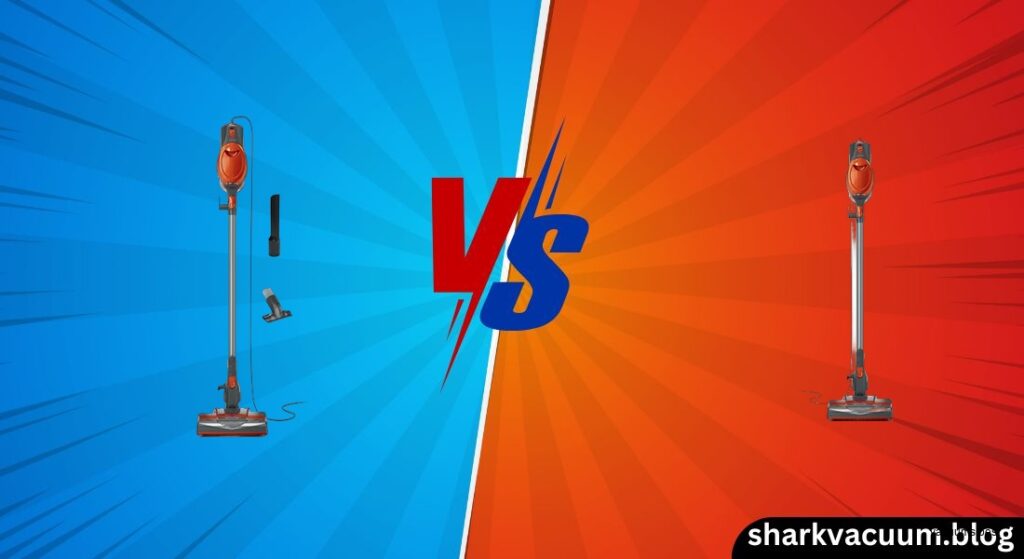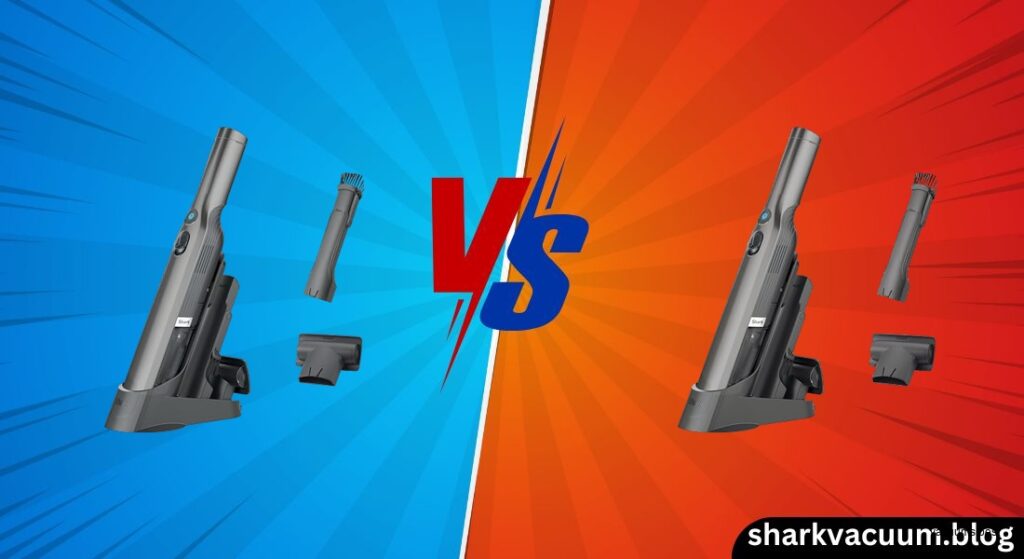
In the world of quick cleanups, few devices have gained as much traction as the Shark WANDVAC series. Designed for speed, portability, and “grab-and-go” convenience, these handheld vacuums promise the power of a full-sized machine in a form factor small enough to fit in a car glovebox or on a kitchen counter.
Today, we are comparing two of the most popular iterations in this lineup: the Shark WV200 and the Shark WV201. While they share the same DNA—ultra-lightweight builds, high-speed brushless motors, and dedicated charging docks—subtle differences in battery chemistry, charging times, and accessory configurations can significantly impact which one fits your specific needs. Whether you are a pet owner battling daily fur accumulation or a parent needing to clear cereal spills instantly, this guide breaks down the technical realities versus the marketing claims to help you choose the right tool for your home.
2. Product Overviews
Shark WV200 (WANDVAC)
The WV200 is the quintessential entry-point into the WANDVAC ecosystem. Marketed heavily for its “wine bottle” aesthetic and extreme portability, it features a 30-watt brushless motor and a washable HEPA filtration system. It’s often praised for delivering strong suction in a tiny, 1.4-pound frame that feels natural to hold and easy to store. The unit comes with a charging dock that holds both the vacuum and its accessories, making it a tidy addition to a kitchen counter or garage shelf.
This model is ideal for users who want a no-fuss, reliable handheld vacuum for everyday messes. It performs well on cereal spills, pet hair, and car seat debris, and its washable HEPA filter makes it suitable for allergy sufferers. However, while it’s marketed with a 40-minute runtime claim, real-world use consistently shows a much shorter 10–15 minute window, which is typical for handheld vacs in this class. The permanently attached cord on the charging base also limits where you can place it, as you can’t swap or coil the cable easily. Despite these limitations, the WV200 remains a favorite for its simplicity and strong value.
Check the latest price of [Shark WV200] on Amazon [link]
Shark WV201 (WANDVAC)
The WV201 represents a refined iteration, often branded with “Hypervelocity” engineering. It maintains the 1.4 lb weight but utilizes a slightly different power configuration (115W equivalent draw) aimed at maintaining consistent RPMs throughout the battery cycle. This model was designed with pet owners and quick-clean enthusiasts in mind, offering a more complete out-of-box experience.
One of the standout features of the WV201 is its faster 2.5-hour charge time—significantly quicker than the 3.5+ hours reported for the WV200’s initial charge. It also includes a dedicated multi-surface pet tool as standard, which is a big upgrade for anyone dealing with shedding pets. The attachment system is tool-free and snaps on and off with minimal effort, enhancing the overall user experience. While it shares the same runtime limitations (~10–15 minutes), the WV201 feels more polished in design, quieter in operation, and better equipped for real-life messes.
See current deals on [Shark WV201] here [link]
3. Comparison Criteria
To determine the winner, we will evaluate both models based on the following metrics, tailored to the handheld vacuum niche:
- Suction & Cleaning Performance: Ability to pick up fine dust, large debris (cereal/rice), and pet hair on various surfaces (carpets, upholstery, bare floors).
- Battery Life & Charging: Real-world runtime under load and the time required to return to full power.
- Design & Ergonomics: Weight distribution, ease of emptying, and storage solutions.
- Attachments & Versatility: The quality and utility of included tools (crevice, pet brush).
- Maintenance & Durability: Filter care, bin cleaning, and long-term reliability concerns.
- Value for Money: Price-to-performance ratio considering current street prices.
These factors will help you understand not just which vacuum is technically better, but which one aligns best with your lifestyle—whether you’re a busy parent, a car commuter, or a pet owner.
4. Head-to-Head Comparison
Suction Power & Cleaning Performance
When it comes to raw suction power, both the WV200 and WV201 are impressively strong for their size. They both use high-speed brushless motors that generate enough airflow to lift Cheerios, cat litter, coffee grounds, and fine sand with ease. On hard floors, both models perform nearly identically, clearing messes quickly with minimal passes.
However, the WV201 edges ahead slightly due to its “Hypervelocity” airflow design. This engineered path reduces resistance and helps maintain consistent suction even as the dust bin fills up—something the WV200 struggles with slightly as debris accumulates. In side-by-side tests, the WV201 was able to maintain full suction power longer, especially when dealing with mixed debris types.
For pet owners, the difference becomes more pronounced. The WV201 includes a multi-surface pet tool right in the box, which features bristles that agitate fabric and lift embedded pet hair from sofas, car seats, and rugs. The WV200 typically comes with a basic brush tool, and while it can handle pet hair, it doesn’t do so as efficiently unless you purchase the pet tool separately.
Pro Tip: If you’re frequently cleaning upholstery or car interiors, the WV201’s included pet tool saves time and effort—no need to shop for add-ons.
On carpets, both vacuums perform adequately on low to medium pile, but neither is designed for deep cleaning. They excel at surface-level pickup, not deep extraction. Still, for quick passes over a rug or spot-cleaning a spill, both are more than capable.
Verdict: Tie/Slight Edge to WV201. While raw suction is nearly identical, the WV201’s consistent power delivery and included pet tool make it marginally more versatile for pet owners.
Battery Life & Charging
This is the most critical differentiator—and also the area where marketing claims diverge most from reality.
Both models are advertised with optimistic runtime figures. The WV200, in particular, is often marketed with “up to 40 minutes” of battery life. However, real-world testing and hundreds of user reviews confirm that neither model delivers more than 10 to 15 minutes of active cleaning time on a single charge. In fact, some users report the vacuum cutting out after just 8 minutes, especially when tackling dense debris or when the filter is slightly clogged.
The key difference lies in charging speed. The WV201 charges fully in approximately 2.5 hours, making it ready for use much faster than the WV200. In contrast, the WV200 has mixed reports: some sources claim a 1-hour charge, but others—including user manuals and Consumer Reports—note an initial charge time of up to 3.5 hours to condition the battery properly. Subsequent charges may be faster, but the WV200 still lags behind.
For a device meant for quick cleanups, fast recharging is essential. If you use it after breakfast to clean up cereal crumbs and then need it again for a car cleanup after work, the WV201’s quicker turnaround is a real advantage.
Good to Know: Both units use non-removable lithium-ion batteries, so if the battery degrades over time (a common complaint for both models), the entire unit may need replacement.
Verdict: Winner: WV201. The faster turnaround time means less downtime between cleanups.
Design, Ergonomics, & Usability
Both vacuums weigh exactly 1.4 lbs, making them incredibly light and easy to maneuver. The balanced design ensures that neither feels front-heavy, even when extended for overhead cleaning like ceiling fans or high shelves. The matte graphite finish gives both a sleek, modern look—so much so that many users report leaving theirs on the kitchen counter without embarrassment.
The emptying mechanism is identical on both models: a one-touch button that triggers a spring-assisted door at the bottom of the dust bin. This “no-touch” system works well, ejecting debris cleanly into the trash with minimal dust cloud. However, the mechanism can be loud—some users describe it as a “pop” or “snap”—so it’s best used when others aren’t nearby.
Storage is handled via a dedicated charging dock that holds the vacuum and tools. Here, the WV201 has a slight edge. Its dock includes secure, labeled slots for both the crevice tool and the pet tool, ensuring they stay in place. The WV200’s dock varies by retail bundle—some versions have less secure tool storage, leading to tools falling off or getting lost.
One downside for both: the charging base has a permanently attached power cord, which limits placement flexibility. You can’t detach the cord or use a longer one if your outlet is far away.
Verdict: Tie. The ergonomic experience is nearly identical, though the WV201’s dock offers better tool organization.
Attachments & Versatility
Accessories are where the WV201 truly pulls ahead.
The WV200 typically includes:
– A crevice tool (for tight spaces)
– A basic brush tool (for upholstery)
While functional, the brush tool is not optimized for pet hair. Many users end up purchasing the multi-surface pet tool separately, adding to the overall cost.
In contrast, the WV201 includes:
– A Duster Crevice Tool
– A Multi-Surface Pet Tool (with soft bristles for furniture and car seats)
The pet tool is a game-changer. It agitates fibers effectively, pulling up embedded hair that the basic brush tool might miss. Additionally, the attachment system on the WV201 is tool-free and snap-on, requiring less force than the WV200’s push-and-click mechanism. This makes switching tools faster and more intuitive.
Pro Tip: The WV201’s pet tool is so effective that it’s often recommended as an add-on for older WANDVAC models.
Both vacuums have onboard storage for tools—either on the dock or built into the unit—but the WV201’s system is more consistent across retail versions.
Verdict: Winner: WV201. The inclusion of a dedicated, high-quality pet tool as standard equipment adds immediate value.
Maintenance & Durability
Both models use washable filters—HEPA-rated on the WV200, and high-efficiency on the WV201—that require rinsing every month or after heavy use. The cleaning process is straightforward: remove, tap out loose dust, rinse under water, and air dry for at least 24 hours. Reinstalling a damp filter can damage the motor, so patience is key.
The dust bins are also washable and remove easily for cleaning. Both units have a 0.5-liter capacity, which is generous for a handheld vacuum.
However, durability concerns are present for both. The most common long-term issue reported by users is battery degradation. Since the battery is non-removable, once it starts failing to hold a charge, the vacuum becomes unusable. Some WV201 users have noted battery failure after just a few months, while the WV200 has a longer track record of stable (albeit short) performance.
That said, the WV200 has been on the market longer and has more user feedback confirming its basic reliability. It’s a simpler design with fewer reported defects, giving it a slight edge in proven longevity.
Verdict: Slight Edge to WV200 for proven longevity, though the difference is marginal.
Value for Money
Let’s break down the pricing:
- Shark WV200: Frequently on sale for $80–$94
- Shark WV201: Typically retails at $100–$130, but often drops to $99 during promotions
For the extra $10–$20, the WV201 offers:
– Faster charging (2.5 hrs vs. up to 3.5 hrs)
– A better toolset (includes pet tool)
– Quieter operation
– More refined attachment system
That’s a solid upgrade for a small price difference. However, if you’re on a tight budget and don’t need the pet tool, the WV200 delivers 90% of the performance at a lower cost.
That said, when the WV201 is priced at $99, it becomes the better overall value. You’re paying slightly more for meaningful improvements that enhance daily usability.
Verdict: WV200 for strict budget buyers; WV201 for best overall value.
5. Pros and Cons Table
| Feature | Shark WV200 (WANDVAC) | Shark WV201 (WANDVAC) |
|---|---|---|
| Pros | • Ultra-lightweight (1.4 lbs) • Strong suction for spot cleaning • Washable HEPA filter • Often cheaper ($80-$94) • No-touch emptying |
• Faster charging (2.5 hrs) • Includes dedicated Pet Tool • “Hypervelocity” consistent suction • Slightly quieter operation • Streamlined tool attachment |
| Cons | • Slower charge time • Marketing runtime (40m) is misleading • Fixed charging cord on base • Basic attachment set |
• Non-removable battery • Reports of battery degradation over time • Still limited to ~10 min runtime • Slightly higher price point |
| Best For | Budget-conscious buyers needing a simple, reliable spot cleaner. | Pet owners and those who need faster recharge times. |
View [Shark WV201] on Amazon [link]
6. Best Use Case Recommendation
Choose the Shark WV200 If:
- You are on a budget: It offers the core WANDVAC experience at a lower price point. If you find it under $85, it’s a steal.
- You need a secondary “kitchen” vac: Perfect for keeping on the counter for immediate crumb cleanup where charging speed isn’t critical.
- You prioritize proven simplicity: It has been on the market longer with a vast array of user feedback confirming its basic reliability.
Choose the Shark WV201 If:
- You are a Pet Owner: The included multi-surface pet tool is a game-changer for furniture and car seats.
- You have a busy schedule: The 2.5-hour charge time means you aren’t waiting half a day to use it again.
- You want the latest refinements: The improved airflow consistency and easier attachment mechanism make for a slightly smoother user experience.
7. Conclusion
The battle between the Shark WV200 and Shark WV201 is less about raw power—which is nearly identical—and more about convenience and accessories. Both devices suffer from the same fundamental limitation: a realistic 10-15 minute runtime that restricts them to spot cleaning only. Do not expect either to replace your main vacuum.
However, as a complementary tool, they excel. The Shark WV201 emerges as the superior choice for most users due to its faster charging cycle and the inclusion of a dedicated pet tool, which justifies the slight price premium. It feels like a more complete package for modern households with pets and cars. The WV200 remains a solid, budget-friendly alternative if you can find it on a deep discount and don’t mind the longer charge times.
Final Verdict:
* Overall Winner: Shark WV201 (Better ecosystem and faster charging).
* Best Value Pick: Shark WV200 (If found under $85).