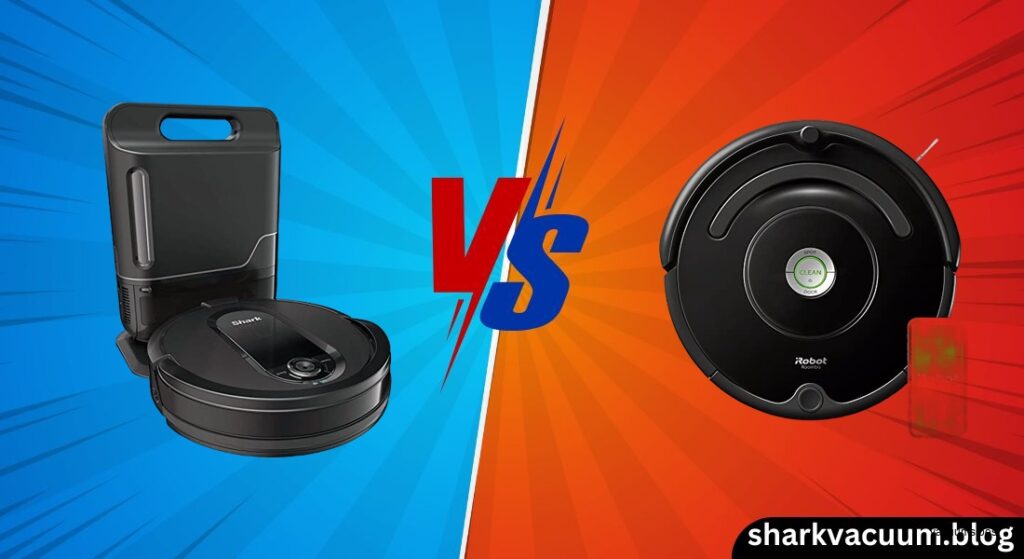
Robot vacuums have come a long way from their early days of aimless bumping and inefficient cleaning. Today, even budget-friendly models offer smart features that make daily floor maintenance easier than ever. But when you’re looking at two popular entry-to-mid-tier robots — the Shark IQ Robot Vacuum R100 and the iRobot Roomba 675 — the choice isn’t always straightforward. Both promise reliable performance, but they take very different approaches to cleaning your home.
The Shark R100 leans into modern technology with smart mapping, room-by-room navigation, and a self-cleaning brushroll designed specifically to tackle pet hair. It’s built for homes where efficiency and low maintenance are priorities, especially if you have furry friends shedding all over the place. On the other hand, the Roomba 675 sticks to iRobot’s proven formula: a no-frills, random-navigation workhorse known for strong carpet cleaning and brand reliability. It’s often cheaper, simpler to use, and performs admirably on carpets — but it lacks the intelligence and targeted cleaning capabilities of its Shark rival.
So which one should you bring into your home? This in-depth comparison dives into every critical aspect — from navigation and cleaning power to hair management and long-term upkeep — to help you decide whether smart efficiency or trusted simplicity better fits your lifestyle. We’ll look at real-world performance, user feedback, and hidden trade-offs so you can make a confident choice without overpaying for features you don’t need — or missing out on ones that truly matter.
1. Introduction
The robot vacuum market has evolved rapidly, and one of the most exciting shifts is how smart features once reserved for premium models are now trickling down to more affordable options. The Shark IQ Robot Vacuum R100 (RV1000) and the iRobot Roomba 675 represent two distinct philosophies in this new era of budget robotics. The Shark R100 brings advanced mapping, systematic cleaning patterns, and a self-cleaning brushroll to the table — all at a price point that used to only get you random-navigation bots. Meanwhile, the Roomba 675 remains a classic example of iRobot’s “if it ain’t broke, don’t fix it” approach: reliable, straightforward, and built on decades of engineering refinement, even if it still relies on older bump-and-go navigation.
At first glance, both robots look similar — circular bodies, around 3.5 inches tall, designed to glide under furniture and clean autonomously. But beneath the surface, their differences are substantial. The Shark R100 uses IQ Navigation, a camera-based system that maps your home and cleans in straight rows, allowing you to select specific rooms via an app. It also features a self-cleaning brushroll that actively prevents hair wrap — a major pain point for pet owners. The Roomba 675, by contrast, uses Adaptive Navigation, which is essentially a random walk algorithm. It doesn’t build a map or remember your floor plan, but it does include Dirt Detect technology, which helps it linger in dirtier areas.
The core conflict here is clear: do you prioritize intelligent, efficient cleaning with better pet-hair handling (Shark), or brand reliability, deep carpet cleaning, and simplicity (Roomba)? Both robots are positioned as value-driven options, but they serve slightly different needs. The Shark R100 is ideal for homes with pets, mixed flooring, and users who want more control over where and when the robot cleans. The Roomba 675 shines in smaller, simpler spaces with mostly carpeted floors, where its aggressive agitation and Dirt Detect mode can deliver excellent results without the complexity of mapping.
This article will break down each robot across key categories — navigation, cleaning performance, hair management, smart features, maintenance, and value — using real-world data, specifications, and user insights. By the end, you’ll know exactly which robot aligns with your home environment, cleaning habits, and expectations.
2. Product Overviews
Shark IQ Robot Vacuum R100 (RV1000)
The Shark IQ Robot R100 (model RV1000) is designed to bring smart home cleaning within reach of budget-conscious buyers without sacrificing key modern features. At its core is the IQ Navigation system, which uses a top-mounted camera to map your home over time, enabling room-by-room cleaning and efficient row-by-row pathing. Unlike older robots that bounce around randomly, the R100 learns your layout and cleans in an organized pattern, returning to the dock when needed and resuming where it left off — a major advantage for larger or multi-room homes.
One of its standout features is the self-cleaning brushroll, engineered specifically to combat hair tangles. This is a game-changer for pet owners or households with long-haired individuals, as the brush actively ejects hair during operation, reducing the need for manual cleaning. The robot also includes dual side brushes for better edge cleaning and an XL dustbin (larger than average) that reduces how often you need to empty it. With 1780 Pa of suction power, it’s strong enough to handle both fine dust and larger debris on hard floors and carpets.
Connectivity is handled through the SharkClean app, which supports Alexa and Google Assistant voice control. The app allows you to start, stop, schedule, and even select specific rooms for cleaning — a feature that’s rare at this price point. However, it’s important to note that while the R100 has smart navigation, it does not include a self-emptying base. You’ll still need to empty the bin manually after each run. Additionally, the robot only supports 2.4GHz Wi-Fi, which may cause connectivity issues for users with modern dual-band routers that default to 5GHz.
Despite these limitations, the R100 delivers a surprisingly high-end experience for its category. It’s particularly well-suited for homes with pets, mixed flooring, and users who want more control over their cleaning routine. Check the latest price of [Shark IQ Robot Vacuum R100] on Amazon [link]
iRobot Roomba 675
The iRobot Roomba 675 is the quintessential entry-level robot vacuum: simple, reliable, and built on iRobot’s long-standing reputation for durability. Priced around $150 (often less during sales), it’s one of the most affordable Wi-Fi-connected Roombas available. While it lacks the advanced mapping of higher-end models like the 900 series, it still offers Dirt Detect technology, which uses acoustic sensors to identify high-traffic, debris-heavy areas and intensify cleaning by spiraling in place.
Instead of mapping, the 675 uses Adaptive Navigation — a random “bump and go” algorithm that has been refined over years of development. It doesn’t create a digital floor plan or clean in straight lines, but it does cover ground effectively over time, especially in small to medium-sized homes. The robot is equipped with a bristle-style brushroll and a single side brush, which work together to sweep debris into the main suction path. On carpets, it performs exceptionally well, achieving 85.1% sand pickup in deep-cleaning tests — on par with more expensive models.
The Roomba 675 connects to the iRobot Home app, allowing for basic scheduling (one cycle per day), voice control via Alexa and Google Assistant, and maintenance reminders. However, the app doesn’t offer room selection, no-go zones, or real-time tracking — features that require hardware add-ons like the Virtual Wall barrier, which is not included and costs about $25 for a two-pack. Another major limitation is that the 675 does not support Recharge & Resume. If the battery runs low mid-clean, it docks and stops — you’ll need to manually restart it later.
Despite these drawbacks, the Roomba 675 remains a solid performer, especially on carpets. Its build quality is robust, the interface is simple, and it’s backed by iRobot’s ecosystem and support. It’s best for small apartments, pet-free homes, or users who want a dependable, low-maintenance robot without the learning curve of smart navigation. See current deals on [iRobot Roomba 675] here [link]
3. Comparison Criteria
To determine which robot truly offers better value and performance, we’ll evaluate both models across six key criteria that matter most to real-world users:
- Navigation & Intelligence: How well does each robot map your home, avoid obstacles, and clean efficiently? Is systematic row-by-row cleaning worth the trade-offs?
- Cleaning Performance: How do they handle debris on hard floors vs. carpets? We’ll look at suction power, pickup rates for sand, pet hair, and rice, and edge-cleaning effectiveness.
- Hair Management: A critical factor for pet owners. Does the brushroll resist tangles? How often do you need to clean or replace it?
- Smart Features & App: What can you do with the app? Can you schedule cleanings, use voice commands, or set virtual boundaries? Is one ecosystem more user-friendly?
- Maintenance & Durability: How easy is it to empty the bin, clean the filter, and replace parts? What are the long-term costs and upkeep requirements?
- Value Proposition: Given their similar price points, which robot offers more features, better performance, and less frustration for the money?
Each category will be assessed using real specs, test data, and user feedback to provide a balanced, practical comparison — not just marketing hype.
4. Head-to-Head Comparison
Navigation and Mapping
This is where the fundamental difference between the two robots becomes most apparent.
The Shark R100 uses camera-based IQ Navigation to build a digital map of your home. Over several cleaning cycles, it learns the layout and begins to clean in straight, systematic rows — much like a human would push a vacuum. This method is significantly more efficient than random navigation, especially in larger or multi-room homes. Once the map is established, you can use the SharkClean app to select specific rooms for cleaning (e.g., “Clean the kitchen only”), set no-go zones, and even schedule room-specific cleanings. The robot remembers the map, returns to the dock when low on battery, and resumes cleaning automatically — a huge time-saver.
However, the mapping system has limitations. It relies on visual cues and requires good lighting to function properly. In dimly lit rooms or homes with low-contrast walls, the map may be inaccurate or fail to form. Some users report variations in map detail depending on their home’s layout. Additionally, the robot only supports 2.4GHz Wi-Fi, which can cause connectivity issues with modern routers.
In contrast, the Roomba 675 uses Adaptive Navigation, a random “bump and go” algorithm. It has no camera, no mapping, and no memory of your floor plan. Instead, it moves in unpredictable patterns, changing direction only when it hits an obstacle or detects a cliff. While this method can eventually cover most of a room, it’s inefficient — the robot may clean the same area multiple times while missing others entirely. It cannot clean specific rooms on command, and it does not resume cleaning if the battery dies.
That said, iRobot’s random navigation is well-optimized. In small, open layouts (like studios or 1-bedroom apartments), it performs reliably and rarely gets stuck. The Dirt Detect feature helps compensate for inefficiency by focusing on high-traffic areas.
🏆 Section Winner: Shark IQ Robot R100
The R100’s smart mapping and room-select cleaning offer a clear advantage in efficiency, control, and usability — especially for homes larger than 1,000 sq ft.
Cleaning Performance by Surface
Both robots handle hard floors well, but they diverge on carpets.
On hard floors, the Shark R100 has a slight edge thanks to its dual side brushes, which sweep debris from edges more effectively than the Roomba’s single brush. Its 1780 Pa suction is strong and consistent, picking up dust, crumbs, and pet hair without scattering debris. The systematic cleaning pattern ensures full coverage without missed spots.
The Roomba 675 also performs well on hard floors, with a 99% cleaning efficiency in tests. However, it occasionally pushes larger debris (like rice grains) into corners instead of sucking it up, due to its random navigation and brush design.
On carpets, the Roomba 675 actually outperforms the Shark in deep-cleaning tasks. In controlled tests, it removed 85.1% of sand from mid-pile carpet — a score that matches higher-end models. Its bristle brushroll agitates carpet fibers aggressively, and Dirt Detect helps it focus on dirty areas. This makes it a strong choice for homes with low-to-mid pile rugs.
The Shark R100 is competent on carpets but doesn’t dig as deeply. Its self-cleaning brushroll is optimized for hair removal, not maximum agitation, so it may leave behind more embedded debris. Still, it transitions smoothly between surfaces and handles thresholds up to 0.875 inches (slightly better than the Roomba’s 0.8-inch limit).
🏆 Section Winner: Roomba 675 (for carpets), Shark R100 (for hard floors and overall balance)
The Roomba wins on deep carpet cleaning, but the Shark offers better edge cleaning and consistent performance across mixed surfaces.
Pet Hair and Brushroll Technology
This is a defining difference — and a major pain point for pet owners.
The Shark R100 features a self-cleaning brushroll that actively prevents hair wrap. As the brush spins, it uses a unique design to eject hair before it tangles around the roller. This means you rarely need to manually clean the brush — a huge time-saver for homes with dogs or cats. User reviews consistently praise this feature, noting that the robot picks up “significant amounts” of pet hair without clogging.
The Roomba 675, however, uses a traditional bristle brushroll that is highly prone to hair tangles. Even small amounts of pet hair can wrap around the roller, requiring users to cut it off with scissors — often weekly or even daily. One test showed that just 1 gram of 5–7 inch human hair caused noticeable wrapping. This makes the 675 a poor choice for long-haired pets or heavy shedders.
While the Roomba’s brush is effective at agitation, the maintenance burden is significant. You’ll need to clean it regularly to maintain performance, and replacement brushes cost money over time.
🏆 Section Winner: Shark IQ Robot R100
The self-cleaning brushroll is a game-changer for pet owners, reducing frustration and maintenance.
Smart Features and Connectivity
Both robots offer Wi-Fi and voice control, but the SharkClean app provides more functionality.
The Shark R100 allows:
– Room-select cleaning
– Custom cleaning schedules
– Cleaning history and map view
– BotBoundary strips included for virtual barriers
The Roomba 675 offers:
– Basic scheduling (one cycle per day)
– Cleaning history and battery health
– Voice control via Alexa/Google
– No in-app boundaries — requires separate Virtual Wall ($25+)
Both support 2.4GHz Wi-Fi only, but the Shark’s app is more intuitive and feature-rich. The ability to clean specific rooms without running a full-house cycle is a major convenience.
Another key difference: the Shark can resume cleaning after recharging; the Roomba cannot. If the battery dies mid-clean, the Roomba docks and stops — you must restart it manually.
🏆 Section Winner: Shark IQ Robot R100
More features, included no-go zones, and auto-resume give the Shark a clear edge.
Maintenance and Upkeep
Maintenance frequency and long-term costs matter.
The Shark R100 has an XL dustbin, so you won’t need to empty it as often. The high-efficiency filter should be tapped clean regularly but doesn’t require frequent replacement. The self-cleaning brushroll reduces maintenance, though you should still inspect it occasionally.
The Roomba 675 has a 0.3L bin (smaller than the Shark’s), requiring more frequent emptying. Its standard filter (non-HEPA) needs cleaning every 2 months. The bristle brushroll requires weekly or daily cleaning for pet owners, and replacement brushes cost around $20–$30.
Estimated annual maintenance cost:
– Shark R100: ~$20–$25 (filters, occasional brush)
– Roomba 675: ~$33 (filters, side brush, main brush)
🏆 Section Winner: Shark IQ Robot R100
Less frequent bin emptying and far less brush maintenance make the Shark easier to live with.
5. Pros and Cons Table
| Feature | Shark IQ Robot R100 | iRobot Roomba 675 |
|---|---|---|
| Navigation | Smart Mapping (Room-to-room, row-by-row) | Random (Bump and go) |
| Best For | Pet hair, mixed flooring, targeted cleaning | Small apartments, hard floors, budget buyers |
| Brush System | Self-Cleaning (Anti-tangle) | Bristle Roller (Prone to tangles) |
| Suction Power | 1780 Pa | Strong (Undisclosed Pa, high real-world performance) |
| App Features | Room select, scheduling, history | Scheduling (1x/day), history, battery health |
| Recharge Logic | Returns to dock and resumes cleaning | Returns to dock (No auto-resume) |
| Boundaries | BotBoundary strips Included | Virtual Wall Sold Separately |
| Filtration | High-Efficiency Filter | Standard Filter (Non-HEPA) |
| Height | 3.5 inches | 3.5 – 3.7 inches |
| Noise Level | Moderate | ~65.6 dB (Moderate) |
| Major Pro | Excellent hair management, efficient pathing | Deep carpet cleaning, trusted brand reliability |
| Major Con | Mapping can be inconsistent in low light | Hair tangles, inefficient random navigation |
6. Best Use Case Recommendation
Choose the Shark IQ Robot R100 If:
- You have pets: The self-cleaning brushroll is a game-changer for avoiding hair wrap.
- You have a multi-room layout: The mapping and room-select features allow you to clean only the kitchen or living room as needed.
- Efficiency matters: You want the robot to clean in straight lines and finish the job faster than a random navigator.
- You need virtual barriers immediately: It comes with the strips needed to block off areas.
Choose the iRobot Roomba 675 If:
- You are on a strict budget: It is often cheaper and provides reliable basic cleaning.
- You have mostly carpets: Its agitation and Dirt Detect technology perform exceptionally well on low-to-mid pile rugs.
- Your home is small and simple: In a studio or 1-bedroom apartment, random navigation is less of a hindrance.
- You prioritize brand ecosystem: You want the simplicity and reliability of the iRobot app and potential future upgrades.
7. Conclusion
The battle between the Shark IQ Robot Vacuum R100 and the iRobot Roomba 675 ultimately comes down to Technology vs. Tradition. The Shark R100 represents the future of budget robot vacuums: smart, efficient, and pet-friendly. Its IQ Navigation delivers systematic cleaning, room-select functionality, and auto-resume — features that make it feel like a premium robot at a mid-tier price. The self-cleaning brushroll is a standout for pet owners, drastically reducing maintenance.
The Roomba 675, meanwhile, is a testament to iRobot’s legacy of reliability. It’s a no-frills, deep-cleaning powerhouse on carpets, with Dirt Detect and a rugged build. But it shows its age with random navigation, no auto-resume, and a bristle brushroll that tangles easily with hair.
Final Verdict:
Overall Winner: Shark IQ Robot R100
For most users — especially those with pets, mixed flooring, or larger homes — the Shark offers significantly more value, smarter cleaning, and less frustration. The Roomba 675 remains a solid choice for small, carpet-heavy, pet-free apartments where simplicity and deep carpet cleaning are the top priorities.
While the Roomba 675 helped popularize robot vacuums, the Shark R100 shows where the budget category is headed: smarter, more efficient, and designed for real-life homes with real-life messes.