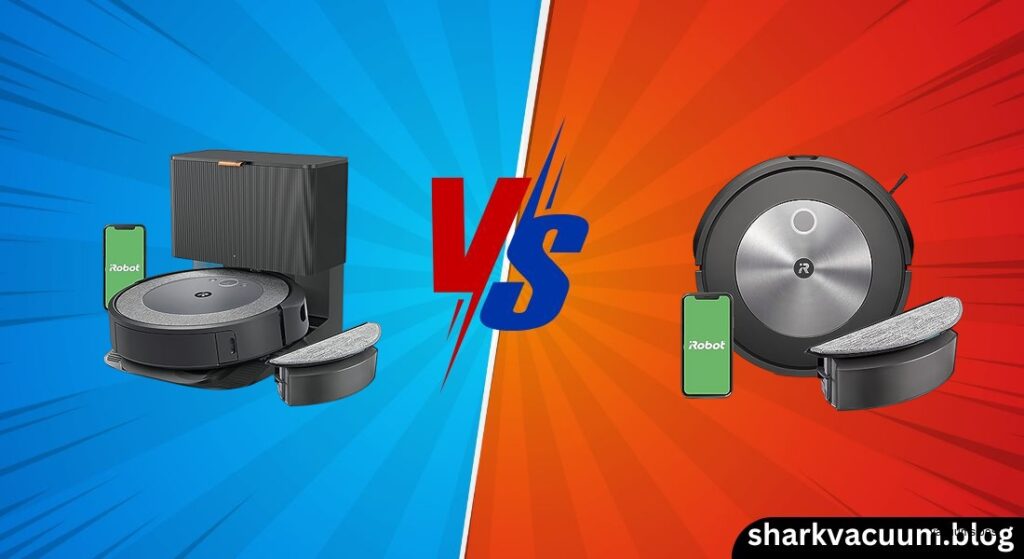
The battle between the Roomba i5 vs. j5 has become one of the most consequential decisions for mid-range robot vacuum buyers in recent years. These two models from iRobot represent vastly different philosophies in smart home cleaning—where the i5 stands as a proven, no-nonsense performer, the j5 brings flagship-level intelligence down to a more accessible price point. At first glance, they may seem like siblings: similar suction, shared brush systems, and nearly identical build quality. But beneath the surface, their navigation, obstacle avoidance, and overall user experience diverge sharply.
This comparison matters now more than ever because the gap between “dumb” and “smart” robot vacuums has dramatically narrowed. The Roomba j5 introduces PrecisionVision Navigation—a camera-based AI system that avoids cords, socks, and pet waste—features once reserved for premium models like the J7 or J9. Yet, it sits in the same price bracket as the older i5, especially during sales. That forces a critical question: is the j5’s advanced intelligence worth the slight premium, or does the i5 still deliver better value with its aggressive cleaning and lower cost?
We’ll dive deep into both models, including their + variants (with auto-empty) and Combo models (with mopping), to see how they stack up across six key criteria: navigation, cleaning performance, mopping ability, app experience, maintenance, and value. Whether you’re a pet owner, a busy parent, or someone who just wants a clean floor without daily effort, this side-by-side analysis will help you decide which robot truly earns its place in your home.
Product Overviews
Roomba i5 / i5+ / Combo i5
The Roomba i5 is the reliable workhorse of iRobot’s i-Series, built for users who prioritize consistent, powerful cleaning over cutting-edge navigation. It’s available in three configurations: the standard i5 (manual empty), the i5+ (with Clean Base auto-empty), and the Combo i5 (vacuum + mopping with manual bin swap). All versions share the same core DNA: a 4-Stage Cleaning System featuring Dual Multi-Surface Rubber Brushes that excel at picking up pet hair and preventing tangles—a major win for homes with shedding animals.
Navigation relies on visual floor tracking and a “bump-and-run” method. The robot learns your home’s layout over time by gently bumping into furniture and walls, creating a basic map. While it eventually becomes efficient, early runs can look chaotic, with zig-zagging paths and missed spots. It lacks object recognition, meaning it can’t tell the difference between a power cord and a chair leg. The app allows room selection and scheduling but offers no No-Go Zones, limiting your control over where the robot goes.
The Combo i5 introduces mopping via a removable water tank, but it comes with major caveats. There’s no carpet detection, so if you run it in a mixed-floor home, it will wet your carpets unless you manually block them off. Plus, when the mop bin is installed, the auto-empty function is disabled, forcing manual cleanup after every mopping session. Despite these limitations, the i5 shines in one area: deep-cleaning performance on carpets, where its aggressive brush system scores a strong 90/100 in independent tests.
Check the latest price of Roomba i5 on Amazon [link]
See current deals on Roomba i5+ here [link]
View Combo i5 on Amazon [link]
Roomba j5 / j5+ / Combo j5
The Roomba j5 is essentially a smarter, more evolved version of the i5, built on the same mechanical foundation but upgraded with the PrecisionVision Navigation system found in iRobot’s premium J7 and J9 models. Like the i5, it’s available in standard, j5+ (with Clean Base), and Combo j5 (vacuum + mopping) variants. The key difference? A front-facing camera powered by AI that actively identifies and avoids obstacles like cords, toys, and—critically—pet waste.
This camera enables Imprint Smart Mapping, which creates precise, room-by-room maps from the first clean. The j5 navigates in neat, straight rows right out of the gate, avoiding the erratic pathing of the i5. The app experience is significantly more advanced: you can set No-Go Zones to block off pet bowls or delicate furniture, and No-Mop Zones to prevent the Combo j5 from mopping over rugs. This makes the Combo j5 far safer and more practical than the Combo i5 for homes with mixed flooring.
The j5 also benefits from Dirt Detect™ technology, which identifies high-traffic areas and gives them extra cleaning passes. It supports voice commands via Alexa, Google Assistant, and Apple Home, and even comes with iRobot’s “Pet Owner Official Promise” (P.O.O.P. guarantee): if it smears pet waste, they’ll replace it. While mopping is still a basic “drag-mop” system without scrubbing pressure, the ability to define virtual boundaries makes it a much more viable option than the i5’s Combo model.
View Roomba j5 on Amazon [link]
Check the latest price of Roomba j5+ on Amazon [link]
See current deals on Combo j5 here [link]
Comparison Criteria
To determine which robot vacuum truly delivers better value and performance, we’ll evaluate the Roomba i5 vs. j5 across six essential categories:
-
Navigation & Intelligence: How well do they map your home, avoid obstacles, and clean efficiently? We’ll compare the i5’s reactive “bump-and-run” system against the j5’s proactive PrecisionVision Camera and AI-powered pathing.
-
Cleaning Performance: Does raw suction power matter more than smart navigation? We’ll analyze debris pickup on hard floors and carpets, edge cleaning, and pet hair handling—areas where both models use the same Dual Rubber Brushes and similar airflow (~2.6 CFM).
-
Mopping Capabilities (Combo Models): For users who want both vacuuming and mopping, how do the Combo i5 and Combo j5 compare? We’ll assess water distribution, scrubbing effectiveness, and crucially, carpet safety—a major differentiator.
-
App Experience & Smart Home: Is the iRobot Home App intuitive and feature-rich? We’ll compare room selection, scheduling, voice control, and the j5’s exclusive No-Go and No-Mop Zones.
-
Maintenance & Autonomy: How much effort does each robot require? We’ll examine bin emptying, brush cleaning, filter replacement, and the performance of the Clean Base Auto-Empty system on + models.
-
Value for Money: At their typical price points, which robot offers the best long-term return on investment? We’ll consider upfront cost, ongoing maintenance, and which features actually improve daily usability.
Each category will be assessed using real-world performance data, user feedback, and technical specifications from our full resource set. The goal is to move beyond marketing claims and deliver a clear, honest verdict on which model suits your lifestyle best.
Head-to-Head Comparison
Navigation: Bump-and-Run vs. PrecisionVision
The Roomba i5 relies on a reactive navigation strategy. It uses floor-tracking sensors and visual odometry to build a map over time, but it must physically bump into objects to understand boundaries. This results in a somewhat chaotic cleaning pattern during initial runs, with the robot zig-zagging through rooms, circling furniture, and occasionally missing spots. While it eventually learns the layout, its pathing remains less efficient than models with LIDAR or camera-based systems. It cannot distinguish between different types of obstacles—so a loose charging cable, a child’s toy, or pet waste are all just “things to bump into,” which increases the risk of getting stuck or scattering messes.
In contrast, the Roomba j5 uses PrecisionVision Navigation, a front-facing camera combined with AI to identify and avoid specific objects before contact. This allows it to clean in systematic, straight-line rows from the very first run, covering the floor more efficiently and completely. It can recognize and steer clear of power cords, socks, shoes, and pet waste—critical advantages in homes with pets or kids. The j5 creates Imprint Smart Maps that are accurate and persistent, supporting multi-floor mapping and room labeling. It also features Dirt Detect™, which identifies high-traffic zones and gives them extra cleaning passes.
The difference in real-world usability is stark. The i5 requires a relatively clutter-free environment to perform well. If you leave a cord on the floor, there’s a high chance it will get tangled. The j5, however, can navigate around that same cord with ease. For homes with pets, the j5’s ability to avoid waste is a game-changer, backed by iRobot’s P.O.O.P. guarantee. In testing, the j5 scored 9 out of 12 in obstacle avoidance—matching the performance of the more expensive J7+.
🏆 Section Winner: Roomba j5
The j5’s PrecisionVision camera and AI-powered pathing deliver a smarter, more efficient, and far less frustrating cleaning experience, especially in cluttered or pet-friendly homes.
Cleaning Performance: Suction and Brushes
When it comes to core vacuuming performance, both the i5 and j5 are remarkably similar. They share the same 4-Stage Cleaning System and Dual Multi-Surface Rubber Brushes, which are engineered to flex and adjust to different floor types while resisting hair tangles. Suction power is also comparable, with airflow measured at 2.6 CFM—slightly below iRobot’s brand average but sufficient for excellent debris pickup.
Independent deep-cleaning tests show the i5 scoring 90/100, a testament to its aggressive brush agitation and ability to pull embedded dirt from carpets. The j5, while using the same brush system, scores slightly lower at 82/100 in some tests, possibly due to its more cautious navigation—avoiding obstacles means it may not bump as close to walls or under furniture as the i5 does. However, the j5’s systematic cleaning pattern ensures more consistent coverage, reducing the likelihood of missed spots over time.
On hard floors, both models pick up fine dust, crumbs, and pet hair with near-identical efficiency. The side brush effectively sweeps debris from edges into the main suction path. In homes with pets, both excel at hair pickup, with users reporting minimal tangling even after weeks of use.
Where the i5 may have a slight edge is in high-pile carpet cleaning, where its bump-and-run method can dislodge debris that the j5 might avoid due to its obstacle-aware pathing. However, this advantage is marginal and comes at the cost of erratic navigation.
🏆 Section Winner: Tie
Cleaning power is nearly identical thanks to shared brush and suction technology. The i5 may clean deeper on carpets, but the j5 compensates with better coverage and consistency.
Mopping: Manual Swap vs. Smart Zoning
Mopping capability is only available on the Combo models, and here, the difference between the Combo i5 and Combo j5 becomes critical.
The Combo i5 requires you to manually swap the dust bin for a water tank. Once installed, the robot drags a damp mop pad across hard floors. While it can remove light grime and everyday spills, it lacks carpet detection, meaning it will not lift the mop when transitioning to a rug or carpet. This poses a real risk of wetting carpets, which can lead to warping, mold, or unpleasant odors. To prevent this, you must either block off carpeted areas physically or avoid running the Combo i5 in mixed-floor homes altogether. Additionally, when the mop bin is in use, the auto-empty function is disabled, requiring manual emptying and refilling after every mopping session.
The Combo j5 uses the same basic drag-mop system—no scrubbing pressure, no automatic pad lifting, no self-cleaning dock. However, it introduces a crucial safety feature: No-Mop Zones in the iRobot Home App. You can draw virtual barriers around rugs and carpets, telling the robot to vacuum those areas but skip mopping. This makes the Combo j5 safe and practical for homes with mixed flooring, a significant upgrade over the i5. Like the i5, it requires manual bin swapping and disables auto-empty during mopping, but the ability to define no-mop zones adds a layer of control and peace of mind.
While neither model offers high-end mopping performance, the j5’s smart zoning makes it the only viable option for most households.
🏆 Section Winner: Roomba j5
The No-Mop Zones feature makes the Combo j5 safe for mixed flooring, while the Combo i5 poses a real risk of damaging carpets.
App Experience and Smart Features
The iRobot Home App is the control center for both models, but the experience differs drastically based on the robot’s capabilities.
The i5’s app is functional but feels outdated. You can view cleaning maps, schedule runs, and select specific rooms to clean. However, you cannot create No-Go Zones, meaning you have no way to keep the robot away from pet bowls, delicate furniture, or charging cables. The interface is described as sluggish, and there’s no obstacle detection feedback. If there’s a mess on the floor, you must clean it yourself before running the robot—otherwise, it might just push it around.
The j5’s app, in contrast, offers a modern, responsive interface with full Imprint Smart Mapping. You can draw No-Go Zones to block off entire rooms or specific areas, set No-Mop Zones for rugs, and even schedule room-specific mopping. The app sends photo alerts when the robot encounters an obstacle it avoided, giving you visibility into potential hazards. You can also use voice commands (“Alexa, clean the kitchen”) or set automations (“clean when I leave home”). The Dirt Detect™ feature is visible in cleaning reports, showing where the robot spent extra time.
For users who want true “set it and forget it” cleaning, the j5’s app delivers far more control and convenience.
🏆 Section Winner: Roomba j5
The full suite of virtual barriers, photo alerts, and smart automations makes the j5’s app experience significantly more advanced and user-friendly.
Maintenance and Auto-Empty
When it comes to upkeep, both models are nearly identical—especially when comparing the i5+ and j5+ variants.
Both use the Clean Base Automatic Dirt Disposal system, which vacuums debris from the robot’s bin into a sealed, allergen-lock bag in the base. The bag holds up to 60 days of dirt, depending on usage, and requires replacement every 2–3 months. Users report the system is reliable, though some note minor dust residue around the base intake after emptying.
Brush and filter maintenance are also the same. The Dual Rubber Brushes resist tangling but should be cleaned weekly, especially in homes with pets. Filters should be replaced every 6 months. Both robots have similar bin capacities (400–460 mL), and both require sensor cleaning to maintain navigation accuracy.
The only difference arises with the Combo models: both require manual bin swapping and manual mop pad washing after each use. Neither has automatic carpet detection during mopping, so user intervention is required to prevent wet carpets—though the j5 mitigates this with virtual zones.
🏆 Section Winner: Tie
Maintenance and auto-empty performance are identical on + models, with both offering strong long-term convenience.
Value for Money
This is where the Roomba i5 vs. j5 decision becomes most nuanced.
The i5 is typically priced $100–$150 lower than the j5, especially during sales. For budget-conscious buyers with simple, open-floor homes and minimal clutter, the i5 delivers excellent core cleaning performance at a compelling price. Its rubber brushes handle pet hair superbly, and the i5+ offers hands-free emptying for weeks at a time. If you don’t care about smart mapping or obstacle avoidance, the i5 remains a solid, reliable choice.
However, the j5 brings flagship-level intelligence—camera-based obstacle avoidance, No-Go Zones, and systematic cleaning—into the mid-range market. At a typical sale price of $300–$350, it offers exceptional value for homes with pets, cords, or mixed flooring. The ability to avoid pet waste and wet carpets isn’t just convenient—it prevents real damage and messes.
Unless the price difference exceeds $150, the j5’s superior navigation and safety features make it the better long-term investment. The i5’s lower cost is attractive, but its lack of intelligence becomes a daily inconvenience in most real-world homes.
🏆 Section Winner: Roomba j5
The j5’s advanced features deliver better real-world value for most users, making it the smarter buy unless the i5 is on deep discount.
Pros and Cons Table
| Feature | Roomba i5 / i5+ | Roomba j5 / j5+ |
|---|---|---|
| Navigation | Basic floor tracking; bumps into objects. | PrecisionVision Camera; avoids cords/waste. |
| Mapping | Learns over time; less precise. | Immediate, precise room mapping. |
| Virtual Barriers | ❌ No No-Go Zones. | ✅ Yes (No-Go & No-Mop Zones). |
| Obstacle Avoidance | Poor (gets stuck on cords/toys). | Excellent (identifies specific objects). |
| Cleaning Power | Excellent on carpets/pet hair. | Excellent on carpets/pet hair. |
| Mopping Safety | High risk of wetting carpets. | Safe with configured No-Mop Zones. |
| App Interface | Functional but basic/slower. | Modern, detailed, and responsive. |
| Price Point | Generally cheaper ($). | Mid-range ($$). |
| Best For | Open floor plans, minimal clutter. | Homes with pets, cords, and mixed flooring. |
Best Use Case Recommendations
Choose the Roomba i5 if:
- You have a strict budget: It is often found significantly cheaper, especially on sale.
- Your home is “robot-ready”: You have minimal floor clutter, no loose cords, and mostly open spaces.
- You prioritize raw carpet cleaning: You want the iRobot brush system for pet hair but don’t care about smart mapping or obstacle avoidance.
- You have a small apartment: The 70-minute battery and simpler navigation are sufficient for spaces under 1,000 sq. ft.
Choose the Roomba j5 if:
- You have pets: The ability to avoid pet waste (and the P.O.O.P. guarantee) is a game-changer.
- You have floor clutter: If you frequently leave socks, toys, or charging cables on the floor, the camera avoidance prevents jams.
- You have mixed flooring: The ability to set “No-Mop Zones” makes the Combo j5 viable for homes with rugs, whereas the Combo i5 is risky.
- You want “set it and forget it”: The systematic navigation and virtual barriers require less pre-cleaning and supervision.
Conclusion
The Roomba i5 remains a solid, reliable vacuum for simple environments where the primary goal is removing pet hair and dust from carpets without breaking the bank. Its cleaning mechanics are proven, and the i5+ offers genuine hands-free convenience with auto-emptying. However, its lack of intelligence shows in its erratic navigation, inability to avoid obstacles, and complete lack of virtual barriers—limiting its usefulness in most modern, lived-in homes.
The Roomba j5, by contrast, represents a major leap forward in mid-range robot vacuum technology. By integrating the PrecisionVision camera and smart zoning into an affordable package, it solves the two biggest pain points of robot vacuums: getting stuck on cords and wetting carpets while mopping. Its systematic cleaning, obstacle avoidance, and No-Go Zones make it far more autonomous and user-friendly.
Unless the price difference is substantial (e.g., >$150 off), the Roomba j5/j5+ is the clear winner for 2024 and beyond. It delivers flagship-level intelligence at a mid-range cost, making it the better value for most households. The Roomba i5 is now a niche pick—best suited for budget buyers with clutter-free, hard-floor dominant spaces who prioritize suction over smarts.
- Final Verdict: Roomba j5/j5+ is the overall winner for its intelligence and versatility. The Roomba i5 is a viable but increasingly outdated alternative for those on a tight budget.