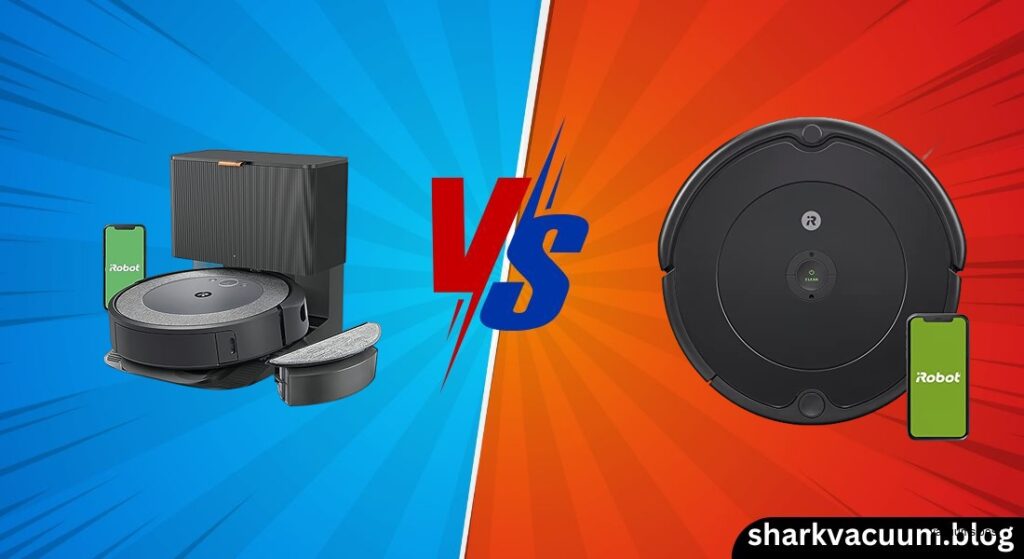
The robotic vacuum market is more crowded than ever, but iRobot remains a dominant force thanks to its reputation for reliability and innovation. Two of its most discussed models—the Roomba i5 and the Roomba 694—often find themselves compared, especially by budget-conscious shoppers trying to decide how much smart technology is worth. While both are circular, charcoal-gray robots from the same brand, they serve very different needs and represent distinct generations of robotic cleaning.
The Roomba 694 is a modern take on iRobot’s classic “bump-and-go” philosophy. It’s an entry-level robot that prioritizes basic cleaning performance over advanced features. It zigs and zags across your floor, relying on physical contact with furniture and walls to navigate. It’s simple, affordable, and effective—especially for small spaces and hard floors. In contrast, the Roomba i5 steps into the era of smart home automation. It uses vSLAM (Visual Simultaneous Localization and Mapping) technology to learn your home’s layout, cleaning in straight, efficient lines and allowing you to command it to clean specific rooms via the iRobot HOME app.
Choosing between the Roomba i5 vs. 694 isn’t just about price—it’s about how you want your robot to behave. Do you want a no-frills cleaner that gets the job done, or a smarter assistant that learns your home and adapts to your schedule? In this detailed comparison, we’ll break down their navigation, cleaning ability, battery life, smart features, and long-term value to help you determine which robot truly fits your lifestyle and flooring needs.
2. Product Overviews
Roomba i5 (and i5+ / Combo i5)
The Roomba i5 is a mid-tier model designed to bring intelligent cleaning within reach of more households. Unlike older Roombas that clean randomly, the i5 uses vSLAM technology to create a digital map of your home. This means it doesn’t just bounce around—it plans its route, cleans in neat rows, and remembers where it’s been. That mapping capability enables one of its standout features: room-specific cleaning. You can tell your i5 to clean just the kitchen after dinner or the living room before guests arrive, all through the iRobot HOME app.
It’s equipped with a 4-Stage Cleaning System powered by iRobot’s Aero Force technology. The centerpiece is the dual multi-surface rubber brushes, which are engineered to resist tangling—making the i5 a top pick for homes with pets or long human hair. These rubber rollers flex to clean both hard floors and carpets, adjusting automatically when the robot detects a change in surface. The suction is optimized for agitation, not raw power, but real-world testing shows it still delivers excellent debris pickup.
The i5 comes in a few configurations. The base Roomba i5 includes Wi-Fi, app control, and smart mapping. The Roomba i5+ adds the Clean Base Automatic Dirt Disposal, which empties the robot’s bin into a sealed bag every time it docks—ideal for users who want minimal maintenance. Then there’s the Roomba Combo i5, which combines vacuuming and mopping. You swap the dustbin for a water tank and mop pad, turning it into a two-in-one cleaner. However, a key limitation is that using the mop bin disables the self-emptying function, so you can’t have both convenience features active at once.
Despite its smart features, the i5 has some notable gaps. It lacks No-Go Zones, meaning you can’t digitally block off areas like pet bowls or small rugs. It also doesn’t have advanced obstacle avoidance, so it can still get tangled in cords or push lightweight objects around. But for its price, it delivers a surprisingly capable blend of intelligence and cleaning power—especially for pet owners and mixed-floor homes.
Check the latest price of [Roomba i5] on Amazon [link]
Roomba 694
The Roomba 694 is the updated version of iRobot’s long-running 600 series, a line known for delivering solid performance at an accessible price. Think of it as the reliable workhorse of the Roomba lineup—no frills, no mapping, just consistent cleaning. It uses a “Bump and Continue” navigation system, moving in a randomized zigzag pattern, gently bumping into furniture and walls to change direction. While this method is less efficient than smart mapping, it’s proven effective over time, especially in smaller, open spaces.
One of the 694’s strengths is its 90-minute battery life, which is longer than the i5’s real-world runtime. This makes it well-suited for homes under 1,500 square feet, where it can often complete a full cleaning cycle without needing to recharge. However, it does not have Recharge and Resume, so if the battery dies mid-clean, the job stops—no automatic continuation later.
The 694 features a 3-Stage Cleaning System with bristle brush rollers and a side spinning brush. The bristles are effective at sweeping up dust and debris from hard floors and low-pile carpets, earning it a 97% overall cleaning efficiency in tests. It captures 100% of debris on hardwood, making it a strong performer on tile, vinyl, and laminate. But the bristle brushes are prone to hair tangles, requiring regular maintenance—especially in homes with pets or long-haired individuals.
Despite its simplicity, the 694 isn’t completely dumb. It has Wi-Fi connectivity, allowing you to schedule cleanings, start/stop runs remotely, and integrate with Alexa and Google Assistant for voice control. The iRobot HOME app provides basic monitoring, including battery status and cleaning history. However, there’s no map, no room selection, and no virtual barriers. What you get is a straightforward, reliable robot that does one thing well: vacuuming.
For users who want a “set it and forget it” experience without the learning curve of smart maps, the 694 is a compelling option—especially at its typically lower price point.
See current deals on [Roomba 694] here [link]
3. Comparison Criteria
To determine which robot is the better fit, we’ll evaluate the Roomba i5 vs. 694 across six key criteria:
- Navigation & Intelligence: How well do they understand and move through your home? Does one clean more efficiently or avoid obstacles better?
- Cleaning Performance: How effective are they on different floor types? How do they handle pet hair, debris, and edge cleaning?
- Battery & Runtime: How long do they run on a single charge? Can they resume cleaning if they run out of power?
- Smart Features & App Control: What level of customization and remote control do they offer? Can you schedule, target rooms, or use voice commands?
- Maintenance & Durability: How often do you need to empty the bin, clean the brushes, or replace parts? Is one easier to maintain?
- Value for Money: Considering price, features, and long-term ownership costs, which delivers the better return on investment?
By analyzing these factors side by side, we can cut through the marketing and see which robot truly excels in real-world use.
4. Head-to-Head Comparison
4.1 Navigation: Smart Mapping vs. Random Bumping
When it comes to navigation, the difference between the Roomba i5 and 694 couldn’t be starker.
The Roomba i5 uses vSLAM technology, which relies on a camera and sensors to track its movement and build a map of your home over time. After a few cleaning cycles, it learns the layout, allowing it to clean in straight, back-and-forth lines—like a lawnmower. This method is far more efficient than random navigation, minimizing overlap and missed spots. Once mapped, you can use the app to select specific rooms to clean, a huge advantage for targeted cleaning. The i5 can even remember multiple floor plans, useful for multi-level homes (though you need to move the dock manually between floors).
However, the i5’s navigation isn’t perfect. Because it uses visual tracking, it can struggle in low-light environments or very large, featureless rooms. It also relies on gentle bumping to detect obstacles, so it may still nudge furniture. Most notably, it lacks No-Go Zones, a feature you’d expect on a mapping robot. You can’t digitally block off areas like a pet’s feeding station or a delicate floor lamp, which is a significant omission.
In contrast, the Roomba 694 uses classic randomized “Bump and Continue” navigation. It moves in a zigzag pattern, changing direction only when it physically hits an obstacle. While this method is less efficient—often revisiting the same spot while missing others—it’s surprisingly thorough over a full 90-minute cycle. It doesn’t create a map, so it can’t learn your home or clean room-by-room. You can’t tell it to avoid or target specific areas via the app.
That said, the 694’s simplicity has its perks. It doesn’t need time to map your home, so it’s ready to clean right out of the box. It also doesn’t get confused by dynamic environments—moving furniture won’t throw it off because it wasn’t relying on a map to begin with.
🏆 Section Winner: Roomba i5
The ability to clean methodically and target specific rooms makes the i5 the clear winner, despite its lack of No-Go Zones.
4.2 Cleaning Performance & Brush Design
Both robots clean well, but their effectiveness depends heavily on your floor type and household.
The Roomba i5 shines with its dual multi-surface rubber brushes. These flexible rollers are designed to resist tangling, making them ideal for homes with pets or long hair. In real-world testing, they pull in pet hair without wrapping around the axle, drastically reducing maintenance. The brushes work well on both hard floors and carpets, and the robot automatically boosts suction when it detects carpet (a feature known as Carpet Boost). While its suction power (2.6 CFM) is below average, the mechanical agitation from the rubber brushes compensates, resulting in a high cleaning score of 90/100.
The Roomba 694, on the other hand, uses bristle brush rollers. These are effective at sweeping up dust, cereal, and kitty litter from hard floors—scoring 100% on hardwood in tests. It also performs well on low and high-pile carpets, achieving 94% and 97% efficiency respectively. However, the bristles are prone to hair tangles. Users with shedding pets or long-haired family members will need to clean the brush every two weeks to prevent clogs and motor strain.
For edge and corner cleaning, both robots use a spinning side brush to sweep debris inward. The i5 has a slight edge due to its more systematic navigation, allowing it to align better with walls and corners over time.
🏆 Section Winner: Roomba i5
Its tangle-free rubber brushes make it the superior choice for most homes, especially those with pets.
4.3 Battery Life and Runtime
On paper, the Roomba 694 wins with a 90-minute runtime compared to the i5’s 75–90-minute claim. However, real-world performance tells a different story.
The i5 typically delivers around 70 minutes of active cleaning per charge—shorter than the 694. But it has a crucial feature the 694 lacks: Recharge and Resume. If the i5 runs out of power mid-clean, it returns to the dock, recharges, and then resumes cleaning exactly where it left off. This makes it viable for larger homes (up to 2,000 sq. ft.), even if it takes multiple charge cycles to finish.
The 694, while offering longer single-session runtime, cannot resume cleaning. If it runs out of battery, the job stops. You’ll need to manually restart it later, which defeats the purpose of automation for larger spaces.
Additionally, the i5’s 2,200 mAh battery is smaller than average, contributing to its shorter runtime. The 694’s battery capacity is less clearly defined, but its 90-minute performance suggests it’s slightly more robust.
🏆 Section Winner: Roomba i5
Recharge and Resume is a game-changer, making the i5 more practical for full-home cleaning despite shorter initial runtime.
4.4 Smart Features and App Control
Smart features are where the gap between these two models becomes most obvious.
The Roomba i5 offers a full suite of smart capabilities through the iRobot HOME app. You get a visual map of your home, can schedule cleanings by room, and view cleaning history. You can set automations, like cleaning when you leave home (geofencing), and use Alexa or Google Assistant to say, “Vacuum the kitchen.” The app is intuitive, with status updates, maintenance alerts, and device diagnostics.
The Roomba 694 also has Wi-Fi and app control, but it’s far more limited. You can start/stop cleaning, set schedules, and check battery status, but there’s no map. You can’t target rooms or create cleaning zones. Voice commands are restricted to starting a general clean or sending the robot home.
While both support voice assistants, only the i5 allows for granular, room-level commands.
🏆 Section Winner: Roomba i5
The i5’s app is vastly more powerful, offering true smart home integration.
4.5 Maintenance and Bin Capacity
Maintenance frequency depends on your home, but the i5 is clearly designed for lower upkeep.
The Roomba i5 has a 400 ml dustbin, which is 33% larger than the 694’s 300 ml bin. This means less frequent emptying—especially important for pet owners. The rubber brushes are easy to wipe clean and rarely tangle. If you have the i5+ model, the Clean Base empties the bin automatically for up to 60 days, reducing hands-on maintenance to almost zero.
The 694’s smaller bin requires more frequent emptying, especially in high-traffic homes. Its bristle brushes need regular cleaning with a tool to remove wrapped hair—a task that can become tedious over time. There’s no self-emptying option, so you’ll be doing this manually every few days.
Both robots use replaceable filters (the i5’s is high-efficiency, trapping 99% of allergens), but the i5’s overall maintenance burden is significantly lower.
🏆 Section Winner: Roomba i5
Larger bin, tangle-free brushes, and optional auto-emptying make it the easier robot to live with.
4.6 Value for Money
Price is often the deciding factor, and here the Roomba 694 starts with an advantage.
The 694 is typically priced in the entry-level range ($200–$300), making it one of the most affordable iRobot models with Wi-Fi. It delivers solid performance for hard floors and light carpet cleaning, especially in small to medium homes. If you want basic automation without smart features, it’s hard to beat.
The Roomba i5 sits in the mid-range ($300–$400 for the base model, $500+ for the i5+). While more expensive, it offers smart mapping, room selection, and tangle-free cleaning—features that add long-term value. For pet owners or those with larger homes, the i5 pays for itself in reduced maintenance and better cleaning efficiency.
While the 694 is cheaper upfront, the i5 offers a higher return on investment for most users due to its advanced features and durability.
🏆 Section Winner: Roomba i5
Its smart features and lower maintenance make it the better long-term value.
5. Pros and Cons Table
| Feature | Roomba i5 (Series) | Roomba 694 |
|---|---|---|
| Navigation | vSLAM Smart Mapping (Logical rows) | Random “Bump and Go” |
| Room Selection | Yes (via App) | No |
| No-Go Zones | No (Major Limitation) | N/A (No mapping) |
| Brush Type | Dual Rubber (Tangle-free) | Bristle (Prone to tangles) |
| Runtime | ~70 mins (with Recharge & Resume) | ~90 mins (No Resume) |
| Bin Capacity | 400 ml | 300 ml |
| Self-Emptying | Optional (i5+ Model) | Not Available |
| Mopping | Available (Combo Model)* | Not Available |
| Best For | Pet owners, Mixed flooring, Larger homes | Small apartments, Hard floors, Budget buyers |
| Price Tier | Mid-Range ($$$) | Entry-Level ($) |
*Note: On Combo models, engaging mopping mode disables the self-emptying base.
6. Best Use Case Recommendation
Choose the Roomba i5 if:
- You have pets: The dual rubber brushes prevent hair tangles, saving you time and frustration.
- You have a larger or multi-room home: Smart mapping and Recharge & Resume ensure full coverage.
- You want targeted cleaning: Clean just the kitchen after dinner or the living room before guests arrive.
- You value low maintenance: Especially with the i5+, you can go weeks without emptying the bin.
Choose the Roomba 694 if:
- You’re on a tight budget: It delivers core iRobot reliability at a lower price.
- You live in a small apartment or studio: Random navigation works fine in compact spaces.
- You have mostly hard floors and no pets: The bristle brush excels on tile and wood when hair isn’t an issue.
- You prefer simplicity: You don’t need maps or app control—just press “Clean” and go.
7. Conclusion
The Roomba i5 vs. 694 debate ultimately comes down to automation intelligence and long-term convenience.
The Roomba 694 is a capable, no-nonsense cleaner that excels in small, simple environments. It’s a great entry point into robotic vacuums, especially for budget buyers or those in studios and apartments. But its random navigation and bristle brushes show their age in larger or pet-heavy homes.
The Roomba i5, despite its higher price, delivers real smart home value. Its vSLAM mapping, tangle-free rubber brushes, and Recharge and Resume feature make it a far more efficient and user-friendly robot. While the lack of No-Go Zones is a frustrating oversight, the overall package—especially for pet owners and mixed-floor homes—justifies the investment.
Final Verdict: For most users, the Roomba i5 is the better choice. It offers a smarter, more convenient cleaning experience that pays off over time. However, if your needs are simple and your budget is limited, the Roomba 694 remains a solid, reliable performer.
View [Roomba i5] on Amazon [link]
View [Roomba 694] on Amazon [link]