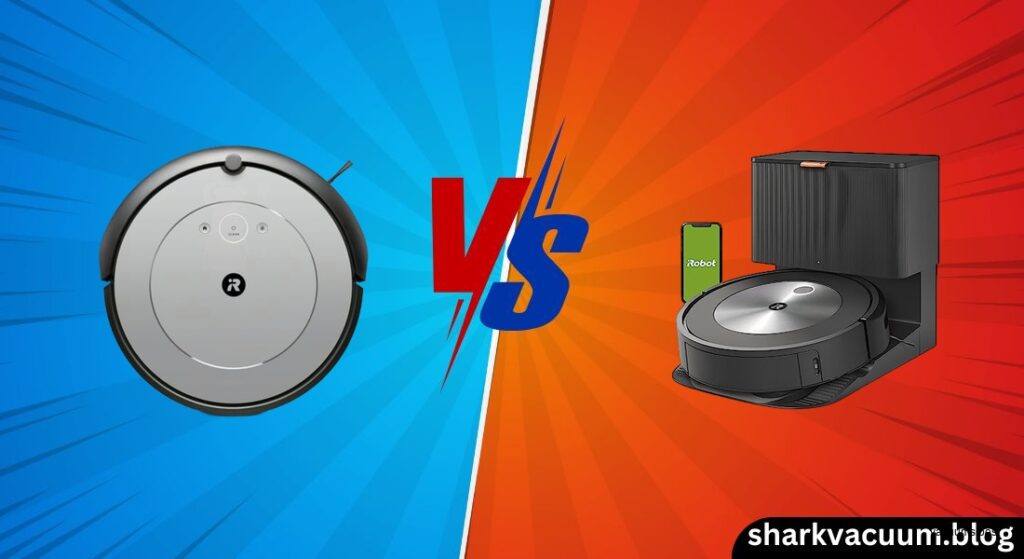
The robotic vacuum market is packed with options, but few brands command the same level of trust and recognition as iRobot’s Roomba lineup. For homeowners looking to automate their cleaning routine—especially those with pets or busy lifestyles—two models consistently rise to the top of the conversation: the Roomba i1 and the Roomba j7. While both belong to the same family, they represent very different philosophies in robotic cleaning: one prioritizes smart, efficient cleaning at a competitive price, while the other leans into cutting-edge intelligence to avoid real-world messes before they happen.
At first glance, the Roomba i1 and Roomba j7 may seem similar. Both use iRobot’s signature dual rubber brushes, connect to the iRobot HOME app, and offer self-emptying variants (i1+ and j7+). But when you dig deeper, the differences become clear—especially in how they navigate your home. The i1 series relies on gyroscopic sensors and Imprint Smart Mapping to learn your floor plan over time, cleaning in straight lines with impressive consistency. It’s a no-frills performer that excels at handling pet hair and daily debris. In contrast, the j7 series is packed with visual intelligence. Its front-facing camera and AI-driven PrecisionVision Navigation allow it to see and avoid obstacles like cords, shoes, and, most famously, pet waste—backed by iRobot’s P.O.O.P. guarantee.
So which robot vacuum is right for your home? If you’re deciding between the Roomba i1 vs. j7, the choice ultimately comes down to your priorities: Do you want a reliable, budget-friendly robot that cleans well and maps your home intelligently? Or are you willing to pay more for a smarter machine that can dodge clutter and accidents, reducing the need to “robot-proof” your floors before every run? In this in-depth comparison, we’ll break down every key aspect—from navigation and cleaning performance to battery life, smart features, and long-term value—to help you make a confident, informed decision.
2. Product Overviews
2.1 iRobot Roomba i1 / i1+
The Roomba i1 series is iRobot’s smart, mid-range workhorse—designed for users who want advanced navigation without the premium price tag. It strikes a balance between performance and affordability, making it one of the most popular entry points into the world of mapped robotic vacuums. The lineup includes two variants: the Roomba i1 (Model i115220), which requires manual emptying, and the Roomba i1+ (Model i1552), which includes the Clean Base® for automatic dirt disposal. Both share the same core navigation and cleaning technology, differing only in their emptying capabilities.
One of the standout features of the i1 is its Imprint Smart Mapping, which allows the robot to learn your home’s layout over multiple cleaning cycles. Once mapped, you can assign specific rooms for cleaning, set schedules, and even tell the robot to avoid certain areas—though not with the same precision as higher-end models. The robot cleans in systematic, straight rows, ensuring full coverage without redundant passes. It’s particularly effective in homes with open floor plans and minimal clutter.
Under the hood, the i1 uses a 3-Stage Cleaning System featuring Dual Multi-Surface Rubber Rollers—iRobot’s patented tangle-free brush design. These rollers flex to adjust to different floor types, making them highly effective on both hard floors and low-pile carpets. They’re especially praised by pet owners for their ability to pick up hair without constant clogging. The suction power is marketed as “10x Power-Lifting Suction,” with one source citing up to 2000 Pa, which is more than sufficient for everyday dust, dirt, and debris.
Battery life is rated at approximately 75 minutes, with real-world usage often falling between 60 and 75 minutes of active cleaning. When the battery runs low, the i1 automatically returns to its dock, recharges, and resumes cleaning where it left off—a feature known as Recharge & Resume. This makes it well-suited for homes up to 2,000 square feet, though larger spaces may require multiple charge cycles to complete a full clean.
Maintenance is straightforward. The rubber brushes are easy to remove and clean, and most users report they remain effective for years without replacement. The i1+ model’s Clean Base is compact and relatively quiet during the emptying cycle, a subtle but appreciated advantage over noisier competitors. However, it does require proprietary 60-day disposable bags, which add a recurring cost to ownership.
While the i1 lacks mopping capabilities and advanced obstacle recognition, it delivers consistent, reliable performance at a price point that’s hard to beat—often found around $180 for the i1 and $350 for the i1+. For users who prioritize value, pet hair handling, and smart mapping without the frills, the Roomba i1 series is a compelling choice.
Check the latest price of Roomba i1 on Amazon [link]
See current deals on Roomba i1+ here [link]
2.2 iRobot Roomba j7 / j7+
The Roomba j7 series represents the cutting edge of iRobot’s smart navigation technology—specifically engineered for homes with pets, kids, and clutter. Unlike the i1, which learns over time, the j7 uses PrecisionVision Navigation (also called Visual Navigation 2.0) to see and avoid obstacles in real time. This system combines a forward-facing camera with AI and Visual SLAM (Simultaneous Localization and Mapping) to identify and navigate around common household hazards like cords, shoes, socks, pet toys, and, most notably, pet waste.
The j7’s standout feature is iRobot’s P.O.O.P. (Pet Owner Official Promise) Guarantee, which promises the robot will avoid solid pet feces or you can get a refund. This isn’t marketing hype—it’s backed by real-world testing and user reports showing the j7 successfully identifying and steering clear of accidents, a game-changer for dog owners. The robot learns from each run: after cleaning, the app displays photos of detected obstacles, allowing you to label them as “Keep Out Zones,” “Temporary Obstacles,” or “Safe to Pass.” Over time, it builds a smarter, more personalized map of your home.
Like the i1, the j7 comes in two variants: the j7 (Model 7150), which requires manual emptying, and the j7+, which includes the Clean Base® Automatic Dirt Disposal. The self-emptying base holds up to 60 days of dirt in a sealed AllergenLock bag, making it ideal for allergy sufferers and those who want truly hands-free maintenance. However, the emptying process is notably loud—much louder than the vacuum itself—so it’s best scheduled during daytime hours.
The j7 uses the same Dual Multi-Surface Rubber Brushes as the i1, ensuring excellent pet hair pickup and resistance to tangles. However, despite its intelligent navigation, some users report that long human hair still wraps around the brush axles, requiring regular cleaning. Suction power isn’t the highest on paper—official specs list it as “unknown,” and some tests indicate lower airflow than competitors—but the Dirt Detect™ technology compensates by identifying high-traffic areas and making extra passes to deep clean them.
Battery life is officially rated at 90 minutes, though real-world usage hovers around 75 minutes, similar to the i1. It also features Recharge & Resume, allowing it to complete large cleaning jobs over multiple charge cycles. The robot operates at just 61 decibels, making it one of the quieter models on the market—perfect for daytime cleaning or work-from-home environments.
In terms of smart features, the j7 shines. The iRobot HOME app (Genius 3.0) allows for granular control, including Keep Out Zones, Clean Zones (for extra passes in messy areas), and room-specific cleaning. It integrates with Alexa, Google Assistant, and Siri via Matter, and can even trigger cleaning based on your phone’s location. While the standard j7 and j7+ are vacuum-only, iRobot also offers Combo j7 models that add intelligent mopping, though those are outside the scope of this comparison.
Priced significantly higher—typically $400–$500 for the j7 and $600–$800 for the j7+—the j7 is a premium investment. But for pet owners and those with cluttered homes, its ability to avoid disasters and adapt to your environment makes it one of the most intelligent and hassle-free robot vacuums available.
View Roomba j7 on Amazon [link]
Check the latest price of Roomba j7+ on Amazon [link]
3. Comparison Criteria
To help you determine which robot vacuum better suits your needs, we’ll compare the Roomba i1 and Roomba j7 across six critical dimensions:
- Navigation & Intelligence: How do they map your home and avoid obstacles? Does one rely on learning over time, while the other sees in real time?
- Cleaning Performance: How well do they handle pet hair, debris, and different floor types? Does suction power or brush agitation matter more?
- Battery Life & Autonomy: How long do they run on a charge? Can they handle large homes without user intervention?
- Maintenance & Durability: How easy are they to clean and maintain? What’s the long-term cost of ownership, especially with self-emptying models?
- Smart Features & App: How intuitive is the app? Can you set no-go zones, schedule cleanings, or use voice commands?
- Value for Money: Does the higher price of the j7 justify its advanced features, or does the i1 offer better bang for your buck?
Each of these factors plays a crucial role in your day-to-day experience. A robot that gets stuck on cords or spreads pet waste defeats the purpose of automation. Conversely, paying for features you don’t need—like advanced obstacle avoidance in a tidy home—might not make financial sense. By evaluating both models side by side, we’ll highlight where each excels and where they fall short, helping you make a decision that aligns with your lifestyle, home environment, and budget.
4. Head-to-Head Comparison
4.1 Navigation and Obstacle Avoidance
When it comes to getting around your home, the Roomba i1 and Roomba j7 take very different approaches.
The Roomba i1 relies on Imprint Smart Mapping, a system that uses gyroscopic sensors and wheel odometry to learn your home’s layout over time. It doesn’t “see” obstacles—it bumps into them, then adjusts its path. After several cleaning runs, it builds a map that allows for room-by-room cleaning and scheduling. While it navigates efficiently in straight rows and handles open spaces well, it lacks real-time object recognition. This means it can get stuck on cords, shoelaces, or small toys, and may push lightweight objects around rather than avoiding them. In one test, the i1 navigated under couches and between chair legs successfully, but rare instances of getting stuck were noted—especially in cluttered areas.
In contrast, the Roomba j7 uses PrecisionVision Navigation, a camera-based system that actively identifies and avoids obstacles. The front-facing camera captures real-time images, which are processed by AI to recognize over 80 common household items—including pet waste, cords, shoes, socks, backpacks, and pet bowls. This isn’t just theory: the j7 is backed by iRobot’s P.O.O.P. Guarantee, which promises it will avoid solid pet feces or you get a refund. In practice, users consistently report that the j7 steers clear of accidents, cords, and clutter, drastically reducing the need to “robot-proof” your home before every run.
The j7 also learns from each cleaning cycle. The iRobot HOME app shows you photos of detected obstacles after each run, allowing you to label them as “Keep Out Zones” or “Safe to Pass.” Over time, it builds a smarter, more personalized map. You can even draw dynamic Keep Out Zones or Clean Zones (areas that get extra passes) directly on the app map.
While the i1’s navigation is reliable and systematic, the j7’s ability to see and understand its environment gives it a massive advantage in real-world homes. If you have pets, kids, or a tendency to leave things on the floor, the j7’s obstacle avoidance is transformative.
Pro Tip: The j7 requires ambient light to see clearly. iRobot recommends keeping lights on during cleaning runs for optimal camera performance.
🏆 Section Winner: Roomba j7
The j7’s camera-based obstacle avoidance is a game-changer, especially for pet owners and cluttered homes.
4.2 Cleaning Performance
Both the Roomba i1 and Roomba j7 use the same Dual Multi-Surface Rubber Brushes, which are excellent at picking up pet hair and preventing tangles. These rollers flex to adjust to different floor types, making them highly effective on both hard floors and low-pile carpets. In direct comparisons, their performance on pet hair is virtually identical—a major selling point for pet owners.
However, there are subtle differences in how they clean.
The i1 is marketed with “10x Power-Lifting Suction,” and one source cites up to 2000 Pa, which is strong for a mid-range robot. It uses a 3-Stage Cleaning System (sweep, lift, suction) to tackle embedded dirt on carpets and hard floors. In real-world testing, it excels at daily maintenance, picking up dust, crumbs, and hair with consistency. Its straight-line navigation ensures no spots are missed.
The j7, while using the same brush system, has slightly lower raw suction power—official specs don’t list a number, and some tests indicate weaker airflow than competitors. However, it compensates with Dirt Detect™ Technology, which uses sensors to identify high-traffic, high-debris areas and automatically makes extra passes. In carpet deep-cleaning tests involving embedded sand, the j7+ scored 91 out of 100, second only to the s9+ and well above average.
On hard floors, both models perform excellently, picking up everything from cereal and coffee grounds to kitty litter. The j7’s systematic edge-first cleaning pattern ensures thorough coverage.
One minor downside: despite the “tangle-free” claim, both models can still get hair wrapped around the brush axles, especially with long human hair. The j7 may require slightly more frequent axle cleaning because it navigates tighter, messier spaces.
🏆 Section Winner: Roomba j7 (Slight Edge)
While both clean pet hair equally well, the j7’s Dirt Detect and smarter pathing give it a slight edge in overall debris management.
4.3 Battery Life and Large Home Performance
Battery life is critical for large homes, and both the i1 and j7 share similar limitations.
The Roomba i1 is rated for approximately 75 minutes of runtime, with one source claiming up to 120 minutes—though real-world tests show closer to 60–75 minutes of active cleaning. In a 799 sq ft test home, it took about 3 hours 24 minutes to complete a full clean, broken into two cycles: one cleaning phase, a recharge, then a second cleaning phase to finish.
The Roomba j7 is officially rated for 90 minutes, but user reports and testing show real-world performance around 75 minutes, nearly identical to the i1. It also uses the Recharge & Resume feature, meaning it can return to the dock, charge, and continue cleaning from where it left off.
Both robots handle multi-room homes effectively, but neither is ideal for massive spaces (e.g., 3,000+ sq ft) if you want a single-charge completion. For homes under 2,000 sq ft, both can manage, though larger homes will require multiple charge cycles.
Good to Know: The Recharge & Resume feature reduces battery stress by preventing deep discharges, potentially extending long-term battery health.
🏆 Section Winner: Tie
Both models offer similar battery life and rely on the same resume functionality. Neither has a clear advantage.
4.4 Maintenance and Self-Emptying
Maintenance is a key factor in long-term satisfaction, and both robots are relatively low-maintenance—especially the self-emptying models.
The standard i1 and j7 require manual bin emptying after every run. The bins are similar in size (~250–400 ml effective capacity), and emptying is quick and mess-free.
The i1+ and j7+ models include the Clean Base®, which automatically empties the robot’s bin into a sealed, disposable bag that holds up to 60 days of dirt. This is a major convenience for busy households and allergy sufferers.
However, there’s a notable difference: the j7+ Clean Base is significantly louder during the emptying cycle—so loud that many users avoid scheduling it at night or during work calls. The i1+ base, in contrast, is more compact and quieter, making it less intrusive.
Both require proprietary disposable bags (sold in 3-packs for $19.99), adding a recurring cost. Filters should be replaced every 6–12 months, and brushes cleaned monthly.
Despite the “tangle-free” design, both models require regular brush maintenance, especially in homes with long hair. The j7 may need slightly more frequent axle cleaning due to its tendency to navigate tighter, messier areas.
🏆 Section Winner: i1+ (for quieter operation)
Functionally identical, but the i1+’s quieter self-emptying base gives it the edge for noise-sensitive environments.
4.5 Smart Features and App Integration
Both robots use the iRobot HOME app, but the j7 offers far more advanced smart features.
The i1 app allows for:
– Scheduling
– Room-specific cleaning (after mapping)
– Basic cleaning history
The j7 includes all of the above, plus:
– Photo logs of obstacles detected during cleaning
– Keep Out Zones (drawn on the map)
– Clean Zones (extra passes in high-traffic areas)
– Dynamic labeling of obstacles (permanent vs. temporary)
– iRobot Genius suggestions (e.g., clean after a party or rain)
– Geofencing (start cleaning when you leave)
The j7 also supports Matter, allowing deeper integration with Alexa, Google Assistant, and Apple Home. You can say, “Alexa, clean under the dining table twice,” and it will execute the command.
🏆 Section Winner: Roomba j7
The j7’s app offers granular control and AI-driven insights the i1 can’t match.
4.6 Price and Value
Price is where the biggest difference lies.
- Roomba i1: ~$180 (often on sale)
- Roomba i1+: ~$350
- Roomba j7: $400–$500
- Roomba j7+: $600–$800
The i1 offers excellent value for users who want smart mapping and pet hair performance without the premium price. The i1+ brings self-emptying to a mid-range price point, making it a strong contender.
The j7, while expensive, justifies its cost with unmatched obstacle avoidance and smart app features. For pet owners or those with cluttered homes, the convenience and peace of mind are worth the investment.
🏆 Section Winner: Roomba i1 (Value), Roomba j7 (Features)
The i1 wins on price, but the j7 wins on advanced capabilities.
5. Pros and Cons Table
| Feature | Roomba i1 / i1+ | Roomba j7 / j7+ |
|---|---|---|
| Navigation | Gyroscopic (Smart Mapping) | PrecisionVision (Camera + AI) |
| Obstacle Avoidance | Basic (bumps and maneuvers) | Advanced (identifies & avoids cords, waste, toys) |
| Suction/Brushes | Dual Rubber Rollers (Excellent) | Dual Rubber Rollers + Dirt Detect (Excellent) |
| App Features | Room Select, Scheduling | Keep Out Zones, Clean Zones, Photo Logs, Genius suggestions |
| Self-Empty Option | Yes (i1+) | Yes (j7+) |
| Noise Level | Moderate | Quiet vacuum, Loud empty base |
| Best For | Open floor plans, budget-conscious | Cluttered homes, pet owners, tech enthusiasts |
| Price Range | $ | $$$ |
| Major Con | Can get stuck on cords; no object ID | Expensive; lower raw suction stats |
6. Best Use Case Recommendation
Choose the Roomba i1 / i1+ if:
- You have a moderate budget: You want smart mapping without the premium price tag.
- Your home is relatively tidy: You don’t have cords, toys, or clothes scattered on the floor daily.
- Pet hair is your main concern: The rubber brushes are just as effective on the i1 as on the j7.
- You prefer a quieter self-empty base: The i1+ base is generally less intrusive than the j7+.
Choose the Roomba j7 / j7+ if:
- You have pets (especially dogs): The P.O.O.P. guarantee and ability to avoid accidents are game-changers.
- Your home has clutter: If you frequently leave shoes, cords, or backpacks on the floor, the j7’s camera will prevent it from getting stuck or spreading messes.
- You want maximum app control: You need specific “no-go” zones or want to target high-traffic “clean zones.”
- You have dark furniture/rugs: The visual navigation handles contrast changes better than gyroscopic sensors alone.
7. Conclusion
The battle between the Roomba i1 and the Roomba j7 comes down to a choice between efficiency and intelligence.
The Roomba i1 is a fantastic, no-nonsense vacuum. It cleans in straight lines, handles pet hair beautifully, and offers the convenience of smart mapping at a price point that is hard to beat. For users with open layouts and minimal floor clutter, it is the logical financial choice.
However, the Roomba j7 justifies its higher price tag with its PrecisionVision Navigation. In real-world scenarios involving pets, children, or general household clutter, the j7’s ability to see and avoid obstacles transforms it from a simple cleaner into a truly autonomous appliance. It eliminates the need to “robot-proof” your home before every run.
Final Verdict:
* Best Overall Value: Roomba i1+ (for the balance of price and self-emptying convenience).
* Best for Pet Owners & Cluttered Homes: Roomba j7+ (the obstacle avoidance is indispensable).
If your budget allows, the j7 series provides a more future-proof and hassle-free experience. If you are price-sensitive and keep your floors relatively clear, the i1 series will serve you faithfully for years.