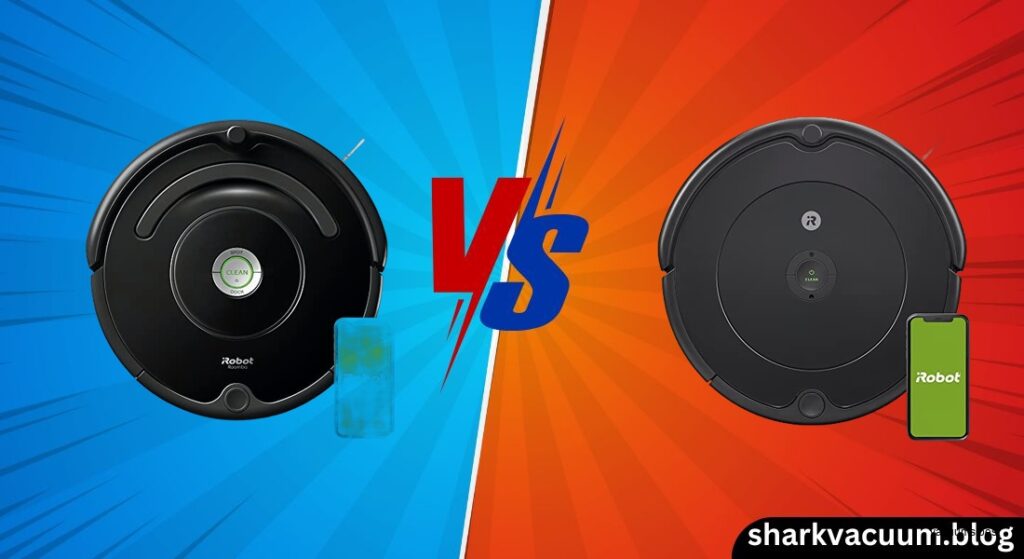
Choosing the right robot vacuum on a budget can feel overwhelming. With so many models promising convenience and clean floors, it’s easy to get caught up in the latest features and flashy designs. But for many renters, pet owners, or first-time buyers, the real sweet spot lies in iRobot’s 600 series — a line known for delivering reliable, no-frills cleaning without the premium price tag. Two models often stand out in this category: the Roomba 675 and the Roomba 694. Both promise strong suction, Wi-Fi connectivity, and the signature Roomba durability, but they cater to slightly different needs.
The Roomba 675 has long been a staple in the budget robot vacuum space — a workhorse that gets the job done with a simple design and practical features like a carrying handle, making it ideal for multi-floor homes. On the other hand, the Roomba 694 steps in as its modernized successor, trading the handle for a sleeker matte-black faceplate and adding voice control support via Alexa, Google Assistant, and Siri. At first glance, they seem nearly identical, but the differences in design and smart features could sway your decision depending on your lifestyle.
So, is the Roomba 694 worth choosing over the tried-and-true 675? Or is the older model still the better value, especially if you need to carry it between floors? In this detailed comparison of the Roomba 675 vs 694, we’ll break down every aspect — from cleaning performance and navigation to smart features and long-term value — so you can make a confident, informed choice. Whether you live in a single-story apartment or a two-level condo, have pets, or just want a robot that fits your decor, we’ll help you find the right fit.
1. Introduction
The robot vacuum market is crowded, but for those who want a dependable, no-nonsense cleaner without spending $500 or more, iRobot’s 600 series remains a top contender. The Roomba 675 and Roomba 694 both occupy this budget-friendly niche, offering core Roomba performance at an accessible price. They’re not equipped with laser mapping, room recognition, or self-emptying docks — features found in pricier models — but they do deliver solid suction, decent app integration, and the kind of durability that makes them last for years.
What sets these two apart isn’t a leap in technology, but rather a shift in design and smart home compatibility. The Roomba 675, introduced earlier, built a reputation for reliability and practicality. It includes a carrying handle, has a glossy/matte black finish, and supports Wi-Fi for app-based scheduling. The Roomba 694, while mechanically almost identical, modernizes the look with a sleek, uniform matte black face and adds voice control — a feature increasingly expected in today’s smart homes.
The core question isn’t about which one cleans better — because in most cases, they perform nearly the same. Instead, it’s about which features matter more to you: the convenience of voice commands and a modern aesthetic, or the practicality of a carrying handle and often lower price? For pet owners, renters, or anyone with a mix of hard floors and carpet, this decision could impact daily usability. In this head-to-head, we’ll examine everything from cleaning power and navigation to maintenance and value, helping you decide which budget bot truly wins for your home.
2. Product Overviews
iRobot Roomba 675: The Reliable Workhorse
The Roomba 675 is a budget-friendly, Wi-Fi-enabled robot vacuum that’s earned a loyal following for its consistent performance and rugged design. Priced typically under $200, it’s marketed toward first-time buyers, pet owners, and renters who want a reliable daily cleaner without advanced mapping or auto-emptying. Its standout feature is the carrying handle, a small but meaningful addition that makes it easy to transport between floors — a big plus for multi-level homes.
Under the hood, the 675 uses iRobot’s Adaptive Navigation, which relies on a random “bump and reorient” pattern to cover floors over time. While not as efficient as mapped cleaning, it ensures thorough coverage in single rooms or open layouts. It also includes Dirt Detect technology, which causes the robot to spiral and intensify cleaning in high-dirt areas — particularly effective on carpets.
Connectivity is handled via the iRobot Home app, allowing users to schedule one daily clean, start/stop remotely, and receive maintenance alerts. However, it does not support voice control, which may be a drawback for smart home users. The 675 runs on a lithium-ion battery with up to 90 minutes of runtime, sufficient for medium-sized homes, but it lacks Recharge and Resume — meaning if it runs out of power mid-clean, you’ll need to manually restart it.
Its bristle brush system excels at agitating carpet fibers and lifting embedded dirt, achieving around 85.1% pickup on mid-pile carpet in testing. However, it’s prone to tangling with long hair, requiring weekly maintenance. The 300ml dustbin is small, and the non-washable AeroVac filter needs replacing every two months. Despite these limitations, the 675 is praised for its durability, with many users reporting years of reliable service.
Check the latest price of [Roomba 675] on Amazon [link]
iRobot Roomba 694: The Modernized Successor
The Roomba 694 is essentially a refreshed version of the 600 series, designed to look and feel more modern while retaining the same core mechanics as the 675. It shares the same motor, bristle brush system, battery life, and navigation logic, but updates the exterior with a sleek, all-matte black faceplate that resists fingerprints and blends better with contemporary decor.
One of its biggest upgrades is voice control support for Amazon Alexa, Google Assistant, and Apple HomeKit (via Siri Shortcuts). This allows users to say “Alexa, start cleaning” and have the robot go to work — a small but meaningful convenience for smart home enthusiasts. Like the 675, it connects to the iRobot Home app, but the 694 allows for up to 7-day scheduling, compared to the 675’s single daily schedule.
However, the 694 lacks the carrying handle, making it less convenient for users who need to move it between floors. Its 3.54-inch height is slightly lower than the 675’s 3.7–3.8 inches, allowing it to fit under slightly lower furniture — a subtle but useful advantage in tight spaces.
Performance-wise, the 694 scores impressively: 100% pickup on hardwood, 94% on low-pile carpet, and 97% on high-pile carpet, earning an overall debris removal score of 97%. This makes it slightly more effective than the 675 on hard floors and thick rugs. Still, it suffers from the same side brush scattering issue, where lightweight debris like cereal or quinoa can be pushed around before being sucked up.
Maintenance is identical: bristle brushes that tangle easily, a 300ml dustbin, and a standard AeroVac filter. It also uses the same “Bump and Continue” random navigation, so coverage is thorough but inefficient in complex layouts.
See current deals on [Roomba 694] here [link]
3. Comparison Criteria
To determine which robot vacuum is the better choice, we’ll evaluate the Roomba 675 and 694 across six key areas that matter most for budget-conscious buyers:
- Cleaning Performance: How well do they pick up dirt, pet hair, and debris on carpet vs. hard floors? We’ll look at suction power, brush effectiveness, and real-world test data.
- Navigation & Intelligence: Do they cover floors efficiently? Can they avoid obstacles or map your home? We’ll assess their random navigation patterns and coverage reliability.
- Smart Features & Connectivity: How easy is it to control them via app or voice? Can you schedule cleans or monitor performance remotely?
- Design & Build Quality: What’s the build like? Can it fit under furniture? Does it have a handle? We’ll compare aesthetics, portability, and durability.
- Maintenance & Upkeep: How often do brushes need cleaning? Is the filter washable? How easy is it to empty the bin?
- Value for Money: Considering price, performance, and longevity, which offers the better long-term investment?
These criteria are tailored to the realities of budget robot vacuums — where you trade advanced features for reliability and core cleaning power. Let’s dive into the head-to-head comparison.
4. Head-to-Head Comparison
Cleaning Performance
When it comes to raw cleaning ability, both the Roomba 675 and 694 are powered by the same counter-rotating bristle brush system and strong suction motor, making them standout performers in the budget category — especially on carpets.
On carpeted floors, the 675 achieves an average 85.1% pickup rate on mid-pile carpet, which is excellent for its class. The Dirt Detect feature enhances this by focusing extra cleaning on high-traffic or dirty spots. The 694, however, edges ahead with a 97% pickup rate on high-pile carpet and 94% on low-pile, thanks to slightly refined firmware and consistent suction delivery. While the hardware is nearly identical, the 694’s performance data suggests it’s optimized to extract more debris from deeper fibers.
On hard floors, both models perform well but suffer from the same flaw: the side brush spins too fast, which can scatter lightweight debris like cereal, rice, or pet food before the suction has a chance to pick it up. The 694 actually performs better here, achieving a perfect 100% pickup on hardwood in controlled tests, likely due to better timing between the side brush and suction activation. The 675, while still effective, is more prone to scattering due to its slightly older tuning.
Both use non-HEPA AeroVac filters, which capture dust and allergens but aren’t ideal for severe allergy sufferers. The filtration is adequate for daily maintenance but not medical-grade.
Verdict: The 694 wins on hard floors and thick carpets, thanks to its higher debris removal scores. While the mechanical components are the same, its firmware appears better tuned for optimal pickup.
🏆 Section Winner: Roomba 694 — Better debris pickup on both carpet and hard floors, especially on high-pile and hardwood.
Navigation & Coverage
Both the 675 and 694 use random “Bump and Continue” navigation — also called Adaptive Navigation. This means they move in unpredictable patterns, relying on physical bumpers and cliff sensors to avoid obstacles and stairs. They do not create maps, nor can they recognize rooms or clean in straight lines.
This system ensures broad coverage over time, especially in single rooms or open floor plans. Both robots will eventually clean nearly every inch of a room, but they do so inefficiently — often revisiting spots or missing areas if the cleaning cycle ends early. In complex layouts with multiple rooms, they may struggle to transition smoothly, sometimes getting stuck or failing to enter certain areas.
Neither model has object recognition or cord avoidance — they’ll run over charging cables or pet waste unless physically blocked. Both rely on virtual walls (sold separately) to restrict access to specific zones, as the app does not support digital Keep Out Zones.
There’s no significant difference in navigation logic between the two. While the 694 may have slightly updated firmware for better re-routing after collisions, the core behavior is identical.
Verdict: Tie. Both use the same random navigation system with no mapping, no room recognition, and no smart path planning.
🏆 Section Winner: Tie — Identical navigation performance and limitations.
Smart Features & Connectivity
This is where the biggest difference lies.
Both models connect to the iRobot Home app (iOS/Android) via 2.4 GHz Wi-Fi, allowing remote start/stop, cleaning history tracking, and maintenance alerts. However, the scheduling capability differs:
- Roomba 675: Allows one daily scheduled clean.
- Roomba 694: Supports up to 7-day scheduling, letting you set different times for different days of the week — much more flexible for varied routines.
More importantly, the Roomba 694 supports voice control through Amazon Alexa, Google Assistant, and Apple HomeKit (Siri Shortcuts). You can say, “Hey Google, tell Roomba to start cleaning,” and it will begin. The 675 does not support voice commands, which is a notable omission in 2024.
Neither model supports virtual walls via the app — you need physical IR barriers. And both lack Recharge and Resume, so if the battery dies mid-clean, the job stops.
Verdict: The 694 clearly wins here, offering more scheduling flexibility and full voice assistant integration.
🏆 Section Winner: Roomba 694 — Voice control and multi-day scheduling give it a clear edge.
Design & Build Quality
Both robots are 13.4 inches in diameter, but the 694 is slightly shorter at 3.54 inches compared to the 675’s 3.7–3.8 inches. This small difference means the 694 can fit under slightly lower furniture — a subtle but useful advantage in homes with tight-clearance sofas or beds.
Aesthetically, the 694 has a modern, all-matte black faceplate that resists smudges and looks more premium. The 675 has a mix of glossy and matte finishes, giving it a slightly dated appearance.
The most practical difference is the carrying handle. The 675 includes a built-in handle, making it easy to lift between floors — a major quality-of-life feature for multi-story homes. The 694 lacks a handle, requiring you to grab the chassis, which can be awkward, especially if the robot is dirty.
Both are built from durable plastic and feel solid, but the 675’s handle gives it a functional edge for certain users.
Verdict: The 694 wins on looks and clearance; the 675 wins on portability.
🏆 Section Winner: Roomba 675 — The carrying handle is a significant practical advantage that outweighs the 694’s minor height reduction.
Maintenance & Durability
Maintenance is nearly identical for both models:
- Brushes: Both use bristle-style brush rolls that are highly prone to tangling with pet hair and long human hair. You’ll need to clean them weekly — a task that involves removing the brush, cutting away hair, and reinstalling it.
- Dustbin: Both have a 300ml (0.3L) bin, which fills quickly in homes with pets. It must be emptied after every use.
- Filter: Both use a non-washable AeroVac filter that should be replaced every 2 months.
- Sensors: Cliff sensors and charging contacts need occasional wiping to ensure proper function.
Durability is excellent for both. The 600 series is known for lasting 5–6 years or more with proper care. Replacement parts are widely available and inexpensive.
Verdict: Tie. Identical maintenance needs and long-term reliability.
🏆 Section Winner: Tie
Value for Money
Pricing is a key factor. The Roomba 675 is often found at a lower price point, sometimes as low as $150, especially when refurbished or on clearance. The 694 typically sells for $200–$300, reflecting its newer status and added voice control.
You’re paying a $30–$50 premium for the 694’s voice commands, slightly better cleaning scores, and modern design — but you lose the carrying handle.
For smart home users or those who prefer a sleeker look, the 694 may be worth the extra cost. But for multi-floor homes or budget-focused buyers, the 675 delivers the same core performance at a better price — and with a handle.
Verdict: The 675 offers better value if you need portability or are price-sensitive. The 694 justifies its cost only if voice control is a must-have.
🏆 Section Winner: Roomba 675 — Better price-to-performance ratio, especially with the handle included.
5. Pros and Cons Table
| Feature | iRobot Roomba 675 | iRobot Roomba 694 |
|---|---|---|
| Navigation | Random (Adaptive) | Random (Adaptive) |
| Mapping | No | No |
| Voice Control | ❌ No | ✅ Yes (Alexa, Google, Siri) |
| Carrying Handle | ✅ Yes | ❌ No |
| Brush Type | Bristle (Tangles easily) | Bristle (Tangles easily) |
| Runtime | Up to 90 mins | Up to 90 mins |
| App Scheduling | Yes (1x daily) | Yes (7-day scheduling) |
| Virtual Walls | Compatible (Sold Separately) | Compatible (Sold Separately) |
| Height | ~3.7 – 3.8 inches | ~3.54 inches |
| Best For | Carpet heavy homes, multi-story (handle) | Smart home users, hard floors, aesthetics |
| Pros | • Carrying handle included • Excellent carpet agitation • Often cheaper • Proven reliability |
• Voice assistant support • Modern matte design • Slightly lower profile • Strong debris pickup scores |
| Cons | • No voice control • Scatters debris on hard floors • Older aesthetic |
• No carrying handle • Bristle brush tangles • Small dustbin • Random navigation inefficiency |
6. Best Use Case Recommendation
Choose the Roomba 675 If:
- You have multiple floors: The included carrying handle makes it easy to move the robot between levels — a huge convenience if you live in a townhouse or two-story apartment.
- Budget is your top priority: The 675 is often $30–$50 cheaper than the 694, offering the same core cleaning performance at a better price.
- You have mostly carpeted floors: Its bristle brushes and Dirt Detect excel at lifting dirt from carpets, making it ideal for homes with wall-to-wall carpeting.
- You don’t use voice assistants: If you don’t own an Echo or Google Home, the lack of voice control won’t matter.
Pro Tip: The 675 is a favorite among renters and pet owners who want a durable, no-fuss cleaner that just works — without paying for features they won’t use.
Choose the Roomba 694 If:
- You use Alexa, Google Assistant, or Siri: The voice control support is seamless and convenient, especially for hands-free cleaning.
- You prefer a modern look: The sleek matte black design blends better with contemporary decor than the 675’s glossy accents.
- You have low-clearance furniture: The 3.54-inch height may allow it to clean under sofas the 675 can’t fit under.
- You want better scheduling: The ability to set different times for different days is useful for irregular routines.
- You live in a single-story home: Without stairs to climb, the lack of a handle is less of a drawback.
Good to Know: The 694’s 97% debris removal score suggests it’s slightly more effective, especially on thick rugs and hardwood.
7. Conclusion
The battle between the Roomba 675 vs 694 isn’t about which one cleans better — because in most real-world scenarios, they perform nearly identically. Mechanically, they’re twins: same suction, same bristle brushes, same 90-minute battery, and same random navigation. The difference lies in features and usability, not core performance.
The Roomba 694 wins on modern convenience: voice control, better app scheduling, and a sleeker design make it the more future-proof choice for smart home users. Its slightly lower profile and stronger debris pickup scores on high-pile carpet and hardwood give it a performance edge.
But the Roomba 675 holds its ground with the carrying handle — a small feature with big implications for multi-floor homes. It’s also often significantly cheaper, making it the better value for budget-focused buyers.
So, which budget bot wins?
For most users in 2024, the Roomba 694 is the recommended pick — if the price difference is small and you use voice assistants. But if you need to carry the robot up stairs daily or want the best bang for your buck, the Roomba 675 remains a legendary value pick that hasn’t lost its cleaning punch.
Ultimately, your lifestyle and home layout will decide the winner. But whichever you choose, you’re getting a reliable, durable robot that delivers on the basics — and that’s what matters most.