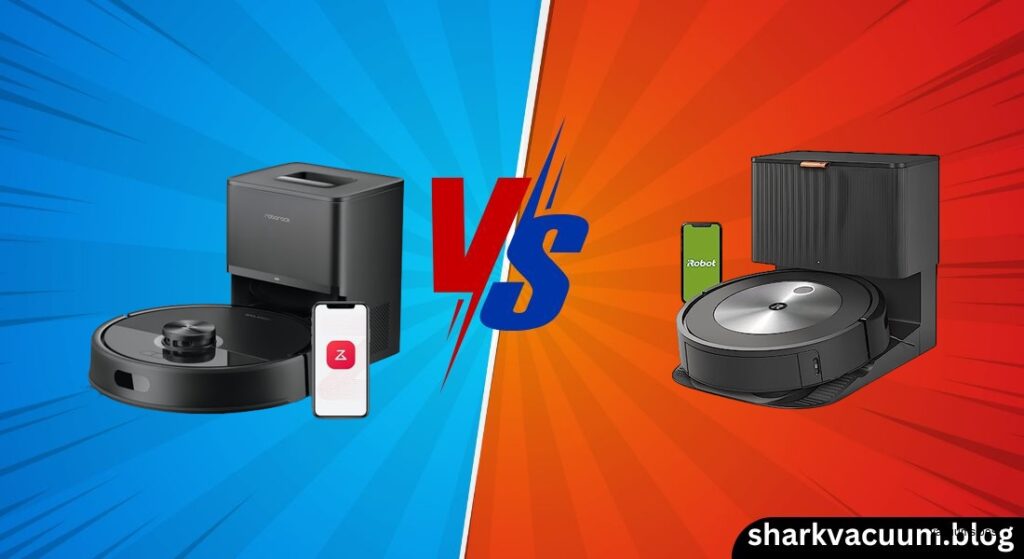
In the evolving world of robot vacuums, two models have emerged as standout contenders in the mid-to-premium range: the Roborock Q5 series and the iRobot Roomba j7. These robots represent opposing philosophies in smart cleaning—Roborock prioritizes powerful suction, LiDAR precision, and value, while iRobot doubles down on AI-driven obstacle avoidance and pet-centric safety. If you’re trying to decide between the Roborock Q5 vs. Roomba j7, the choice isn’t just about specs—it’s about your lifestyle, home environment, and what kind of cleaning autonomy you truly need.
For pet owners constantly battling hair, litter, and the dreaded “pet accident,” the Roomba j7’s Precision Vision Navigation and P.O.O.P. Guarantee offer unmatched peace of mind. But if you live in a large, open-concept home with hard floors and prioritize deep cleaning power and long battery life, the Roborock Q5 Pro—with its 5500 Pa suction and 240-minute runtime—delivers premium performance at a fraction of the price. Both robots offer app control, smart scheduling, and strong mapping, but their core strengths diverge in meaningful ways. This in-depth comparison will break down every aspect—from navigation and cleaning power to hair handling and long-term value—so you can confidently choose the robot that fits your floor, your budget, and your daily routine.
2. Product Overviews
Roborock Q5 Series (Focus: Q5 Max & Q5 Pro/DuoRoller+)
The Roborock Q5 series is a strategic lineup designed to bring high-end features to budget-conscious buyers. It includes several models, but the real contenders in this comparison are the Q5 Max and the Q5 Pro (also known as the DuoRoller+). At its core, the Q5 series leverages PreciSense® LiDAR navigation, which scans the room with a rotating laser to create fast, accurate, and highly reliable maps. This allows the robot to clean in straight, methodical lines and efficiently cover large areas without random bouncing.
The Q5 Max serves as the value champion, offering a significant upgrade over the base Q5 with increased airflow (16 CFM) and a larger dustbin, though it retains the single floating brush design and lacks mopping capabilities. It’s an excellent choice for homes that want strong LiDAR navigation and solid cleaning without the dual-roller system or mopping.
The Q5 Pro / DuoRoller+, however, is where the series truly shines. It features 5500 Pa of HyperForce® suction, a 770 ml dustbin, and the DuoRoller™ dual all-rubber brush system—a major leap in pet hair management. This model also includes a rear-mounted passive mopping system with manual water flow control, making it a true vacuum-mop hybrid. While the mopping is basic, it’s included at no extra cost, which is rare at this price point. The Q5 Pro can be purchased with the RockDock® Plus auto-empty station (as the Q5 Pro+) for hands-free emptying, though the dock uses a 2.5L bag and struggles with large cat litter chunks.
Despite its strengths, the Q5 Pro lacks AI-based obstacle avoidance. It relies on LiDAR and infrared sensors to navigate, which means it will bump into small obstacles like cords, shoes, or toys. It also can’t identify pet waste, making it a riskier choice in homes with unpredictable pets. Still, its multi-floor mapping support (up to 4 levels), 240-minute battery life, and criss-cross cleaning pattern make it a formidable performer in tidy, spacious environments.
Check the latest price of [Roborock Q5 Pro] on Amazon [link]
See current deals on [Roborock Q5 Max] here [link]
iRobot Roomba j7 Series (Focus: j7 & j7+)
The iRobot Roomba j7 series is engineered for real-world chaos. Unlike traditional robots that rely on bumping and basic sensors, the j7 uses Precision Vision Navigation, a front-facing camera powered by AI to identify and avoid over 80 common household objects—including pet waste, cords, socks, and shoes. This technology is the foundation of iRobot’s P.O.O.P. Guarantee (Pet Owner Official Promise), which promises to replace the robot if it fails to avoid solid pet waste. For pet owners, this isn’t just a feature—it’s a game-changer.
The Roomba j7 (7150) is the base model, featuring dual multi-surface rubber brushes, a 250 ml dustbin, and the full suite of smart navigation features. However, it requires manual emptying after each run, which can become tedious. The j7+ model includes the Clean Base Automatic Dirt Disposal, a self-emptying station that seals up to 60 days of dirt in a disposable bag. This transforms the j7 into a truly “set and forget” robot, ideal for busy households.
The Combo j7 and Combo j7+ variants add mopping functionality, using a vibrating mop pad that lifts on carpets (on newer firmware) or avoids them via No-Mop Zones. The mopping is effective for light maintenance but not for deep scrubbing. The robot’s dual rubber brushes are excellent at minimizing hair tangles, though long human hair can still wrap around the ends.
The j7’s V-SLAM mapping creates detailed floor plans, supports multiple levels, and allows for Keep Out Zones, Clean Zones, and room-specific cleaning. It also integrates with Amazon Alexa, Google Assistant, and Apple Siri Shortcuts, and supports “Clean When I Leave” geofencing. However, its 75–90 minute battery life limits coverage to homes under 1,500 sq ft without recharge-and-resume cycles. The self-emptying base is loud (~80 dB), making nighttime emptying disruptive.
View [Roomba j7+] on Amazon [link]
Check the latest price of [Roomba Combo j7] on Amazon [link]
3. Comparison Criteria
To fairly evaluate the Roborock Q5 vs. Roomba j7, we need to assess them across six key dimensions that reflect real-world usage:
- Navigation & Intelligence: How accurately do they map your home? Can they avoid obstacles without bumping? Do they offer smart features like geofencing or object recognition?
- Cleaning Performance: How well do they handle dust, debris, and pet hair on both hard floors and carpets? Does suction power translate to real cleaning results?
- Hair & Tangle Management: How effective are their brush systems at picking up and containing pet and human hair? Do they require frequent maintenance?
- Battery Life & Coverage: Can they clean large homes on a single charge? How long do they run, and how well do they resume after recharging?
- Maintenance & Usability: How often do you need to empty the bin? Is auto-emptying reliable? Are filters and brushes easy to clean and replace?
- Value for Money: Does the price reflect the features and performance? Are consumables affordable? Which robot offers the best long-term ownership experience?
These criteria go beyond raw specs to evaluate how each robot performs in daily life—especially in homes with pets, clutter, or mixed flooring. Let’s dive into the head-to-head comparison.
4. Head-to-Head Comparison
4.1 Navigation and Obstacle Avoidance
When it comes to navigation, the Roborock Q5 and Roomba j7 take fundamentally different approaches. The Q5 series uses PreciSense® LiDAR, a laser-based system that scans the room in 360 degrees to build a precise map in seconds. This method is fast, reliable, and unaffected by lighting conditions. The Q5 Pro’s Quick Mapping mode is 6x faster than standard cleaning modes, and it supports up to four floor levels without needing additional docks. However, LiDAR only detects shapes and distances—it can’t identify what an object is. As a result, the Q5 will bump into small obstacles like power cords, shoes, or toys before navigating around them. It has no awareness of pet waste, making it a potential risk in homes with pets.
In contrast, the Roomba j7 uses Precision Vision Navigation, combining a front-facing camera with AI-powered object recognition. It analyzes thousands of images per second to identify and avoid specific items. The j7 can recognize and steer around pet waste, cords, socks, slippers, and even live pets. When it detects an obstacle, it sends a photo to the iRobot app, allowing you to review and adjust cleaning behavior. This active avoidance is a massive advantage in cluttered homes. The j7 also offers Keep Out Zones and Clean Zones, giving you fine control over where it goes. However, the camera-based system can struggle in total darkness, though it uses LED lighting to compensate. Mapping is slightly slower than LiDAR, and the robot may take more time to plan paths around detected objects.
Verdict: The Roomba j7 wins for obstacle avoidance, especially in homes with pets or frequent floor clutter. Its AI recognition and P.O.O.P. Guarantee provide a level of autonomy the Q5 can’t match. The Roborock Q5 wins for mapping speed, multi-floor support, and reliability in low-light environments. 🏆 Section Winner: Roomba j7 – Its ability to actively avoid pet waste and cords is unmatched.
4.2 Cleaning Performance (Suction & Debris)
Suction power is where the Roborock Q5 Pro pulls far ahead on paper. With 5500 Pa of suction, it’s one of the most powerful robots in its price range. Independent tests confirm it excels at deep carpet cleaning, pulling fine dust from hardwood seams and extracting debris from medium-pile carpets. In controlled tests, it achieved a 98% clean score on laminate and 92% on medium-pile carpet. The DuoRoller™ dual rubber brushes agitate fibers effectively, and the criss-cross cleaning pattern ensures thorough coverage. However, the oversized dustbin and wide duct can slightly disrupt airflow, and it struggles with fine sand and narrow crevices due to brush design.
The Roomba j7 doesn’t publish a Pascal rating, and independent measurements suggest its suction is moderate compared to high-Pa competitors. However, it compensates with its dual multi-surface rubber brushes, which rotate in opposite directions to mechanically beat debris out of carpets. It performs exceptionally well on large debris like kitty litter, cereal, and coffee grounds. On medium-pile carpet, it scored 91/100 in deep clean tests—second only to the s9+ in some reviews. It also has strong edge cleaning, thanks to its side brush and systematic zigzag pattern. However, it may miss fine dust in deep carpet fibers compared to the Q5 Pro.
Verdict: The Roborock Q5 Pro wins for raw suction power and deep carpet extraction, making it ideal for homes with lots of embedded dirt. The Roomba j7 is more than capable for daily maintenance and excels with larger debris. 🏆 Section Winner: Roborock Q5 Pro – Higher suction and better carpet agitation give it the edge in deep cleaning.
4.3 Hair Management
Both robots are strong performers for pet owners, but they handle hair differently. The Roborock Q5 Max uses a single floating brush, which can still tangle with human hair—testing shows 70–90% of hair becomes wrapped around the roller, requiring regular cutting. However, the Q5 Pro’s DuoRoller™ system (dual all-rubber rollers) significantly reduces tangling. It picks up 100% of short pet hair and claims a 99% hair pick-up rate on carpets in Max+ mode. While not immune to long hair, it’s far better than bristle brushes.
The Roomba j7’s dual rubber brushes are legendary for minimizing hair wrap. They’re designed to resist tangling, and iRobot claims they’re the best in class for pet hair. Real-world testing confirms they handle short and medium pet hair exceptionally well, and human hair wrap is minimal compared to older models. However, very long human hair can still wrap around the brush ends, requiring monthly maintenance.
Verdict: The Roomba j7 has a slight edge in real-world anti-tangle performance, especially for long human hair. The Q5 Pro is a very close second and a massive improvement over the Q5 Max. 🏆 Section Winner: Roomba j7 – Its brush design is slightly more reliable for tangle-free operation.
4.4 Battery Life and Coverage
This is a clear win for the Roborock Q5. Equipped with a 5200 mAh battery, the Q5 Pro offers up to 240 minutes of runtime in Quiet mode, covering homes up to 3,700 sq ft on a single charge. Even on Max mode, it lasts well over two hours. This makes it ideal for large, open-concept homes where uninterrupted cleaning is essential.
The Roomba j7, in contrast, is rated for 90 minutes of runtime, with real-world use averaging 75 minutes. While sufficient for homes under 1,500 sq ft, larger homes will require the robot to return to the dock, recharge, and resume cleaning—which can double the total cleaning time. The recharge-and-resume feature works well, but it’s less efficient than a single, continuous clean.
Verdict: The Roborock Q5 is the undisputed winner for battery life and coverage. 🏆 Section Winner: Roborock Q5 – Its 240-minute runtime is unmatched in this class.
4.5 Maintenance and Dustbin Capacity
The Roborock Q5 Pro has a massive 770 ml dustbin, the largest in its class. This means you only need to empty it every 2–3 days in average households. When paired with the RockDock® Plus, it uses a 2.5L E12-rated bag that lasts up to 7 weeks. However, the auto-empty function struggles with cat litter, removing only 13% after multiple attempts.
The Roomba j7 has a much smaller 250 ml onboard bin, requiring daily emptying unless you have the j7+ with the Clean Base. The Clean Base bag holds 60 days of dirt and handles litter well. Filters need replacing every 6–12 months, and the system is designed for long-term, hands-free use.
Verdict: The Roborock Q5 wins for onboard capacity, while the Roomba j7+ wins for auto-empty reliability with pet waste and litter. 🏆 Section Winner: Tie – Q5 for capacity, j7+ for consumable performance.
4.6 Mopping Capabilities
Only the Roborock Q5 Pro includes mopping as standard, with a rear-mounted passive mop and manual water flow dial. It’s effective for light dust and spills but can puddle on the dock and leaves streaks on heavy messes. The Combo j7 offers vibrating mopping with auto-lift on carpets (on newer models), making it better for mixed flooring.
Verdict: The Roborock Q5 Pro offers better value, as mopping is included. But the Combo j7 is more advanced with smart mopping features. 🏆 Section Winner: Roborock Q5 Pro – Mopping is standard, not an upgrade.
5. Pros and Cons Table
| Feature | Roborock Q5 Series (Max/Pro) | iRobot Roomba j7 Series (j7/j7+) |
|---|---|---|
| Navigation | PreciSense LiDAR (Fast, Accurate) | Precision Vision Camera (AI Object Avoidance) |
| Suction Power | Up to 5500 Pa (Excellent) | Moderate (Relies on brush agitation) |
| Obstacle Avoidance | Basic (Bumper/Infrared); struggles with small items | Advanced (AI识别 cords, socks, pet waste) |
| Battery Life | Up to 240 mins (Huge homes) | ~75-90 mins (Medium homes) |
| Dustbin Capacity | 470ml – 770ml (Large) | 250ml (Small) |
| Hair Handling | Very Good (DuoRoller on Pro) | Excellent (Dual Rubber Brushes) |
| Mopping | Passive (Q5 Pro only) | Vibrating (Combo models only) |
| Smart Features | Multi-floor maps, No-go zones, App routines | P.O.O.P. guarantee, Photo logs, Geofencing |
| Price Point | Budget to Mid-Range ($300 – $500) | Premium ($600 – $900+) |
| Best For | Large homes, hard floors, value seekers | Pet owners, cluttered homes, tech enthusiasts |
6. Best Use Case Recommendation
Choose the Roborock Q5 (Max/Pro) if:
- You have a large home: Its 240-minute battery and efficient LiDAR mapping cover up to 3,700 sq ft effortlessly.
- Budget is a priority: You want premium features (LiDAR, high suction, app control) without the premium price tag.
- Your home is relatively tidy: You don’t have cables, toys, or socks scattered on the floor daily.
- You have mostly hard floors or low-pile carpet: The high suction and seam-cleaning capabilities shine here.
- You need multi-floor mapping: It handles up to 4 levels seamlessly without extra hardware.
Choose the iRobot Roomba j7 (or j7+) if:
- You have pets: The P.O.O.P. guarantee and superior hair handling make it the safest bet for pet owners.
- Your home is cluttered: If you frequently leave shoes, cords, or toys on the floor, the AI camera avoidance is a game-changer.
- You want “Set and Forget” intelligence: The ability to recognize specific objects and send you photos of obstacles provides peace of mind.
- You have a mix of carpets and hard floors: The dual rubber brushes transition well, and the auto-empty base (j7+) handles debris from both surfaces effectively.
- Privacy is a concern: iRobot’s local processing and clear data policies may appeal to cautious users (though the camera is always a consideration).
7. Conclusion
The battle between the Roborock Q5 and the Roomba j7 is a clash of philosophies: Power and Value vs. Intelligence and Safety.
If your primary concern is maximum cleaning power, large coverage, and cost-effectiveness, the Roborock Q5 Pro (with its DuoRoller brush) is the superior choice. It delivers flagship-level suction and mapping for a fraction of the price of premium competitors, making it the best value robot vacuum of 2025.
However, if your home is a minefield of pet hair, cables, and toys, the Roomba j7 justifies its higher price tag. Its ability to visually identify and avoid obstacles—backed by the industry-leading pet waste guarantee—offers a level of autonomy and reliability that LiDAR-only robots simply cannot match.
Final Verdict:
* Best Overall Value: Roborock Q5 Pro
* Best for Pet Owners & Clutter: iRobot Roomba j7+