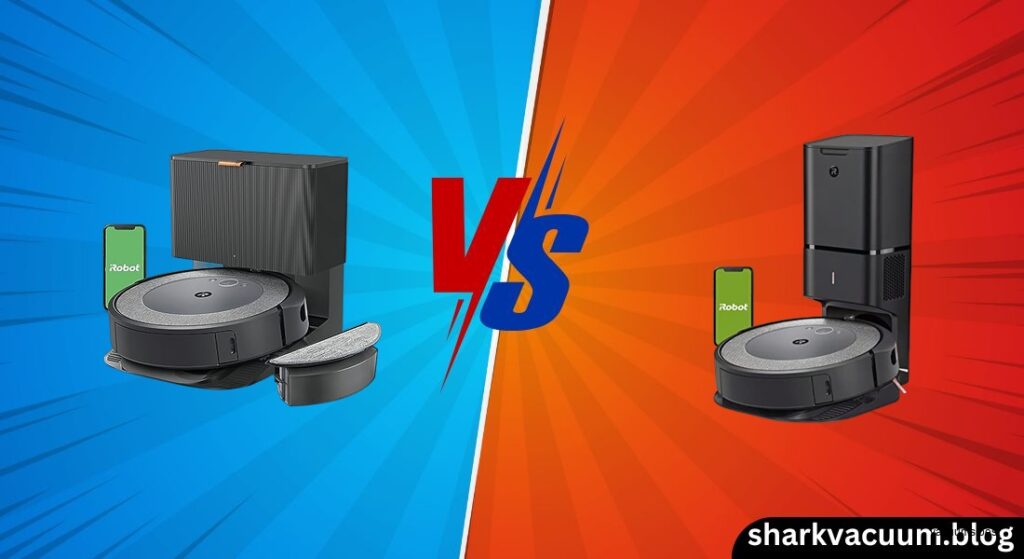
If you’re trying to decide between two iRobot Roomba models in the mid-tier range, the i5 vs i3 debate is one you’ve likely stumbled into — especially since both are frequently on sale and look similar at first glance. But beneath the surface, they solve very different household problems. The iRobot Roomba Combo i5 steps in as a hybrid vacuum-and-mop solution, ideal for homes with lots of hard flooring where daily mopping matters. Meanwhile, the Roomba i3+ (the plus matters) is a dedicated vacuum cleaner built around the game-changing Clean Base, which automatically empties the bin for up to 60 days. This makes it a favorite for pet owners and anyone who hates touching dirty dustbins. Both models rely on iRobot’s Smart Mapping to learn your home layout and clean in neat, methodical rows — but neither uses advanced camera-based obstacle avoidance or LiDAR, so don’t expect them to dodge shoes or cords like higher-end models. Still, they share the same excellent Dual Multi-Surface Rubber Brushes, which are tangle-free and great for pet hair. Your choice ultimately comes down to your floor type, your tolerance for manual chores, and whether you value mopping convenience or hands-free vacuuming more. Let’s break down exactly how these two stack up.
2. Product Overviews
iRobot Roomba Combo i5 (The Hybrid All-Rounder)
The iRobot Roomba Combo i5 is designed for users who want a single robot to handle both vacuuming and mopping — particularly in homes with a mix of carpets and hard floors like hardwood or tile. It’s not a true “automatic” mop-vac hybrid like some newer models; instead, it uses a manual bin-switching system. You start with the dry debris bin installed for vacuuming, and when you want to mop, you swap it out for the water tank and mop pad assembly. This allows the robot to vacuum first and then mop the same area — or operate in vacuum-only mode — without water leaking onto carpets. The device uses Smart Mapping to learn your home’s layout over a few cleaning cycles and lets you select specific rooms to clean via the iRobot Home app. It runs in neat, parallel rows for systematic coverage and supports voice commands through Alexa, Google Assistant, and Siri Shortcuts. While it’s a compelling all-in-one option, it lacks one major convenience feature: the Clean Base Automatic Dirt Disposal. Unless you find a rare bundle deal, the i5 does not come with self-emptying, meaning you’ll need to empty the dustbin after every run. This can be a dealbreaker for busy households, but for apartment dwellers or minimalist cleaners who want to avoid owning two robots, the i5’s hybrid functionality is a space-saving advantage.
Check the latest price of [Roomba Combo i5] on Amazon [link]
iRobot Roomba i3 / i3+ (The Automated Vacuum Specialist)
The iRobot Roomba i3+ is built for one thing: hands-free vacuuming. The standout feature is the Clean Base Automatic Dirt Disposal, which automatically empties the robot’s dustbin into an enclosed, allergen-sealing bag every time it docks. This means you can go up to 60 days without touching dirt — a huge win for pet owners, allergy sufferers, or anyone who finds emptying robot bins unpleasant. The i3+ uses the same Smart Mapping system as the i5, learning your home’s layout over 3–4 runs and cleaning in neat, back-and-forth rows. You can assign names to rooms and clean specific areas on demand through the iRobot Home app. It also includes Dirt Detect™ technology, which uses acoustic and optical sensors to identify high-traffic zones and clean them more thoroughly. Like the i5, it has Dual Multi-Surface Rubber Brushes that resist tangles and work well on both carpets and hard floors, plus a high-efficiency filter that captures 99% of allergens like pollen and pet dander. However, the i3+ does not mop — it’s a vacuum-only machine. Also, while it supports room selection, it cannot create software-based “No-Go Zones” in the app; you’ll need physical Virtual Wall barriers to block off areas. Despite its older navigation tech (relying on wheel odometry and bump sensors, not LiDAR), the i3+ delivers strong suction — 10X Power-Lifting Suction compared to the Roomba 600 series — making it especially effective on carpets.
See current deals on [Roomba i3+] here [link]
3. Comparison Criteria
To help you make a clear decision between the iRobot Roomba Combo i5 and the Roomba i3+, we’ll evaluate them across six critical categories: Cleaning Versatility, Convenience & Automation, Navigation & Mapping, Performance on Surfaces, Smart Home & App Control, and Value for Money. These factors cover everything from daily usability to long-term ownership costs. While both robots share core technologies like Smart Mapping and the same rubber brush system, their differences lie in functionality and user experience. The i5 offers mopping capability at the cost of manual bin handling, while the i3+ delivers true hands-free vacuuming but lacks any wet-cleaning function. Neither has advanced obstacle avoidance, so both will bump into furniture and may struggle in cluttered spaces. However, their app experiences, suction power, and ecosystem integration vary in ways that matter depending on your lifestyle. By comparing them head-to-head across these pillars, you’ll be able to pinpoint which robot aligns best with your home’s layout, flooring type, and cleaning priorities — whether you’re looking to reduce chore time or simply keep floors spotless with minimal effort.
4. Head-to-Head Comparison
A. Cleaning Versatility: Mopping vs. Dedicated Vacuuming
When it comes to cleaning versatility, the Roomba Combo i5 has a clear advantage: it can both vacuum and mop. This dual functionality makes it a strong contender for homes with large expanses of hardwood, tile, or laminate flooring where daily sweeping and occasional mopping are needed. The system works by using a switchable bin — you install the dry debris bin for vacuuming, and when you want to mop, you manually swap it out for the water tank and reusable mop pad. This allows the robot to vacuum first, then mop the same area, ensuring debris is removed before wet cleaning. The 4-Stage Cleaning System includes powerful suction and the tangle-free rubber brushes to handle dust, crumbs, and pet hair effectively on both carpets and hard floors. However, the need to manually switch bins means you can’t run vacuum-and-mop cycles automatically in one go — and there’s no automatic carpet detection to lift the mop, so you must ensure the robot doesn’t cross carpets while mopping, or you’ll leave them damp.
On the other hand, the Roomba i3+ is a vacuum-only machine. It doesn’t offer any mopping capability, which may be a downside for hard-floor-heavy homes. But this singular focus allows it to optimize performance: the entire bin space is dedicated to dry debris, and there’s no need to manage water tanks or mop pads. Its 10X Power-Lifting Suction is tuned for maximum dirt extraction, especially from carpets, and since it doesn’t carry mopping hardware, it can maintain consistent suction without design compromises. For users who already mop manually or own a separate robot mop like the Braava jet m6, the i3+’s lack of mopping isn’t a drawback — it’s a streamlined design choice.
Verdict: If you want a single robot to handle both dry and wet cleaning, the i5 wins. But if you prioritize consistent, no-fuss vacuuming — especially on carpets — the i3+’s dedicated design gives it the edge in pure cleaning efficiency.
🏆 Section Winner: i5 – for homes that need mopping; i3+ – for vacuum-only performance.
B. Convenience: The Self-Emptying Factor
Convenience is where the Roomba i3+ truly shines — and where the Roomba Combo i5 falls short. The i3+ includes the Clean Base Automatic Dirt Disposal, a game-changing feature that automatically empties the robot’s dustbin into a sealed, allergen-trapping bag every time it returns to the dock. This means you can run the robot daily for up to 60 days without ever touching the dirt. For pet owners, this is a massive quality-of-life improvement, as the robot can handle daily hair and dander buildup without requiring constant maintenance. The sealed AllergenLock™ bags also prevent dust clouds when the bag is full, making disposal cleaner and safer for allergy sufferers.
In contrast, the Roomba Combo i5 does not come with the Clean Base by default. Unless you purchase a rare bundle (which is hard to find), you’ll need to manually empty the dustbin after every cleaning cycle. This undermines one of the core promises of robot vacuums: automation. While the bin is easy to remove and clean, doing it daily can become a chore — especially if you have pets or long hair. Additionally, when switching between vacuuming and mopping modes, you must also swap the bins manually, adding another step to the process.
The Recharge and Resume feature is shared by both models: if the robot runs low on battery mid-clean, it returns to the dock, recharges, and then resumes where it left off. But only the i3+ offers true hands-free operation over weeks.
Verdict: The i3+ is the undisputed winner in convenience and long-term automation. The Clean Base transforms it from a helpful gadget into a genuinely set-and-forget appliance.
🏆 Section Winner: i3+ – The self-emptying base is a massive convenience upgrade that the i5 lacks.
C. Navigation and Mapping Intelligence
Both the Roomba Combo i5 and the Roomba i3+ use the same Smart Mapping technology, which relies on wheel-based odometry and bump sensors rather than LiDAR or camera-based vSLAM. This means they navigate by tracking wheel rotations and detecting obstacles through physical contact. As a result, both robots will gently bump into furniture and walls as they map your home. Neither model has camera-based obstacle avoidance, so they can’t recognize or avoid small objects like socks, cords, or pet toys — making them prone to getting stuck in cluttered environments.
Mapping performance is nearly identical between the two. Both require 3 to 4 full cleaning cycles to learn your home’s layout and stabilize the map. Once mapped, they clean in neat, parallel rows rather than random patterns, ensuring full coverage. You can name rooms in the iRobot Home app and select specific areas to clean — a feature both models support equally. However, neither robot supports software-defined “No-Go Zones”. If you want to keep the robot out of certain areas — like a cat’s feeding zone or a home office with loose cables — you’ll need to use physical Virtual Wall barriers (sold separately).
Both models operate in the dark since they don’t rely on visual navigation, but their drop sensors can sometimes misread dark rugs or black flooring as drop-offs, causing them to avoid those areas unnecessarily.
In short, navigation is a tie between the i5 and i3+. They perform the same, struggle with the same obstacles, and offer the same level of control. Neither is ideal for homes with heavy clutter, but both work well in open, tidy spaces.
🏆 Section Winner: Tie – Both use identical navigation logic and have the same limitations.
D. Surface Performance: Carpets, Hard Floors, and Pet Hair
When it comes to surface performance, both robots share the Dual Multi-Surface Rubber Brushes, a key strength of iRobot’s design. These rubber blades flex to maintain contact with both carpets and hard floors, and their tangle-resistant design makes them excellent for pet hair. Unlike bristle brushes that can wrap hair around the roller, these rubber brushes typically push hair into the bin, reducing maintenance. Both models also feature edge-sweeping side brushes to clean along baseboards and corners.
On carpets, the i3+ may have a slight edge. With no mopping hardware to carry, it can dedicate full suction power and bin capacity to vacuuming. Its 10X Power-Lifting Suction is especially effective at pulling embedded dirt from medium-pile carpets. The i5 performs well too, but the added weight and design compromises for mopping might slightly reduce sustained suction efficiency.
On hard floors, the i5 wins by default — not because it vacuums better, but because it can mop. While both robots clean hard floors effectively with their rubber brushes and strong suction, the i5 adds the ability to wipe away light stains, footprints, and dried spills with its mop pad. However, it’s not a deep-cleaning mop — more of a daily maintenance tool. The i5’s mop pad is reusable and washable, but you’ll need to rinse it after each use.
For pet owners, both models are strong choices thanks to the rubber brushes and high-efficiency filtration. The i3+’s sealed AllergenLock bags give it a slight advantage for allergy sufferers, as they prevent allergens from escaping during disposal.
🏆 Section Winner: i5 – for hard floor cleaning with mopping; i3+ – for carpet and pet hair performance.
E. Smart Home Integration and App Experience
Both the Roomba Combo i5 and the Roomba i3+ use the iRobot Home App, offering an identical user experience in terms of interface, scheduling, and control. The app allows you to start, pause, or send the robot home, view cleaning history, and manage room names and cleaning schedules. You can also enable personalized cleaning suggestions through iRobot Genius, which learns your habits and may recommend extra cleans during high pollen seasons or pet shedding periods.
Both models support voice control via Amazon Alexa, Google Assistant, and Siri Shortcuts. You can say, “Alexa, tell Roomba to clean the kitchen,” and the robot will begin cleaning the named room — a feature that works seamlessly on both models.
They also support Imprint Link Technology, which allows the robot to coordinate with the Braava jet m6 mop robot. The Roomba vacuums first, then signals the Braava to mop the same area. This is a great feature — though for the i5, it’s somewhat redundant since the i5 already mops itself.
Where they fall short is in advanced automations. Neither model supports software-based No-Go Zones, so you can’t draw exclusion areas on the map. You also can’t set Keep Out Zones or Clean Zones without physical barriers. While both can integrate with IFTTT for triggers like “clean when I leave home,” the lack of virtual boundaries limits their smart home flexibility compared to higher-end models like the j7+.
🏆 Section Winner: Tie – Both offer the same app, voice control, and smart features.
F. Value, Pricing, and Trade-In Potential
When it comes to value for money, the Roomba i3+ often wins on price and long-term convenience. While both models launched at similar price points (the i3+ at $599, the i5 around $600), the i3+ frequently goes on sale for under $350, making its self-emptying feature incredibly cost-effective. The i5, meanwhile, rarely includes the Clean Base in bundles, so you’re paying a premium for mopping without the automation benefit.
Replacement costs also differ. The i3+ uses disposable AllergenLock bags that need replacing every 60 days — adding ongoing cost, but saving time and reducing allergen exposure. The i5 requires reusable mop pads and cleaning solution, which are cheaper long-term but require washing and maintenance.
Both models are eligible for iRobot’s Trade-In Program, falling into Tier B (along with i1, i4, i5, i8). This means you can trade in an old Roomba (including an i3 or i5) for credit toward a newer model like the j7+ or s9. This boosts their long-term value, as they retain residual worth within the iRobot ecosystem.
For pet owners or those with carpet-heavy homes, the i3+ delivers better value per dollar due to its hands-free operation. For hard-floor homes where mopping is a daily chore, the i5’s hybrid function justifies its price — but only if you don’t mind manual bin handling.
🏆 Section Winner: i3+ – Better pricing, self-emptying, and long-term convenience.
5. Pros and Cons Table
| Feature | iRobot Roomba Combo i5 | iRobot Roomba i3 / i3+ |
|---|---|---|
| Primary Function | Vacuum & Mop Combo | Vacuum Only |
| Self-Emptying | No (Manual Empty) | Yes (i3+ Model only, 60 days) |
| Mopping Capability | Yes (Manual bin switch) | No |
| Navigation | Smart Mapping (Neat Rows) | Smart Mapping (Neat Rows) |
| Obstacle Avoidance | Bump Sensors Only | Bump Sensors Only |
| Virtual Boundaries | Physical Walls Required | Physical Walls Required |
| Brush System | Dual Rubber (Tangle-Free) | Dual Rubber (Tangle-Free) |
| Best For | Mixed floors, Mopping needs | Pet owners, Carpet homes, Automation |
| Major Pro | 2-in-1 functionality saves space | Hands-free emptying (i3+) |
| Major Con | Manual bin switching/emptying | No mopping; struggles with clutter |
6. Best Use Case Recommendations
Choose the Roomba Combo i5 if:
- You have a mix of carpets and hard floors (like hardwood or tile) and want to mop without buying a second robot.
- You live in an apartment or small home where storage space is limited and prefer an all-in-one solution.
- You’re okay with manually switching bins between vacuuming and mopping, and emptying the dustbin after every run.
- Your home has minimal floor clutter, reducing the risk of the robot getting stuck.
Choose the Roomba i3+ if:
- You’re a pet owner and want to automate daily vacuuming without touching dirty bins — the Clean Base is perfect for managing hair and dander.
- You or a family member suffer from allergies, and the sealed AllergenLock bags will help reduce airborne irritants.
- Your home is primarily carpeted, making the mopping feature of the i5 unnecessary.
- You prioritize hands-free operation and want to run the robot daily for weeks without any intervention.
Consider Neither (Upgrade Path) if:
- Your home is very cluttered with toys, cords, or furniture — both robots struggle with obstacles. Consider the Roomba j7+, which has camera-based obstacle avoidance.
- You need software-defined “No-Go Zones” in the app — look at the Roomba i7+ or j7+ for virtual boundaries.
- You want faster, more accurate mapping — models with LiDAR (like Roborock or Shark AI) offer better navigation at similar or lower prices.
7. Conclusion
The iRobot Roomba i5 vs i3 comparison ultimately boils down to a trade-off between versatility and automation. Both robots share the same brain — Smart Mapping, neat-row navigation, and the excellent Dual Multi-Surface Rubber Brushes — making them equally capable on carpets and hard floors. But their value propositions diverge sharply. The Roomba Combo i5 is built for hard-floor-heavy homes where mopping is a regular chore. Its ability to vacuum and mop with a single device is appealing, especially for apartment dwellers or minimalists. However, the lack of self-emptying and the need for manual bin switching limit its automation.
In contrast, the Roomba i3+ is engineered for low-maintenance living. The Clean Base Automatic Dirt Disposal is a genuine quality-of-life upgrade, allowing up to 60 days of hands-free operation — a must-have for pet owners and allergy sufferers. While it can’t mop, its dedicated vacuum design delivers slightly better carpet performance and eliminates the hassle of daily bin emptying.
Final Verdict:
The overall winner for most users is the Roomba i3+. The convenience of self-emptying outweighs the i5’s mopping capability for the average household.
The niche winner is the Roomba Combo i5, which remains a solid choice for those who must have mopping and are willing to manage the manual steps.
Whichever you choose, both models are eligible for iRobot’s Trade-In Program (Tier B), so you can upgrade later with credit — a smart move as robot tech continues to evolve.