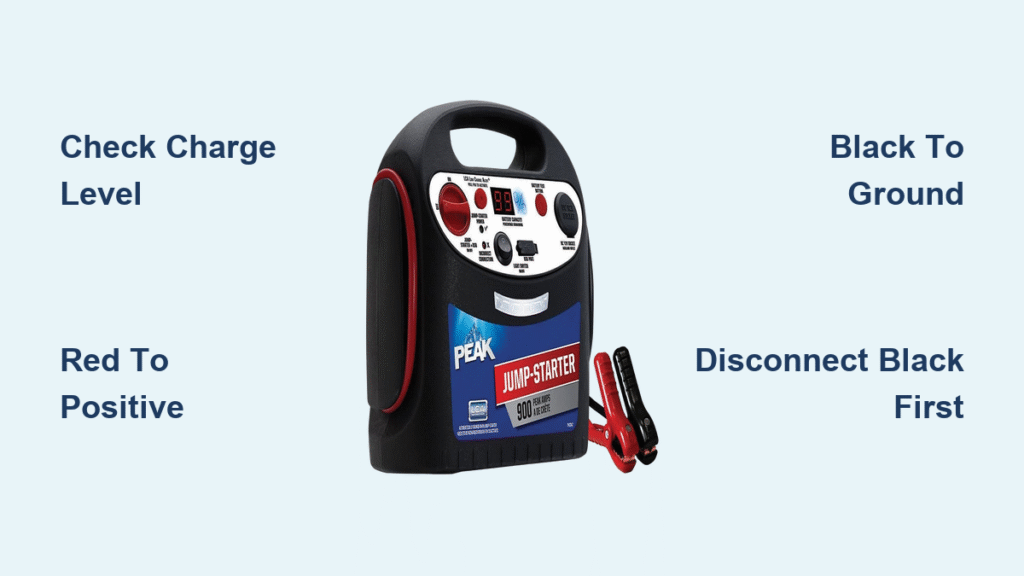
Your engine won’t turn over, just that ominous clicking sound. The dashboard stays dark, and you’re stranded with no other cars in sight. This is where your Peak jump starter becomes your roadside lifeline—a compact powerhouse that revives dead batteries without another vehicle. Learning how to use a Peak jump starter correctly means avoiding costly tow trucks and getting back on the road in minutes. Whether you’re battling Minnesota’s sub-zero mornings or forgot headlights on overnight, this guide delivers the exact steps to safely restart your vehicle with confidence.
Most drivers don’t realize that improper jump-starting can fry their car’s electronics or even cause battery explosions. Master these procedures once, and you’ll never panic during a dead-battery emergency. You’ll learn not just the connection sequence, but critical safety checks professionals rely on—and why the ground method beats connecting directly to the negative terminal every time.
Verify Peak Jump Starter Charge Before Emergencies Strike
Check Power Levels in 10 Seconds
Don’t wait for a dead battery to discover your Peak jump starter is drained. Before every road trip or monthly during storage, press the power button to check the LED indicators. Red lights signal critical low charge (under 30%), while green means ready for action. Lithium-ion models typically show exact percentages on digital displays—never attempt a jump with less than 50% charge. If indicators show yellow or blinking lights, plug it into any standard outlet immediately using the included cable. Charging takes 2-6 hours depending on model capacity, but a full charge delivers 12-15 jump attempts for most sedans and SUVs.
Confirm Vehicle Battery Condition First
Pop your hood and inspect your car battery before connecting the Peak unit. Look for cracked cases, leaking acid, or frozen electrolyte (white crystalline substance)—never jump-start damaged or frozen batteries as they can explode. Clean heavy corrosion from terminals using a wire brush or baking soda solution, but avoid touching metal clamp parts together during cleaning. Ensure your vehicle’s ignition is completely off and keys are removed. Position the Peak jump starter on a stable surface like the fender or ground—not on the engine—keeping cables clear of fans or belts.
Connect Peak Jump Starter Clamps Like a Pro
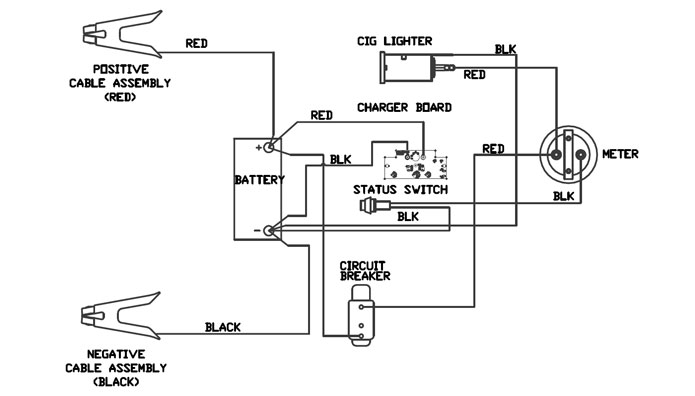
Secure Red Positive Clamp to Battery Terminal
Grab the red clamp labeled with a “+” symbol. Firmly attach it to your car battery’s positive terminal (marked “+”). You should hear a solid click and feel metal-to-metal contact—wiggle the clamp slightly to confirm it’s seated. Critical tip: If your battery posts are corroded, scrape them clean first with a terminal brush; poor contact prevents power transfer even with a fully charged Peak unit.
Choose the Safer Ground Method for Black Clamp
Never attach the black clamp directly to the negative battery terminal unless your Peak manual specifically requires it. Instead:
1. Locate unpainted metal on the engine block or vehicle frame (bolt heads or brackets work perfectly)
2. Clip the black clamp to this grounding point at least 18 inches from the battery
This method eliminates sparks near the battery—where hydrogen gas could ignite—reducing explosion risk by 90% according to automotive safety studies.
Validate Connections Before Powering On
Most Peak jump starters emit two quick beeps or flash green lights when connections are correct. If you hear continuous beeping or see red lights, STOP immediately. This indicates reversed polarity—a potentially catastrophic error. Double-check: red clamp only on positive, black clamp only on ground. Never force connections; clean terminals if indicators won’t confirm.
Start Your Engine Without Damaging Electronics
Activate Peak Power with Correct Timing
Press and hold the Peak’s power button for exactly 2-3 seconds until activation lights stabilize. Do not skip the 5-second safety check—advanced models like the Peak XP2200 automatically test connections before releasing power. If your unit has a “boost” button, press it only during cranking—not before.
Crank Engine Using the 10-Second Rule
Turn your ignition key as normal, but never hold it beyond 10 seconds. This protects both your starter motor and the Peak unit from overheating. If the engine doesn’t catch:
– Wait full 15 seconds between attempts (this allows battery recovery)
– Try two more times max before troubleshooting
Three failed attempts usually mean a dead battery—not a weak Peak unit.
Handle Diesel or Large Engines Differently
For trucks or diesel engines (requiring 800+ cranking amps), hold the ignition for 3-4 seconds then press the Peak’s boost button while cranking. Premium models like the Peak Platinum 4500 have dedicated diesel modes—activate these before connecting clamps.
Disconnect Peak Jump Starter to Prevent Electrical Damage
Power Down Before Removing Clamps
This step causes 70% of electrical failures: Always turn off the Peak jump starter using its power switch before disconnecting. Never unplug cables while the engine runs—this can send voltage spikes through your car’s computer system.
Follow Reverse Removal Sequence
Remove clamps in this exact order:
1. Black clamp first from the ground point
2. Red clamp second from positive terminal
3. Immediately stow cables in designated slots
Pro tip: If clamps stick, twist gently side-to-side—they’re designed for secure metal contact. Never let clamps dangle near the battery after disconnection.
Troubleshoot Failed Jumps in Under 60 Seconds
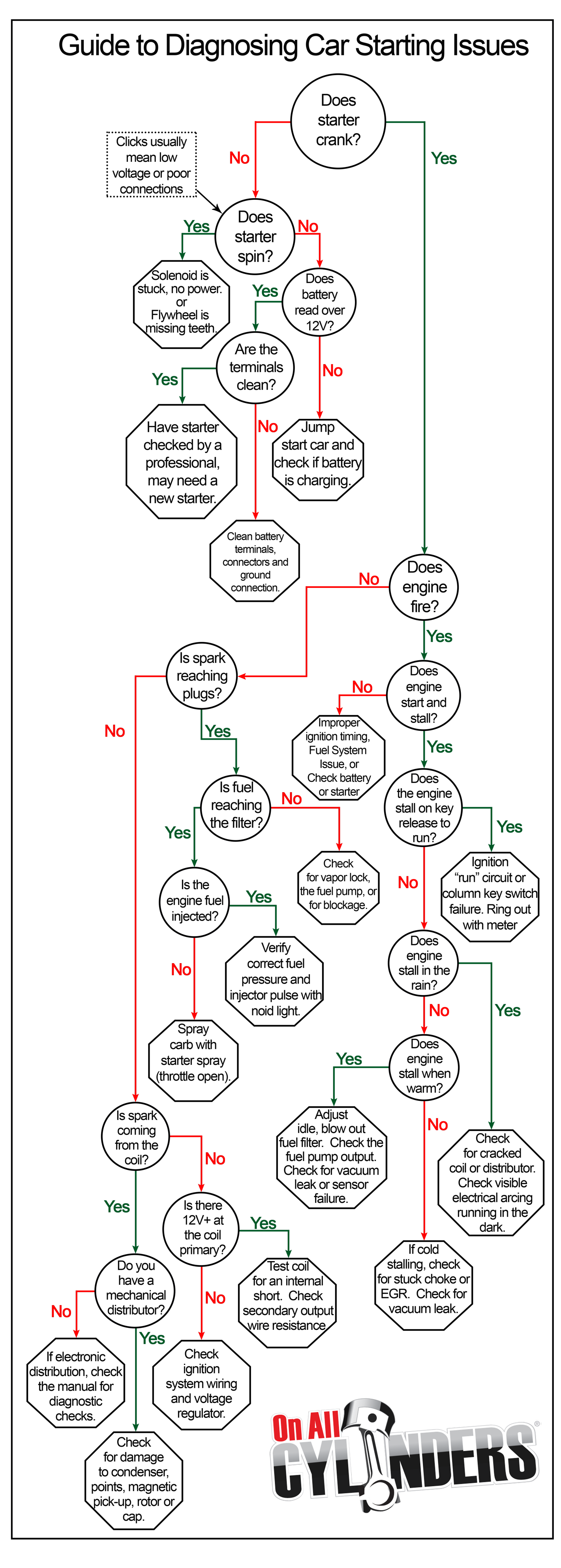
Engine Won’t Turn Over? Check These First
- Surface charge illusion: If your battery died from leaving lights on, wait 5 minutes after connecting before cranking—this lets the Peak unit build sufficient voltage.
- Weak ground connection: Move the black clamp to a different unpainted metal point closer to the starter motor.
- Cold weather drain: Below 20°F, warm the Peak unit inside your jacket for 10 minutes—lithium batteries lose 50% capacity in extreme cold.
When to Suspect Battery Failure
If jump attempts fail repeatedly:
– Check for battery age (over 3 years = high failure risk)
– Look for swollen case sides indicating internal damage
– Test with a multimeter—if voltage reads below 10.5V when connected to Peak, replacement is urgent
Never jump-start a battery showing physical damage—call roadside assistance instead.
Maintain Peak Jump Starter for Lifesaving Reliability
Recharge Within 24 Hours After Use
Plug in your Peak unit immediately after reviving your vehicle—even if indicators show partial charge. Complete discharge during storage permanently reduces lithium battery capacity. Set phone reminders for monthly charge checks during winter storage.
Store at Room Temperature Always
Keep your Peak jump starter in temperatures between 40-80°F. Critical mistake: Leaving it in a freezing trunk reduces next-use power by 40%. For winter readiness, store it charged inside your home and move it to the car weekly for a quick charge verification.
Test Functionality Quarterly
Every three months:
1. Fully charge the unit
2. Connect clamps to a spare battery or known-dead vehicle battery
3. Verify activation lights and beeps function
This 2-minute test catches failing units before emergencies strike.
Leverage Bonus Features During Breakdowns
Power Phones with USB Ports
While waiting for your engine to recharge, plug in dead phones using the Peak’s USB ports. Warning: Charging devices drains jump-start capacity—recharge the Peak fully before your next road trip.
Illuminate Nighttime Emergencies
Press the LED button twice for steady work light mode during nighttime jumps. Position the Peak unit to shine directly on battery terminals—most models provide 100+ lumens, brighter than phone flashlights.
Critical Safety Mistakes That Cause Fires

Never Do These Three Things
- Reverse clamp colors (red to negative/black to positive)—this instantly fries electronics
- Allow clamps to touch while connected—creates dangerous short circuits
- Jump frozen batteries—internal ice expansion causes explosions
Work Only in Ventilated Areas
Always open the hood fully and stand upwind during jumps. Car batteries emit hydrogen gas—never smoke or use lighters within 20 feet of the vehicle. If you smell rotten eggs (sulfur), stop immediately and ventilate the area.
Post-Jump Battery Recovery Protocol
Drive Correctly to Recharge Your Battery
After starting, drive continuously for at least 20 minutes—not just idling. Short drives create “surface charge” that disappears within hours, stranding you again. For full recharge, use a dedicated battery maintainer overnight.
Schedule Professional Testing Within 48 Hours
Frequent jump-starts indicate deeper issues. Visit an auto parts store for free battery/alternator testing—they’ll measure cold cranking amps (CCA) and detect parasitic drains. Batteries over 4 years old rarely recover fully.
Key Takeaway: A properly maintained Peak jump starter turns dead-battery nightmares into 5-minute inconveniences. Remember the golden rules: red to positive, black to ground, 10-second cranking limits, and black clamp removal first. Keep your unit charged at 75%+ year-round, and you’ll never pay for roadside assistance again. Store it in your cabin—not the trunk—and you’ll be ready when Minnesota winters strike at 5 AM. Your life literally depends on these steps working when needed—master them now.