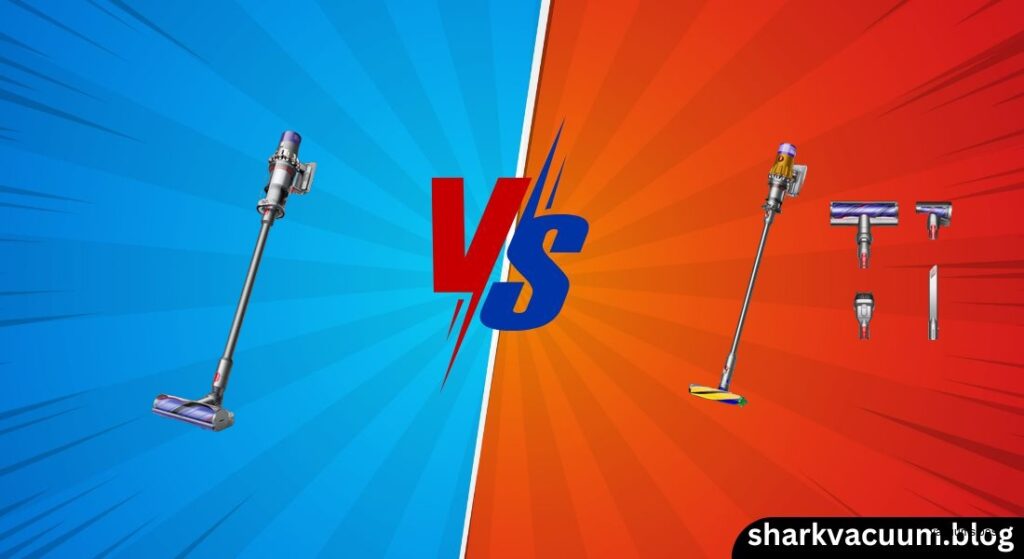
The cordless vacuum market has evolved rapidly, and few brands have pushed the envelope quite like Dyson. When it comes to everyday cleaning, two models consistently rise to the top of buyer considerations: the Dyson V10 and the Dyson V12 Detect Slim. Both deliver the brand’s signature suction power, HEPA filtration, and seamless transition from stick to handheld, but they represent different philosophies in design and function. The V10 stands as a proven workhorse—trusted, robust, and built for endurance—while the V12 introduces smart technology, laser dust detection, and a lightweight build tailored for modern, intuitive cleaning. If you’re trying to decide between them, you’re not just choosing a vacuum—you’re deciding how you want to clean. Do you prioritize raw utility, bin capacity, and value? Or are you drawn to real-time feedback, automation, and the ability to see dust you never knew was there?
This comparison cuts through the marketing to deliver a clear, side-by-side analysis of the Dyson V10 vs. V12, focusing on what matters most: suction performance, smart features, ergonomics, battery life, and overall value. We’ll break down their strengths and limitations using real-world data, user feedback, and technical specs—no guesswork. Whether you’re dealing with pet hair, hard floors, stairs, or just want a vacuum that doesn’t leave your arms tired, this guide will help you determine which model aligns with your lifestyle. Spoiler: the V12 wins on innovation and ease of use, but the V10 still holds its ground in capacity and affordability. Let’s dive in.
1. Introduction
Dyson has long dominated the cordless vacuum space, setting benchmarks with each new release. The Dyson V10, launched as a major leap from its predecessor, redefined what a cordless vacuum could do—offering fade-free suction, a full suite of tools, and enough runtime to clean an entire home. It became a favorite among users who wanted high performance without being tethered to a plug. Fast forward to the Dyson V12 Detect Slim, and the focus shifts from brute power to intelligent cleaning. With a laser that reveals invisible dust and a sensor that counts particles in real time, the V12 isn’t just cleaning—it’s proving it’s cleaning. This evolution reflects Dyson’s broader shift: from powerful appliances to smart, data-driven tools that adapt to your needs.
The V10 and V12 are more than just iterations—they represent two distinct approaches to home cleaning. The V10 is the engineered workhorse, built for durability, large homes, and users who want maximum bin space and proven reliability. The V12 is the sleek innovator, designed for those who value lightweight maneuverability, automation, and visual confirmation of cleanliness. At first glance, the V12 seems like the obvious upgrade, but that’s not always the case. The V10 still delivers exceptional suction, longer runtime with non-motorized tools, and often comes at a lower price point. So, is the V12’s tech worth the premium? Or does the V10 remain the smarter buy for most households?
This article will answer that question by comparing the two models across seven key criteria: suction and cleaning performance, smart features, ergonomics, battery life, bin capacity, noise levels, and value. We’ll examine real-world usage, user-reported pain points, and how each vacuum handles different floor types and debris. By the end, you’ll know exactly which Dyson cordless vacuum—V10 or V12—is the better fit for your home.
2. Product Overviews
Dyson V10 (Cyclone)
The Dyson V10 Cyclone is a mature, high-performance cordless vacuum that has stood the test of time since its release. It’s built around the Dyson Digital Motor V10, which spins at 110,000 rpm and delivers up to 150 air watts of fade-free suction. The vacuum uses a straight-line airflow design, aligning the bin and cyclone directly with the cleaner head to optimize suction efficiency. This engineering choice helps maintain consistent performance across cleaning sessions. The V10 is available in multiple configurations—including the Motorhead, Absolute, Total Clean, and Konical™—each tailored to different needs. The Absolute and Total Clean models come with dual cleaner heads (a motorized Torque Drive for carpets and a Soft Roller for hard floors), making them ideal for homes with mixed flooring.
One of the V10’s standout features is its larger bin capacity, especially in the Total Clean and Konical models, which offer up to 0.76 liters. This means fewer stops to empty the bin during whole-home cleaning. The vacuum also supports a wide range of accessories, from the Mini Motorized Tool for pet hair to the Low Reach Adapter for cleaning under furniture. However, most V10 models (except the Konical) use a trigger-based power system, requiring you to hold the trigger the entire time you’re cleaning—a design that can cause hand fatigue, especially for users with arthritis or limited grip strength. While powerful and reliable, the V10 lacks smart sensors, laser illumination, or an LCD display, relying instead on manual mode selection and user intuition.
Check the latest price of Dyson V10 on Amazon [link]
Dyson V12 Detect Slim
The Dyson V12 Detect Slim represents the next generation of Dyson’s cordless vacuums, emphasizing smart technology, lightweight design, and ergonomic innovation. It features the newer Hyperdymium™ motor, which spins faster at 125,000 rpm, yet is engineered to be lighter and more efficient. The vacuum delivers the same 150 air watts of suction as the V10 but does so in a much more compact and agile form. Weighing just 5.22 pounds, the V12 is significantly lighter than the V10 (~6.0 lbs), making it easier to maneuver on stairs, ceilings, and tight spaces.
What sets the V12 apart is its intelligent cleaning system. The Laser Slim Fluffy™ cleaner head projects a green laser at a precise angle to illuminate microscopic dust on hard floors—revealing up to twice as much invisible debris as traditional lighting. This is paired with a Piezo sensor that counts particles up to 15,000 times per second and displays the results on a small LCD screen. In Auto mode, the vacuum adjusts suction power in real time based on the amount of debris detected, optimizing battery life and cleaning efficiency. The push-button power control (no trigger to hold) is a major ergonomic upgrade, allowing for easy hand-swapping and reduced fatigue. However, the V12 has a smaller bin (0.35L), requires frequent emptying, and cannot stand upright on its own—two compromises made to achieve its slim profile.
See current deals on Dyson V12 Detect Slim here [link]
3. Comparison Criteria
To determine which vacuum is better suited to your needs, we’ll evaluate the Dyson V10 vs. V12 across seven key metrics that matter most to cordless vacuum users:
- Suction & Cleaning Performance: How do they handle carpets, hard floors, and embedded debris?
- Smart Features & Technology: Is the V12’s laser and particle sensor a game-changer or a gimmick?
- Ergonomics & Design: How does weight, balance, and control mechanism affect usability?
- Battery Life & Runtime: How long do they last in real-world use across different modes?
- Bin Capacity & Maintenance: How often do you need to empty the bin, and how easy is it?
- Noise Levels: Which one is quieter, and how does the sound quality compare?
- Value & Accessories: What do you get for the price, and which offers better long-term value?
These criteria reflect actual user priorities—especially for households with pets, allergies, or mixed flooring. Let’s break them down.
4. Head-to-Head Comparison
Suction & Cleaning Performance
At their core, both vacuums deliver 150 air watts of fade-free suction, thanks to Dyson’s advanced motor and cyclone technology. The V10 uses 15 cyclones generating up to 79,000 grams of centrifugal force, while the V12 uses 11 cyclones with Root Cyclone™ technology. Despite the difference in cyclone count, both are highly effective at separating dust and maintaining suction.
On carpets, the V10’s Torque Drive or Konical conical brush bars excel at deep cleaning. Consumer Reports notes it picks up 25% more embedded dirt than the V8 and clears visible debris in under 23 seconds. The V12’s Motorbar™ cleaner head is equally capable, featuring anti-tangle vanes that lift and spiral hair straight into the bin—ideal for pet owners. In Boost mode, both vacuums deliver intense suction for deep-pile carpets, though runtime drops to ~6 minutes.
Where the V12 truly shines is on hard floors. Its Laser Slim Fluffy™ head uses a green laser to reveal dust that’s invisible under normal lighting. This is a game-changer for tile, wood, and laminate floors. The V10’s Soft Roller head (on Absolute/Total Clean models) is also excellent, capturing large and fine debris while polishing the surface—but it doesn’t show you what you’re missing. The laser makes cleaning more satisfying and thorough.
For pet hair, the V12 has a slight edge. The combination of the Motorbar™ head and Mini Motorized Tool removes hair without tangling, and the Hair Screw Tool (included in some bundles) is specifically designed for long hair. The V10 Konical model also handles hair well with its conical brush bars, but standard models require manual detangling.
🏆 Section Winner: Dyson V12 Detect Slim
The V12’s laser illumination and anti-tangle tech give it superior hard floor visibility and pet hair handling, making it the better all-around performer despite similar raw suction.
Smart Features & Technology
This is where the V12 pulls far ahead. The Piezo sensor counts dust particles in real time and displays the number on the LCD screen, providing scientific proof of cleaning. In Auto mode, the vacuum adjusts suction based on debris load—ramping up for dirty spots and conserving battery on cleaner areas. This intelligent adaptation is especially useful for mixed-floor homes.
The green laser is not just a novelty—it’s a functional tool. It reveals dust on hard floors in low-light conditions, helping you clean more thoroughly. Users consistently report being shocked by how much more dust the laser exposes.
The V10 has no smart features. It lacks sensors, an LCD screen, and auto-adjusting suction. The Konical model includes a laser-like light (not a true laser), but it doesn’t offer particle counting or auto-mode. You manually select Eco, Medium, or Max mode—no automation.
🏆 Section Winner: Dyson V12 Detect Slim
The V12’s real-time particle counting, auto-adjusting suction, and laser illumination offer a level of feedback and intelligence the V10 simply can’t match.
Ergonomics & Design
Weight and control are critical for comfort, especially during extended cleaning sessions.
The V12 weighs 5.22 lbs, about 0.8 lbs lighter than the V10 (~6.0 lbs). This may not sound like much, but it makes a noticeable difference when cleaning stairs, ceilings, or under furniture. The push-button power (no trigger to hold) is a major ergonomic upgrade. You can turn it on/off with a tap and swap hands easily—ideal for users with arthritis or limited hand strength.
The V10, especially non-Konical models, uses a trigger mechanism that requires constant pressure. This can lead to hand fatigue, particularly on longer cleaning sessions. The Konical model has a triggerless switch, improving usability, but it’s still heavier.
However, the V10 stands upright independently, allowing you to pause cleaning without leaning it against a wall. The V12 cannot stand on its own—it must be wall-mounted or leaned, which some users find inconvenient.
🏆 Section Winner: Dyson V12 Detect Slim
The lighter weight and push-button control make the V12 significantly more comfortable to use, especially for users with mobility or strength limitations.
Battery Life & Runtime
Both vacuums use a 7-cell lithium-ion battery with a ~4-hour charge time.
Claimed runtime: Up to 60 minutes in Eco mode.
Real-world performance:
| Mode | Dyson V10 | Dyson V12 |
|---|---|---|
| Eco/Low | ~52–60 mins (non-motorized tools) | ~60 mins |
| Medium/Auto | ~20–28 mins (motorized head) | ~35–40 mins (Auto mode) |
| Max/Boost | ~6–8 mins | ~6 mins |
The V12’s Auto mode is more efficient, adjusting power based on debris load, which extends usable runtime. The V10’s Medium mode runs at a fixed power level, draining the battery faster.
In practice, the V12 lasts longer in mixed cleaning scenarios thanks to its intelligent power management.
🏆 Section Winner: Dyson V12 Detect Slim
Auto mode optimization gives the V12 better real-world battery efficiency, especially in homes with varied cleaning needs.
Bin Capacity & Maintenance
This is where the V10 shines.
| Model | Bin Capacity |
|---|---|
| Dyson V10 (Total Clean/Konical) | Up to 0.76L |
| Dyson V12 Detect Slim | 0.35L |
The V10’s larger bin means fewer stops to empty, especially during whole-home cleaning. The V12’s small bin fills up quickly, requiring emptying every few rooms.
Both use “Point and Shoot” hygienic emptying. The V10 requires removing the wand to access the bin—some users find this awkward. The V12 has a red release tab that swings the bin back to eject debris. While generally effective, some users report the bin is stiff to detach.
Filter maintenance is similar: both have washable HEPA filters that should be cleaned every 3 months and dried completely before reinsertion.
🏆 Section Winner: Dyson V10
The V10’s larger bin capacity is a major practical advantage, reducing interruptions during cleaning.
Noise Levels
The V10 reaches 78 dB on Max mode—loud, but below the 85 dB safety threshold. It emits a distinctive “boing” sound when the trigger is released, caused by the motor braking.
The V12 is slightly quieter and has a higher-pitched tone. While not dramatically quieter, its Auto mode runs at lower power when debris is light, reducing noise during most of the cleaning session.
Verdict: The V12 is slightly more pleasant to use due to adaptive noise levels, but neither is whisper-quiet.
Value & Accessories
| Model | Price Range | Key Tools Included |
|---|---|---|
| Dyson V10 (Total Clean) | $500–$700 | Motorized head, Soft Roller, Mini Motorized, Low Reach Adapter, Crevice, Dusting Brush |
| Dyson V12 Detect Slim | $729.99 | Laser Fluffy, Motorbar, Mini Motorized, Hair Screw, Crevice, Dusting Brush |
The V12 is more expensive and comes with fewer total tools, but includes smart features and specialized attachments like the Hair Screw. The V10 offers better value for budget-conscious buyers, especially since older models are often discounted.
🏆 Section Winner: Dyson V10
The V10 provides more accessories and lower pricing, making it the better value for users who don’t need smart tech.
5. Pros and Cons Table
| Feature | Dyson V10 (Cyclone) | Dyson V12 Detect Slim |
|---|---|---|
| Pros | • Larger bin capacity (less frequent emptying) • Stands upright independently • Proven reliability & durability • Often available at a lower price point • Extensive model variety (Konical, Total Clean) |
• Significantly lighter (5.22 lbs) • Laser dust detection reveals hidden dirt • Intelligent Auto-mode & Particle Counter • Push-button power (no trigger fatigue) • Faster motor (125k rpm) |
| Cons | • Heavier (~6.0+ lbs) • Trigger mechanism causes hand strain (on most models) • No intelligent dust sensing • Older technology (no LCD screen) |
• Small bin (0.35L) requires frequent emptying • Cannot stand upright on its own • Higher price tag • Bin detachment can be stiff/difficult |
6. Best Use Case Recommendation
Choose the Dyson V10 If:
- You have a larger home: The larger bin means fewer trips to the trash can.
- Budget is a primary concern: You want premium Dyson suction but prefer better value over the latest gadgets.
- You need a freestanding unit: You prefer a vacuum that stands up on its own when pausing to move a chair or answer the door.
- You have mostly carpets: The V10’s robust motorized heads are excellent for deep carpet cleaning without needing laser guidance.
Choose the Dyson V12 Detect Slim If:
- You have mixed flooring or mostly hard floors: The laser illumination is a transformative feature for tile, wood, and laminate.
- Ergonomics are critical: You have arthritis, weak grip strength, or clean many stairs/curtains where the lighter weight and push-button make a huge difference.
- You love data and automation: You want the vacuum to automatically adjust power based on dirt levels and show you proof of a clean home.
- Pet hair is a major issue: The combination of the anti-tangle Motorbar and lighter weight makes spot-cleaning pet messes less of a chore.
7. Conclusion
When comparing the Dyson V10 vs. V12, the choice ultimately comes down to your cleaning priorities. The Dyson V12 Detect Slim is the overall winner for most modern households. Its lightweight design, laser dust detection, intelligent auto-mode, and push-button control represent the future of cordless cleaning—offering a smarter, more intuitive experience. The ability to see invisible dust and have the vacuum adapt to it is not just impressive—it’s genuinely useful.
However, the Dyson V10 remains a strong contender, especially as a best value pick. It delivers the same core suction power, has a larger bin, stands upright, and is often available at a lower price point. If you’re on a budget, clean large homes, or prioritize capacity over smart features, the V10 is still an excellent choice.
Both vacuums offer HEPA filtration, fade-free suction, and versatile toolkits, ensuring a deep clean regardless of your pick. But if you want a vacuum that cleans smarter, not harder, the Dyson V12 Detect Slim is the clear leader. For those who value proven performance and practicality, the Dyson V10 holds its ground.
View Dyson V12 Detect Slim on Amazon [link]
Check the latest price of Dyson V10 on Amazon [link]