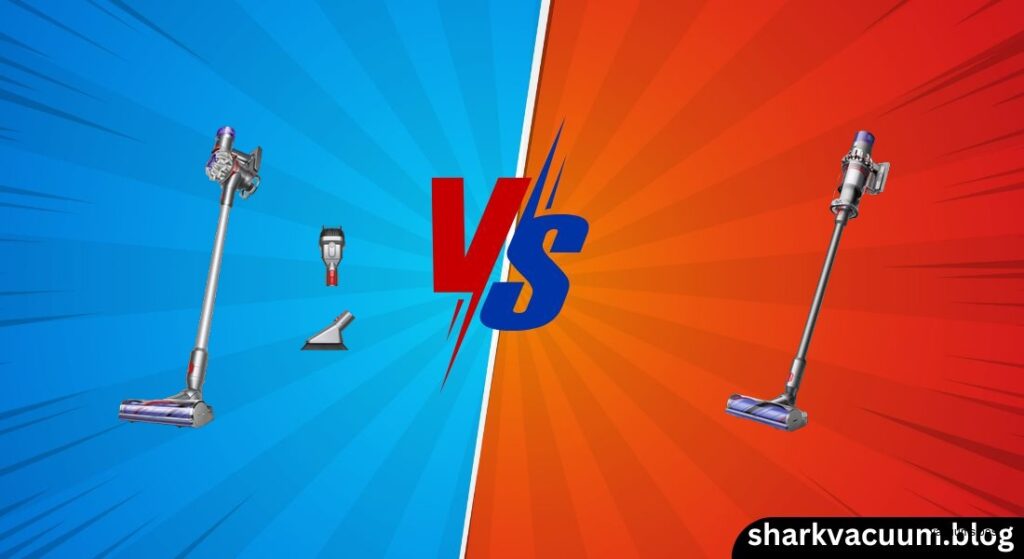
The shift from cumbersome corded vacuums to sleek, agile cordless models has redefined how we approach home cleaning. At the forefront of this transformation stands Dyson, a brand synonymous with innovation and engineering excellence. Among its most influential lines are the Dyson V7 and Dyson V10—two generations of cordless stick vacuums that represent different milestones in Dyson’s journey to perfect the wireless clean. While both deliver the brand’s signature build quality and cyclonic suction, they cater to distinctly different needs and budgets. The V7 carved a path as an accessible entry into premium cordless cleaning, while the V10 was marketed as the first truly capable replacement for a traditional upright.
Choosing between the Dyson cordless vacuum V7 vs V10 isn’t just about price—it’s about understanding how each model’s engineering impacts real-world performance. Are you cleaning a compact apartment where lightweight maneuverability matters most? Or managing a larger home with mixed flooring and pets, demanding longer runtime and superior allergen control? This in-depth comparison breaks down every critical factor—suction power, battery life, filtration, design, and value—to help you determine whether the V10’s generational leap justifies its premium over the still-competent V7. We’ll examine not just the specs on paper, but how they translate to daily use, maintenance, and long-term satisfaction. Whether you’re upgrading from an older model or stepping into the Dyson ecosystem for the first time, this guide will clarify which vacuum aligns with your lifestyle.
1. Introduction
The evolution of home cleaning appliances has been dramatically shaped by the rise of cordless technology, and Dyson has been a key driver in that shift. By eliminating cords, reducing weight, and improving suction efficiency, Dyson transformed the vacuum from a chore-inducing appliance into a convenient, go-anywhere tool. The Dyson V7 and V10 represent two pivotal points in that journey. The V7 series launched as Dyson’s most affordable foray into high-performance cordless cleaning, offering impressive power and engineering at a more accessible price. It became a favorite among apartment dwellers and those seeking a reliable secondary vacuum. The V10, however, was positioned as a game-changer—the first cordless model Dyson claimed could genuinely replace a corded upright vacuum for whole-home cleaning.
These two models, while sharing core DNA, are built for different missions. The V7 delivers excellent value and surprising deep-clean performance, especially on carpets, but with compromises in runtime and bin size. The V10 answers those limitations with a redesigned horizontal cyclone layout, stronger suction, longer battery life, and more advanced filtration. It’s heavier and more expensive, but it brings capabilities closer to a full-sized vacuum. For consumers weighing the Dyson cordless vacuum V7 vs V10, the decision often comes down to home size, flooring type, and budget. This guide will dissect their differences across seven key metrics—suction, battery, filtration, design, tools, maintenance, and value—to help you determine which model truly fits your cleaning needs. Whether you’re a pet owner battling hair tumbleweeds or an allergy sufferer needing sealed HEPA filtration, we’ll highlight where each vacuum excels and where it falls short.
2. Product Overviews
2.1 Dyson V7 Series: The Efficient Entry Point
The Dyson V7 series was engineered to be the most accessible gateway into Dyson’s premium cordless cleaning ecosystem. Built around the Dyson Digital Motor V7, which spins at 107,000 rpm, the V7 delivers fade-free suction powered by 2 Tier Radial cyclones. Despite its lower price point, the build quality remains solid and durable, with a lightweight design that weighs just 5.58 lbs—making it one of the easiest Dyson sticks to maneuver, especially on stairs or for quick cleanups. Its core strength lies in deep-cleaning carpets; the MotorHead model, in particular, achieves a near-perfect score in embedded dirt removal due to its superior seal between the brush bar and carpet fibers.
However, the V7’s affordability comes with trade-offs. Battery life is limited, offering around 20 minutes with a motorized head and just 6 minutes in MAX mode. The dust bin is relatively small at 0.14 gallons, requiring more frequent emptying. Filtration varies significantly by model: the base V7 MotorHead lacks a removable HEPA filter, relying instead on a non-removable post-motor filter, which limits its effectiveness for allergy sufferers. More premium variants like the V7 Animal+ and V7 Absolute include washable HEPA filters and additional tools, but even then, the V7 doesn’t match the filtration consistency of the V10. Another common user complaint is hair tangling on the brush bar, especially with long human or pet hair, though models like the V7 Advanced feature the Motorbar head with de-tangling vanes to mitigate this.
Check the latest price of [Dyson V7] on Amazon [link]
2.2 Dyson V10 Series: The Whole-Home Powerhouse
The Dyson V10 was a major leap forward, designed from the ground up to tackle entire homes without needing to recharge. At its heart is the Dyson Digital Motor V10, spinning at 110,000 rpm—faster than the V7—and featuring doubled magnets and stators for increased power. This translates to 55% more suction than the V7 and up to 60 minutes of runtime in Eco mode, though real-world use with motorized tools typically delivers 35–40 minutes. The V10’s most striking design change is its horizontal cyclone layout, which shifts the motor and bin to the top of the vacuum. This improves balance and allows for a larger 0.23-gallon bin, reducing how often you need to empty it.
Filtration is a major upgrade: all V10 models feature fully sealed HEPA systems that capture 99.99% of particles down to 0.1–0.3 microns, making them ideal for homes with allergies or asthma. The V10 also introduced advanced floor heads like the Soft Roller for hard floors and the Torque Drive/Motorbar with anti-tangle technology. Later models, such as the V10 Konical, refined this further with conical brush bars, laser dust detection, and triggerless power controls, eliminating the hand fatigue associated with holding down a trigger. While the V10 is heavier at 6.0 lbs and slightly front-heavy due to the top-heavy design, its performance across mixed flooring and longer runtime make it a far more capable primary vacuum.
See current deals on [Dyson V10] here [link]
3. Comparison Criteria
To fairly evaluate the Dyson cordless vacuum V7 vs V10, we’ll assess both models across seven essential criteria that impact real-world usability and long-term satisfaction. First, suction and cleaning performance will examine how well each vacuum removes embedded dirt from carpets and captures fine dust on hard floors, including their ability to handle large debris and pet hair. Second, battery life and power modes will compare actual runtime across Eco, Medium, and MAX settings, as well as charge time and battery longevity. Third, filtration and allergen control will focus on HEPA certification, sealed system integrity, and airflow efficiency—critical for homes with allergies or respiratory sensitivities.
Fourth, design and ergonomics will analyze weight, balance, bin emptying, and overall ease of use—especially important for users with mobility issues or those cleaning stairs and tight spaces. Fifth, tools and versatility will compare the included floor heads and attachments, evaluating how well they adapt to different surfaces and cleaning tasks like upholstery, crevices, and under-furniture reach. Sixth, maintenance and durability will address common pain points like hair tangling, filter cleaning, bin maintenance, and long-term reliability based on user reports and service data. Finally, value for money will weigh the cost of each model—new and refurbished—against its performance, features, and lifespan, helping you determine which offers the better return on investment for your specific needs.
4. Head-to-Head Comparison
4.1 Suction Power and Cleaning Performance
When it comes to raw suction, the Dyson V10 holds a clear advantage. With 150 Air Watts (AW) on the Konical model and 55% more suction than the V7, the V10 generates significantly stronger airflow, allowing it to lift more debris from deep within carpet fibers and handle high-pile rugs with greater ease. Independent testing confirms the V10 delivers 25% better carpet pickup than the V8, and by extension, outperforms the V7 in overall cleaning power. However, the V7 shouldn’t be underestimated—its MotorHead model scored 100% in deep-cleaning tests on thick carpet, outperforming even the V8 in some evaluations. This success is attributed to its superior carpet seal, which minimizes air leakage and maximizes suction at the cleaning head.
On hard floors, the difference is even more pronounced. The V7 MotorHead struggles with large debris, often scattering cereal or rice due to its stiff bristles and lack of a soft roller. In contrast, the V10 Soft Roller head is specifically designed to capture both fine dust and larger particles without scattering, and the Konical’s laser dust detection illuminates invisible particles, making cleaning more thorough. The V10 also features a shutter mechanism in its floor head that adjusts airflow based on debris load, improving efficiency. While the V7 Absolute includes the Soft Fluff roller to address hard floor shortcomings, it still lacks the suction power and airflow optimization of the V10.
🏆 Section Winner: Dyson V10 – Superior suction, better hard floor performance, and advanced debris management.
4.2 Battery Life and Runtime
Battery life is one of the most critical differentiators between the V7 and V10. The V7 offers up to 30 minutes in Eco mode without a motorized tool, but this drops to 20 minutes with the Motorbar head—and just 6 minutes in MAX mode. In real-world use, users with larger homes often find this limiting, especially when switching between floor types. The V10 significantly extends this, offering up to 60 minutes in Eco mode (verified at 52–60 minutes depending on tool use), 22–28 minutes in Medium mode, and 6–8 minutes in MAX. For most homes under 2,000 sq ft, the V10 can complete a full clean on a single charge using Medium power.
Another key advantage: the V10 charges in 4 hours, compared to the V7’s 5-hour charge time. Both use removable lithium-ion batteries, but the V10’s 7-cell pack delivers more energy density. While neither model matches the 80+ minute runtimes of newer Dyson models like the V15, the V10’s battery is clearly superior to the V7’s. For users cleaning larger homes or preferring not to interrupt cleaning to recharge, the V10’s extended runtime is a major benefit.
🏆 Section Winner: Dyson V10 – Longer runtime, faster charging, and better real-world usability.
4.3 Filtration and Allergens
For allergy sufferers, filtration is non-negotiable—and here, the V10 is the definitive winner. All V10 models feature a fully sealed HEPA filtration system that captures 99.99% of particles as small as 0.1–0.3 microns, including dust mites, pollen, and pet dander. The filter is washable and must be dried for 24 hours before reuse, but its consistent performance makes it ideal for sensitive households. The V10’s horizontal design also improves airflow sealing, reducing the chance of dirty air escaping.
In contrast, the V7 MotorHead lacks a removable HEPA filter—its post-motor filter is non-removable and not HEPA-certified. While models like the V7 Animal+ and Absolute do include HEPA filters, the overall system isn’t as tightly sealed as the V10’s. This means even HEPA-equipped V7 models may not perform as well in allergen containment. If you or a family member has asthma or severe allergies, the V10’s guaranteed sealed HEPA system is the safer, more reliable choice.
🏆 Section Winner: Dyson V10 – Superior, fully sealed HEPA filtration across all models.
4.4 Design, Weight, and Bin Capacity
Design-wise, the two vacuums offer contrasting experiences. The V7 is lighter at 5.58 lbs and more balanced, making it easier to carry up stairs or use overhead. Its traditional stick layout keeps the motor near the handle, so it doesn’t feel front-heavy. The V10, at 6.0 lbs, feels slightly heavier and more top-heavy due to its horizontal cyclone design. While this improves bin capacity and balance during use, some users report arm fatigue during extended cleaning sessions.
The bin capacity difference is significant: the V7 holds 0.14 gallons, while the V10 holds 0.23 gallons—a 64% increase. This means fewer trips to the trash, especially in homes with pets or high foot traffic. Both use Dyson’s “point-and-shoot” bin emptying, but the V10’s larger chute reduces clogging. However, accessing the V10’s bin for deep cleaning requires removing the wand, which some users find cumbersome.
🏆 Section Winner: Dyson V10 – Larger bin, better emptying flow, despite slightly heavier feel.
4.5 Tools and Floor Heads
The tool ecosystem is where the V10 truly shines. The V7 includes basic tools—a crevice tool, combination tool, and mini motorized tool on higher-end models—but lacks specialized attachments. The V10 Absolute and Animal+ models come with dual floor heads: the Torque Drive for carpets and Soft Roller for hard floors. This versatility is a major upgrade for homes with mixed flooring.
The V10 also introduces anti-tangle technology. The Motorbar head features vanes that help clear hair, and the Konical’s All Floor Cones™ use rotating conical brush bars to spiral hair away, handling up to 25 inches of length. The Low Reach Adapter (on Total Clean models) allows cleaning under low furniture, and the Hair Screw Tool is excellent for pet hair on upholstery. The laser dust detection on the Konical is a standout feature, revealing hidden dust on hard floors.
🏆 Section Winner: Dyson V10 – More versatile, advanced tools, and innovative floor heads.
4.6 Maintenance and Hair Tangling
Maintenance is similar for both: filters must be washed monthly and dried for 24 hours, and bins should be emptied at the MAX line. However, hair tangling is a known issue with the V7 MotorHead, requiring frequent manual cleaning with scissors. The V7 Advanced and Animal+ models with Motorbar heads improve this, but still lag behind the V10.
The V10’s anti-tangle vanes and conical brush bars (Konical) significantly reduce hair wrap, though not eliminate it entirely. The main cleaner head can be opened (often with a coin) to remove debris, making maintenance easier. Battery longevity is a concern for both—replacement batteries cost $95.99 for the V7 and $99.99 for the V10—but user reports suggest the V10’s battery degrades more slowly due to better power management.
🏆 Section Winner: Dyson V10 – Better anti-tangle design and easier maintenance.
4.7 Price and Value Proposition
Price is where the V7 regains ground. New V7 models are rare, but refurbished units can be found for $199–$299, making them an excellent budget option. The V10, even refurbished, typically sells for $199.99–$349.99, with new models commanding higher prices. While the V10 offers more features, the V7 delivers strong carpet performance at a fraction of the cost.
For small apartments or as a secondary vacuum, the V7 offers exceptional value. But for whole-home cleaning, pet owners, or allergy sufferers, the V10’s upgrades in suction, runtime, and filtration justify the premium. The V10 Konical, with triggerless power and laser detection, offers the best long-term value for tech-savvy users.
🏆 Section Winner: Dyson V7 – Better budget value; V10 – better overall value for performance.
5. Pros and Cons Table
| Feature | Dyson V7 Series | Dyson V10 Series |
|---|---|---|
| Pros | – Excellent value for money – Lightweight & highly maneuverable – Superior carpet seal (deep clean) – Quieter operation – Lower replacement part costs |
– Significantly higher suction power – Longer runtime (up to 60 mins) – Larger bin capacity – Advanced anti-tangle tools – Superior HEPA filtration (all models) – Laser dust detection (Konical) |
| Cons | – Short runtime (20 mins real-world) – Small bin requires frequent emptying – Base MotorHead lacks HEPA filter – Prone to hair tangling – Longer charge time (5 hrs) |
– Higher initial cost – Heavier and front-heavy feel – Loud on Max mode – Trigger fatigue (non-Konical models) – Expensive accessories |
| Best For | Apartments, carpet-heavy homes, budget buyers, secondary vacuums. | Whole homes, mixed flooring, pet owners, allergy sufferers. |
6. Best Use Case Recommendation
Choose the Dyson V7 If:
You live in a small apartment or home under 1,500 sq ft and prioritize a lightweight, easy-to-store vacuum for quick cleanups. The V7 MotorHead excels on carpet and is ideal if most of your flooring is plush or medium-pile. If you’re on a tight budget, refurbished V7 models offer Dyson quality at a steep discount. It’s also a great choice for car cleaning, stairs, or as a secondary vacuum in a larger home. For allergy sufferers, opt for the V7 Animal+, which adds HEPA filtration and pet-specific tools.
Choose the Dyson V10 If:
You have a medium to large home with a mix of carpet and hard flooring and want a single vacuum to handle everything. The V10 Absolute or V10 Konical provides dual floor heads, longer runtime, and sealed HEPA filtration—making it ideal for pet owners and allergy sufferers. If you value convenience, the triggerless power on the Konical eliminates hand fatigue, and the laser dust detection ensures a truly thorough clean. The V10 is the first in this comparison that can realistically replace a corded upright for most households.
7. Conclusion
In the Dyson cordless vacuum V7 vs V10 showdown, both models have earned their place in Dyson’s legacy, but they serve different purposes. The V7 remains a champion of value and carpet cleaning, delivering impressive deep-cleaning performance in a lightweight, affordable package. It’s perfect for small spaces or as a supplementary cleaner. However, the V10 represents a true generational leap, offering stronger suction, longer battery life, larger capacity, and superior filtration. It’s the first model in this comparison that can confidently serve as a primary, whole-home vacuum.
Ultimately, the choice comes down to your priorities. If price and portability are your top concerns, the V7—especially the Animal+ or Absolute variants—is a smart, capable choice. But if you need performance, versatility, and allergen control for a larger or more complex home, the V10 is worth the investment. For most users looking to replace a corded vacuum, the Dyson V10 is the clear answer.