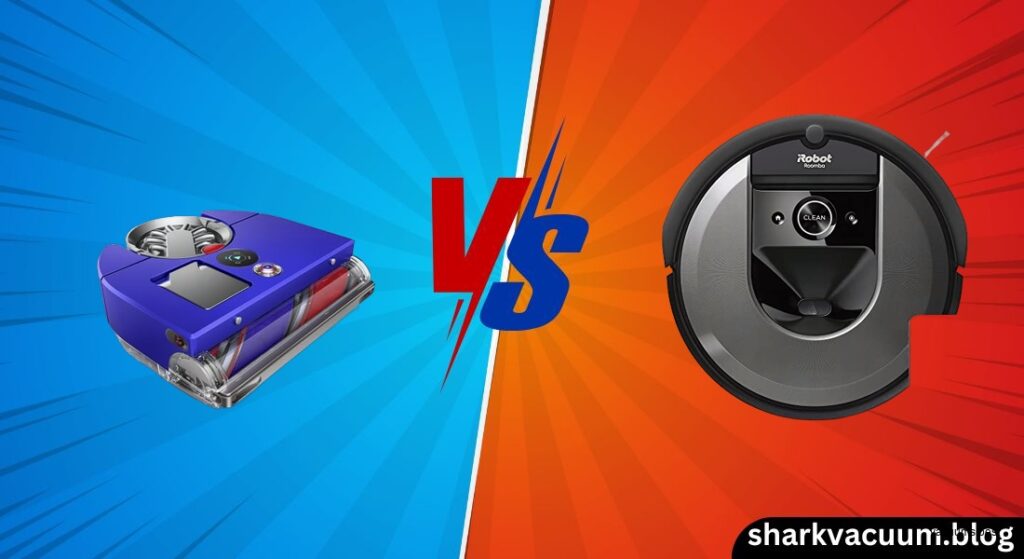
Robot vacuums have come a long way from their early days of randomly bumping around furniture, often missing entire sections of your floor. Today’s top models are intelligent, map-aware machines that clean with purpose, adapting to your home’s layout and your lifestyle. Two of the most talked-about premium robots in this space are the Dyson 360 Vis Nav and the iRobot Roomba i7—each representing a different philosophy in robotic cleaning. The Dyson emphasizes raw power and engineering precision, while the Roomba leans into smart-home integration and convenience. If you’re trying to decide between them, you’re likely facing a real dilemma: do you prioritize deep cleaning performance or seamless automation?
In this detailed comparison, we’ll pit the Dyson 360 Vis Nav—marketed as the “world’s most powerful robot vacuum”—against the iRobot Roomba i7, a veteran in the smart robot vacuum space known for its tangle-free brushes and intelligent mapping. Both are designed for pet owners, allergy sufferers, and tech-savvy households, but they approach the task of cleaning in fundamentally different ways. The Dyson focuses on suction, edge cleaning, and HEPA filtration, while the Roomba excels in ecosystem integration, multi-floor navigation, and pet-hair resistance. We’ll break down every key factor—suction, navigation, edge cleaning, pet hair handling, smart features, battery life, and maintenance—to help you determine which robot better suits your home.
1. Introduction
The robot vacuum market has matured into a landscape where high-end models no longer just clean—they think, learn, and adapt. The days of random navigation and missed corners are fading, replaced by precision mapping, room recognition, and voice-controlled automation. At the premium end of this evolution stand two distinct approaches: one built around engineering-driven cleaning performance, the other around lifestyle-friendly convenience. The Dyson 360 Vis Nav and the Roomba i7 are perfect examples of this divide.
The Dyson 360 Vis Nav is engineered like a performance machine—its Hyperdymium motor spins at 110,000 rpm, delivering what Dyson claims is twice the suction power of any other robot vacuum. It’s built for deep carpet cleaning, aggressive debris pickup, and capturing microscopic allergens with its sealed HEPA system. In contrast, the Roomba i7 is designed as a smart home partner. It learns your floor plan, remembers up to 10 different levels, and integrates with Alexa, Google Assistant, and even the Braava jet m6 mop via Imprint Link technology.
This comparison isn’t just about specs—it’s about values. Do you want the most powerful clean possible, even if it means emptying the bin yourself? Or would you rather have a robot that empties itself, cleans specific rooms on command, and fits seamlessly into your connected home? Both robots are excellent, but they serve different needs. By the end of this article, you’ll know exactly which one aligns with your cleaning priorities.
2. Product Overviews
Dyson 360 Vis Nav
The Dyson 360 Vis Nav is positioned as a no-compromise robot vacuum focused on cleaning performance above all else. It doesn’t offer a self-emptying base, nor does it mop, but what it does do—clean— it does exceptionally well. Its standout features include the D-shaped body, which allows it to get closer to walls and into corners than circular robots, and the extending side duct, a unique mechanism that redirects suction right up to baseboards without flicking debris away.
At the heart of its performance is the Hyperdymium™ motor, which spins at 110,000 rpm and powers Dyson’s patented cyclone technology. This system generates centrifugal forces up to 100,000g, ensuring consistent suction even as the bin fills. The triple-action brush bar combines carbon fiber filaments for hard floors, stiff nylon bristles for carpets, and soft woven fibers for large debris—eliminating the need to swap brush rolls.
The robot uses a 360° Vision System with a camera and 26 sensors to map your home, processing 10,000 data points per second. It stores maps for multiple floors, allows zone cleaning, and includes no-go and no-climb zones via the MyDyson app. Notably, the camera captures only shapes and contrast—no images are stored or transmitted, addressing privacy concerns.
With a lifetime washable HEPA filter, the Dyson is also a strong choice for allergy sufferers. It runs up to 65 minutes on a single charge and features Recharge and Resume functionality. While it lacks the self-emptying convenience of some competitors, its focus on filtration, suction, and edge cleaning makes it a top contender for homes with pets, carpets, and heavy debris.
Check the latest price of [Dyson 360 Vis Nav] on Amazon [link]
iRobot Roomba i7
The iRobot Roomba i7 is a smart-home-centric robot designed for users who want automation, voice control, and pet-friendly cleaning. It’s part of iRobot’s premium line and introduces Imprint Smart Mapping, which allows the robot to learn your home layout, label rooms, and remember up to 10 different floor plans. This makes it ideal for multi-level homes or users who want one robot to clean multiple locations.
Its cleaning system centers around Dual Multi-Surface Rubber Brushes, which are engineered to be tangle-free—a major advantage for pet owners. Unlike bristle brushes that trap hair, these flexible rubber treads adapt to both hard floors and carpets, rotating in opposite directions to agitate and extract debris. Combined with 10x the air power of the Roomba 600 series, the i7 delivers strong suction across all floor types.
The Roomba i7 uses iAdapt 3.0 with vSLAM navigation, capturing over 230,000 data points per second to build accurate maps. It features Dirt Detect technology, which identifies high-traffic or heavily soiled areas and performs extra passes to clean them thoroughly.
While the standard model doesn’t include a self-emptying base, it’s fully compatible with the Clean Base Automatic Dirt Disposal—sold separately or in bundles. This allows the robot to empty its bin into a sealed bag that holds up to 60 days of dirt. It also supports Imprint Link, enabling it to trigger the Braava jet m6 mop after vacuuming.
The robot offers excellent smart home integration, working with Alexa, Google Assistant, and IFTTT for advanced automations. It runs up to 75–90 minutes per charge and resumes cleaning after recharging. With a HEPA-grade filter that captures 99% of allergens, it’s also a solid choice for allergy sufferers.
See current deals on [Roomba i7] here [link]
3. Comparison Criteria
To determine which robot is better for your needs, we’ll evaluate both models across eight key criteria:
- Suction Power & Cleaning Performance: How well each robot picks up fine dust, large debris, and embedded dirt from carpets.
- Navigation & Mapping Intelligence: Accuracy of mapping, obstacle avoidance, and multi-floor memory.
- Edge & Corner Cleaning: Effectiveness in cleaning along walls and into tight corners.
- Pet Hair & Tangle Resistance: Performance on pet fur and resistance to brush roll clogs.
- Smart Features & Connectivity: App functionality, voice control, zoning, and ecosystem integration.
- Battery Life & Runtime: Endurance per charge and recharge/resume capabilities.
- Maintenance & Filtration: Ease of emptying, filter quality, and long-term upkeep.
- Value & Ecosystem: Price, warranty, and available accessories like self-emptying bases.
Each of these factors plays a crucial role in the overall user experience, and the winner in each category will depend on your specific priorities.
4. Head-to-Head Comparison
Suction Power & Deep Cleaning
When it comes to raw cleaning power, the Dyson 360 Vis Nav stands out immediately. Dyson claims it has two times the suction power of any other robot vacuum, thanks to its Hyperdymium motor spinning at 110,000 rpm. This isn’t just marketing—real-world testing shows it excels at picking up kitty litter, pet food kibble, and embedded carpet dirt. The triple-action brush bar aggressively agitates carpet fibers, lifting deep-seated debris that many robots leave behind. Its cyclone technology maintains suction even as the bin fills, a critical advantage over robots that lose power over time.
The Roomba i7, while not matching Dyson’s peak suction, still delivers 10x the air power compared to the older 600 series. Its three-stage cleaning system—agitation, extraction, and suction—works well on both hard floors and carpets. The Dirt Detect feature enhances performance by focusing on high-traffic areas, ensuring thorough cleaning where it’s needed most.
Pro Tip: If you have thick carpets or heavy debris like sand or litter, the Dyson’s superior suction and brush bar design will make a noticeable difference.
🏆 Section Winner: Dyson 360 Vis Nav – For raw suction power and deep carpet cleaning, the Dyson is unmatched.
Navigation & Mapping Technology
Both robots use advanced visual navigation systems, but they differ in flexibility and user experience.
The Dyson 360 Vis Nav uses a 360° Vision System with a camera and 26 sensors, processing 10,000 data points per second. It builds accurate maps and supports multi-floor memory (up to 2 floors), zone cleaning, and no-go zones. The system is privacy-focused—no images are stored. However, some users report a steeper learning curve when defining zones in the app.
The Roomba i7 uses iAdapt 3.0 with vSLAM, capturing 230,000 data points per second to create highly detailed maps. Its Imprint Smart Mapping learns your home layout after a few runs, automatically segmenting rooms that you can label (e.g., “Kitchen,” “Living Room”). It remembers up to 10 floor plans, making it ideal for multi-story homes or users with vacation properties.
Good to Know: The Roomba i7’s ability to label rooms and clean specific zones via voice command (“Alexa, clean the kitchen”) is a major usability advantage.
🏆 Section Winner: Roomba i7 – Superior multi-floor support, room labeling, and user-friendly app make it the smarter navigator.
Edge & Corner Cleaning
This is where the Dyson 360 Vis Nav truly shines. Its D-shaped body allows it to get physically closer to walls than the circular Roomba. But the real innovation is the extending side duct—a mechanism that redirects suction right up to the baseboard. Unlike side sweepers that flick debris away, the Dyson’s duct captures dust and hair along edges without scattering it.
The Roomba i7 uses a 27-degree angled edge-sweeping brush to knock debris into the cleaning path. While effective, its circular shape means it can’t reach into tight corners as well as a square-fronted robot. It will leave a small gap along walls, especially in corners.
Pro Tip: If you have baseboards that collect dust or pets that track litter along walls, the Dyson’s edge-cleaning advantage is significant.
🏆 Section Winner: Dyson 360 Vis Nav – The D-shape and extending duct provide unmatched edge-to-edge cleaning.
Pet Hair & Tangle Resistance
For pet owners, brush roll tangles are a constant frustration. The Roomba i7 is widely regarded as the gold standard for tangle resistance thanks to its Dual Multi-Surface Rubber Brushes. These flexible rubber treads resist hair wrap, making them ideal for homes with long-haired dogs or cats. Hair is extracted and directed into the bin without clogging the brush.
The Dyson 360 Vis Nav also performs well, with a wide-diameter brush bar designed to minimize tangles. Its high suction pulls hair into the cyclone system, and the brush is easy to clean. However, it’s not quite as foolproof as the Roomba’s rubber brushes.
Good to Know: While both robots handle pet hair well, the Roomba i7 requires less maintenance between cleanings.
🏆 Section Winner: Roomba i7 – The tangle-free rubber brushes give it the edge for heavy shedders.
Smart Features, App, & Voice Control
The Roomba i7 dominates in smart home integration. Its iRobot Home App is intuitive, offering cleaning history, maintenance alerts, and Proactive Care suggestions (e.g., “Clean more during shedding season”). It supports voice control with Alexa and Google Assistant, and IFTTT integration enables advanced automations like starting a clean when you leave home.
It also supports Imprint Link, allowing it to automatically trigger the Braava jet m6 mop after vacuuming—a true set-and-forget floor care routine.
The Dyson 360 Vis Nav has a capable MyDyson app with heat maps, zone rules, and scheduling. It works with Alexa and Google Assistant for basic commands. However, it lacks IFTTT support and mopping integration, making it less versatile in a smart home ecosystem.
🏆 Section Winner: Roomba i7 – Superior app, voice control, and ecosystem integration.
Battery Life & Runtime
The Roomba i7 offers 75–90 minutes of runtime, depending on floor type and suction mode. The Dyson 360 Vis Nav provides up to 65 minutes, primarily in Quiet mode.
Both robots feature Recharge and Resume functionality, meaning they return to the dock when low on power and resume cleaning where they left off. This ensures complete coverage even in larger homes.
For homes over 1,500 sq. ft., the Roomba’s longer runtime is a clear advantage.
🏆 Section Winner: Roomba i7 – Longer battery life benefits larger or multi-room cleaning jobs.
Maintenance, Filtration & Convenience
The Dyson 360 Vis Nav includes a lifetime washable HEPA filter, which saves money over time. The bin empties with a hygienic one-touch ejection, but there’s no self-emptying base option—you must empty it manually.
The Roomba i7 uses a replaceable high-efficiency filter (recommended every 2 months), adding a recurring cost. However, it’s compatible with the Clean Base, which automatically empties the bin into a sealed bag—ideal for users who want minimal interaction.
Pro Tip: If you hate touching dirty filters, the Dyson’s washable HEPA is a major perk. If you hate emptying bins, the Roomba + Clean Base combo wins.
🏆 Section Winner: Tie – Dyson wins on filter cost, Roomba wins on convenience (with Clean Base).
5. Pros and Cons Table
| Feature | Dyson 360 Vis Nav | iRobot Roomba i7 |
|---|---|---|
| Pros | – Industry-leading suction power – Superior edge/corner cleaning (D-shape + duct) – Lifetime washable HEPA filter – Excellent on carpets and heavy debris – Privacy-focused navigation |
– Tangle-free rubber brushes (Best for pets) – Advanced Smart Mapping (10 floors) – Compatible with Self-Empty Base & Mop – Superior Smart Home/IFTTT integration – Dirt Detect technology |
| Cons | – No self-emptying base option – Shorter battery runtime (~65 mins) – Higher upfront cost for base features – App can be less intuitive than iRobot’s |
– Circular shape misses corners slightly – Replacement filters add recurring cost – Self-empty base sold separately (usually) – Navigation can struggle in total darkness (no light assist) |
| Best For | Deep cleaning, carpets, edges, allergy sufferers on a budget for filters. | Pet hair, multi-floor homes, smart home enthusiasts, convenience seekers. |
6. Best Use Case Recommendations
Choose the Dyson 360 Vis Nav If:
- Your primary concern is cleaning performance on carpets and picking up heavy debris (cereal, litter).
- You have a lot of corners and baseboards and want the cleanest edges possible.
- You prefer a washable filter to avoid recurring costs.
- You don’t mind manually emptying the bin and want the most powerful suction available in a robot.
Choose the Roomba i7 If:
- You have pets and need the absolute best hair-tangle resistance.
- You live in a multi-story home (up to 10 floors) and want one robot to handle it all.
- You want convenience features like a self-emptying dock or coordinated mopping (with Braava).
- You rely heavily on voice commands and smart home automations (Alexa/Google/IFTTT).
View [Roomba i7] on Amazon [link]
7. Conclusion
The Dyson 360 Vis Nav and iRobot Roomba i7 represent two different philosophies in robotic cleaning. The Dyson is an engineering marvel—built for maximum suction, deep carpet cleaning, and flawless edge performance. It’s the robot you buy when you care most about the quality of the clean, especially if you have pets, carpets, or allergy concerns. Its lifetime HEPA filter and D-shaped design make it a long-term investment in air quality and surface cleanliness.
The Roomba i7, on the other hand, is a lifestyle product. It’s designed for convenience, automation, and integration. With tangle-free brushes, multi-floor memory, and self-emptying capability (with Clean Base), it’s ideal for busy households that want a truly hands-off experience. Its smart mapping, voice control, and mopping integration make it a centerpiece of a connected home.
🏆 The “Power” vs. “Smarts” Verdict:
* Dyson 360 Vis Nav wins for pure cleaning capability and edge performance.
* Roomba i7 wins for smart home integration, pet hair management, and overall convenience.
Final Recommendation: If you hate seeing dust left behind in corners, buy the Dyson. If you hate interacting with your vacuum and have shedding pets, buy the Roomba. Both are excellent—your choice depends on what kind of clean matters most to you.