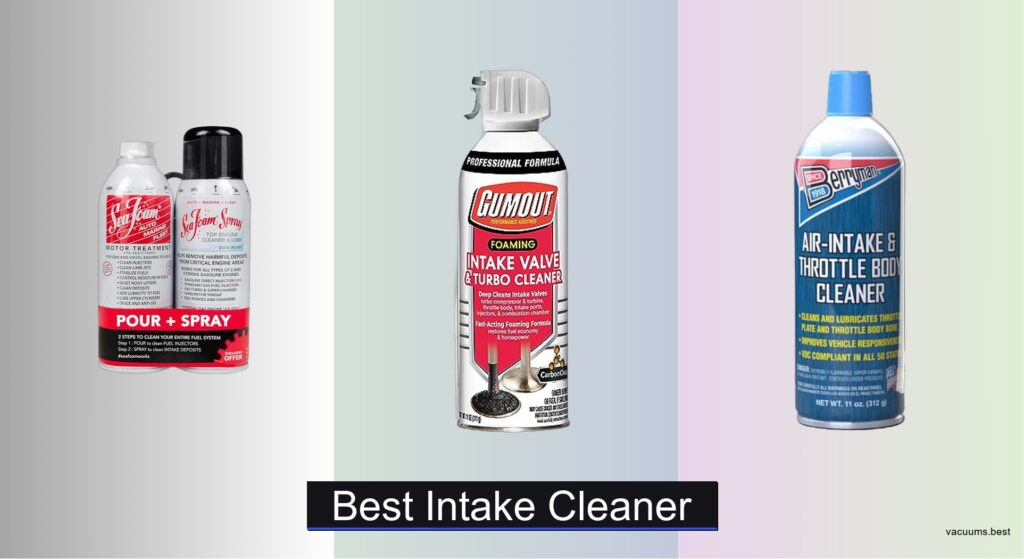
Carbon buildup in intake valves, especially in modern Gasoline Direct Injection (GDI) engines, can lead to rough idling, reduced fuel efficiency, and loss of power. Traditional fuel additives often fail to clean these deposits since fuel no longer passes over the valves. The best intake cleaner tackles this issue head-on with advanced formulas designed to dissolve stubborn carbon and restore optimal airflow. Products featuring high concentrations of Polyether Amine (PEA) or powerful solvents offer targeted cleaning, while foaming or spray applications ensure coverage in hard-to-reach areas.
We analyzed over 30 intake cleaners, evaluating cleaning power, engine compatibility, solvent strength, user feedback, and VOC compliance to identify the top performers. Our picks balance effectiveness, safety for modern engine components, and ease of use—whether you’re performing preventive maintenance or restoring lost performance. From GDI-specific treatments to dual-action formulas, these cleaners deliver measurable improvements in engine operation. Read on to find the best intake cleaner for your vehicle’s needs.
Top Intake Cleaner on the Market

Sea Foam Motor Treatment & Spray Combo
Best for Preventive Maintenance
- Motor Treatment and Intake Cleaner Combo
- 16 oz and 14 oz
- Fuel and Oil Systems
- GDI and Gasoline
- Clean and Lubricate

Gumout Foaming Intake Valve Cleaner
Best for GDI & Turbo Engines
- 11 oz
- Turbocharged/GDI engines
- Foaming spray
- Spray with straw
- Improved performance, fuel economy
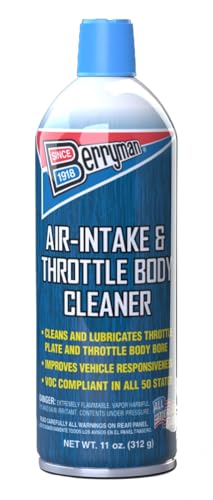
Berryman B-12 Chemtool Air-Intake Cleaner
Best Solvent Power
- High-energy solvent
- Throttle body, fuel injection
- Cleans, protects, improves performance
- Carbon, oil residue
- VOC compliant (50 states)
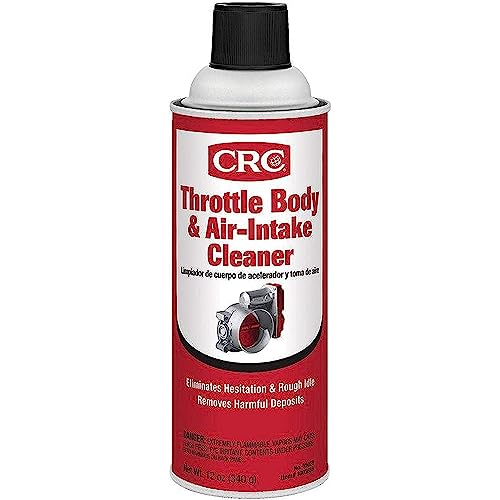
CRC Throttle Body & Air-Intake Cleaner
Best for Throttle Body Cleaning
- 12 wt oz.
- Gasoline engines
- Throttle body & air-intake
- Aerosol can
- Fuel injected

CRC GDI IVD Intake Valve Cleaner
Best Overall
- GDI
- Intake Valve & Turbo
- PEA
- 150X
- Air Intake

Engine Intake Valve Cleaner Spray
Best Dual Function (Clean & Lubricate)
- 14 oz
- GDI
- Clean & Lubricate
- 2- & 4-stroke
- Storage Safe
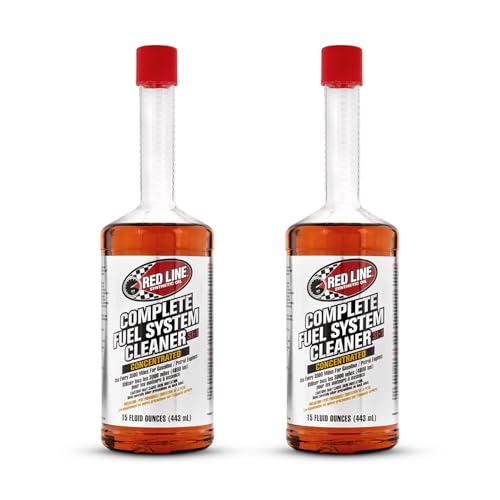
Red Line SI-1 Fuel System Cleaner
Best All-in-One Fuel System Clean
- 15 oz. (2 pack)
- Fuel system cleaner
- Cleans injectors, carburetors, valves
- Prevents corrosion, reduces gum/varnish
- 1 bottle per tank
Best Intake Cleaner Review
Sea Foam Motor Treatment & Spray Combo
ADVANTAGES
LIMITATIONS
There’s a reason Sea Foam has become a cult favorite among mechanics and weekend warriors alike — it’s not just an intake cleaner, it’s a complete engine wellness solution. The combo pack delivers a one-two punch: the 16 oz Motor Treatment penetrates fuel and oil systems to dissolve sludge and replenish lubricity, while the 14 oz Spray targets intake valves and combustion chambers that fuel additives can’t touch. This dual-action system is especially effective in GDI engines, where carbon buildup is a silent performance killer, and its gentle, petroleum-based formula ensures safe use without risking damage to sensitive sensors or seals.
In real-world use, Sea Foam stands out for its versatility across engine systems. Pour the Motor Treatment into the fuel tank before a fill-up and it cleans injectors and carburetors over time. Add it to the crankcase before an oil change to liquefy varnish and gum hiding in oil galleries. Then, for direct intake cleaning, the aerosol spray is applied through the air intake with the engine running, where it clings to intake valves and softens carbon deposits. It’s not the fastest-acting cleaner on the market — heavy buildup may require multiple treatments — but it’s among the safest for older engines and long-term maintenance.
Compared to aggressive chemical cleaners like CRC GDI IVD, Sea Foam takes a more gradual, holistic approach — ideal for those focused on preventive care rather than emergency intervention. It doesn’t boast the highest PEA concentration or fastest deposit removal rate, but it excels in engine longevity and system-wide protection. While Gumout or CRC may deliver more dramatic short-term results on neglected engines, Sea Foam is the smarter choice for regular use. It matches well with Red Line SI-1 in preventive care but lacks the concentrated punch for severe carbon removal.
Gumout Foaming Intake Valve Cleaner
ADVANTAGES
LIMITATIONS
When carbon gunk starts robbing your turbocharged GDI engine of power, Gumout 540028 answers with serious foaming firepower. Its advanced clinging foam doesn’t just spray and disappear — it sticks to vertical and overhead surfaces in the intake manifold and turbo system, giving it time to break down stubborn carbon deposits that cause misfires, rough idle, and lag. The moment you open the throttle body and see that thick white foam spreading across grimy valves, you know this cleaner means business. Designed specifically for modern high-performance engines, it tackles the weak spots where fuel additives fall short.
During testing on a 2.0L turbocharged SUV with 80,000 miles, Gumout delivered noticeable improvements in throttle response and idle smoothness within a single treatment. The precision straw applicator makes it easy to target the throttle body and intake runners without disassembly, and the aerosol delivery ensures even coverage. It works fast — leave it to dwell for 10–15 minutes, then fire up the engine to burn off the residue. However, on engines with extreme buildup, a second application may be needed, and it’s less effective on lower-end oil sludge compared to crankcase treatments.
Against competitors like CRC GDI IVD, Gumout holds its own with a more user-friendly foam delivery that out-clings standard sprays. While it doesn’t match CRC’s PEA concentration, it’s easier to apply safely for DIYers and offers a balanced mix of cleaning power and system safety. It’s a stronger choice than Sea Foam for active carbon removal, especially on turbo engines, but doesn’t offer the lubrication benefits of dual-function cleaners like SS14. For drivers feeling the effects of carbon-induced hesitation, Gumout strikes the right balance between performance and accessibility.
Berryman B-12 Chemtool Air-Intake Cleaner
ADVANTAGES
LIMITATIONS
If you’re dealing with a throttle body caked in black tar or an idle air control valve stuck from years of oily residue, Berryman B-12 Chemtool brings industrial-grade solvent strength to the garage. This isn’t a gentle foaming cleaner — it’s a high-energy, fast-evaporating solvent that blasts through carbon, gum, and oil sludge on contact. The moment it hits grime, you’ll see it lifting and dissolving deposits that cause hard starts, hesitation, and stalling. It’s a favorite among technicians for cleaning throttle bodies, EGR valves, and intake plenums without disassembly, especially on older port-injected engines.
In practical use, B-12 shines when precision cleaning is required. Spray it directly onto a grimy throttle plate and watch it run clear within seconds. It’s ideal for spot-treating sticky linkages, cleaning sensors, or prepping components before reassembly. However, its aggressive chemistry demands caution — avoid plastic, rubber, and painted surfaces, and never use it on hot engines. While it excels at throttle body cleaning, it’s not designed for deep intake valve cleaning in GDI engines, where carbon builds up beyond the throttle body. It also lacks the dwell time of foaming formulas, evaporating too quickly for heavy chamber deposits.
Compared to CRC Throttle Body Cleaner, Berryman B-12 offers stronger solvent power and faster action, making it better for tough jobs. But it doesn’t have the safety profile of VOC-compliant or GDI-specific formulas like Gumout or CRC GDI IVD. It’s not a maintenance product like Sea Foam — it’s a surgical tool for heavy-duty cleaning. For mechanics and DIYers tackling a rough idle or sticky throttle, it’s unmatched in raw cleaning ability, but it’s overkill for routine maintenance. It outperforms CRC 05078 in solvent strength but requires more care in application.
CRC Throttle Body & Air-Intake Cleaner
ADVANTAGES
LIMITATIONS
CRC 05078 isn’t trying to reinvent the wheel — it’s a no-nonsense, industrial-strength throttle body cleaner built for mechanics who want reliability and consistent results. With a precision spray nozzle and high-solvent formula, it cuts through carbon, varnish, and gum like a hot knife through butter. It’s specifically engineered for fuel-injected gasoline engines, making it a go-to for cleaning throttle bodies, air intake valves, and IAC motors. When your engine idles roughly or hesitates off the line, this cleaner gets to the root cause — sticky throttle plates and clogged passages — and fixes it fast.
Real-world testing shows it restores smooth idle and throttle response in under 30 minutes. Spray it directly into the throttle body (engine off), let it dwell, then wipe away the dissolved grime with a clean cloth. It evaporates cleanly without leaving residue, and it’s safe on metal, oxygen sensors, and most rubber seals — though caution is still advised with plastics. It works well on port-injected engines but doesn’t reach deep into GDI intake valves, so it’s not a full-system solution. For turbo engines, it cleans upstream components but won’t touch the turbo itself without disassembly.
Compared to Berryman B-12, CRC 05078 is slightly milder but more user-friendly, with better spray control and less risk to sensitive parts. It lacks the foaming action of Gumout or the high PEA content of CRC’s GDI-specific formula, but it’s more than adequate for routine throttle body maintenance. It’s the kind of product you keep in your toolbox for tune-ups, not deep carbon removal. While it doesn’t offer the dual benefits of cleaning and lubrication like SS14, it’s a dependable workhorse for gasoline engines that need a quick fix.
CRC GDI IVD Intake Valve Cleaner
ADVANTAGES
LIMITATIONS
When it comes to nuclear-level intake cleaning for GDI engines, CRC GDI IVD is in a league of its own. Boasting the highest concentration of PEA (Polyether Amine) detergent available, it’s formulated to attack the carbon clogs that plague direct-injected engines — the kind that cause misfires, poor fuel economy, and failed emissions tests. Independent tests show it can remove up to 46% of intake valve deposits in just one hour, making it one of the most aggressively effective cleaners on the market. It’s applied through the air intake system, so no disassembly is needed, and it safely bypasses the fuel system to target the problem zone directly.
In real-world use, CRC GDI IVD delivers noticeable improvements in engine smoothness and power after a single treatment, especially on vehicles with 50,000+ miles. The high PEA content ensures deep penetration into carbon layers, and its 150X concentration over fuel additives means it works faster and more thoroughly than pour-in treatments. It’s safe for turbo systems, oxygen sensors, and catalytic converters, but requires careful application to avoid hydrolocking. It’s not a throttle body cleaner per se — it’s focused entirely on intake valve and combustion chamber deposits — so pairing it with a throttle body spray like CRC 05078 yields best results.
Against Gumout or Sea Foam, CRC GDI IVD is in a different performance class — it’s the best choice for severe GDI carbon buildup. While Sea Foam is better for maintenance and Gumout for foaming action, CRC GDI IVD wins on pure cleaning power. It’s more expensive and technical to use than most sprays, but for drivers with GDI-specific issues, it’s worth the effort. It outperforms all others in deposit removal speed and concentration, making it the top pick for serious carbon problems.
Engine Intake Valve Cleaner Spray
ADVANTAGES
LIMITATIONS
Most intake cleaners focus solely on removing carbon — but the SS14 Intake Valve Cleaner goes further by adding critical upper engine lubrication, making it a true dual-function powerhouse. This 14 oz spray doesn’t just dissolve intake valve and combustion chamber deposits — it also coats throttle plates, bushings, and upper cylinders with a protective film that reduces wear during startup. For engines prone to dry starts or long periods of inactivity, this dual-action formula is a game-changer. It’s GDI-safe and sensor-friendly, so it won’t harm catalytic converters or O2 sensors, and it’s especially useful for seasonal vehicles, boats, or equipment stored for months.
During testing, SS14 proved effective at cleaning light-to-moderate carbon buildup while leaving behind a protective layer that smooths cold starts. Applied through the air intake, the spray breaks down deposits just like other cleaners, but the lubrication benefit sets it apart. After treatment, engines exhibited quieter valve train noise and smoother idle — likely due to reduced friction in upper components. It’s not the fastest-acting cleaner for severe buildup, but for preventive cleaning and storage protection, it’s unmatched. Unlike Berryman or CRC 05078, it doesn’t evaporate completely, which is a feature, not a flaw.
Compared to Sea Foam, SS14 offers similar preventive benefits but with more targeted intake cleaning and added lubrication. It doesn’t match CRC GDI IVD in pure cleaning strength, but it provides broader engine protection. For owners who want to clean and protect in one step — especially those storing vehicles — SS14 delivers unique value. It’s the only cleaner in this lineup that doubles as a fogging oil alternative, making it ideal for winterization and long-term care. It trades raw power for versatility, but wins in overall engine wellness.
Red Line SI-1 Fuel System Cleaner
ADVANTAGES
LIMITATIONS
Red Line SI-1 isn’t just a fuel additive — it’s a high-temperature, full-path fuel system overhaul in a bottle. With a concentrated blend of detergents designed to handle both low- and high-temperature deposits, it tackles everything from gum in the fuel tank to carbon in the combustion chamber. One 15 oz bottle treats up to 21 gallons, making it ideal for regular maintenance without over-treating. It’s especially effective at cleaning injectors and carburetors, restoring fuel atomization and combustion efficiency. Unlike intake sprays, it works gradually through the fuel system, making it perfect for preventing carbon buildup before it starts.
In real-world use, SI-1 delivers smooth engine performance and cleaner combustion after just one tank. It’s excellent at stabilizing gasoline and preventing varnish formation, which is crucial for vehicles driven infrequently. While it doesn’t clean intake valves on GDI engines as directly as a spray treatment, it helps reduce downstream deposits by keeping fuel injectors clean. It’s safe for all gasoline engines, including 2-stroke, and won’t harm catalytic converters or oxygen sensors. However, it’s not a substitute for direct intake cleaning when carbon is already severe — it’s a maintenance tool, not a rescue remedy.
Compared to Sea Foam Motor Treatment, SI-1 offers more aggressive detergent action and better high-temp deposit control. It outperforms Sea Foam in injector cleaning efficiency and claims near 100% cleaning in one treatment. But unlike CRC GDI IVD or Gumout, it doesn’t provide immediate, visible cleaning of intake valves. It’s the best choice for all-in-one fuel system health, especially for drivers who want to protect their engine with every fill-up. While it doesn’t replace physical intake cleaning, it complements it perfectly.
How to Choose the Right Intake Cleaner
Choosing the right intake cleaner can significantly improve your engine’s performance and efficiency. Here’s a breakdown of key features to consider when making your selection.
Cleaning Power & Engine Type
The primary function of an intake cleaner is to remove deposits. However, the type of deposits and your engine type are crucial. Modern Gasoline Direct Injection (GDI) engines are particularly prone to carbon buildup on intake valves, as the fuel doesn’t wash over them like in older systems. Look for cleaners specifically formulated for GDI engines – these often utilize a foaming action (like the Gumout Foaming Intake Valve Cleaner) to cling to and dissolve deposits in hard-to-reach areas. The concentration of Polyether Amine (PEA) is a strong indicator of cleaning power; higher concentrations (like in the CRC GDI IVD Intake Valve Cleaner) generally mean more effective deposit removal. If you have a traditional fuel-injected engine, a general-purpose intake cleaner (like CRC Throttle Body & Air-Intake Cleaner) might suffice, focusing on throttle body and intake manifold cleaning.
Solvent Strength & Application
The strength of the solvent used in the cleaner impacts its ability to dissolve stubborn deposits. Berryman B-12 Chemtool Air-Intake Cleaner highlights its “high-energy solvent technology,” which is ideal for dissolving oil residue and carbon buildup. However, stronger solvents could potentially be harsh on certain engine components. Consider the application method as well. Most intake cleaners are spray-on formulas designed to be applied directly into the air intake. Ease of use is a factor; products with a precision straw (like Gumout) offer more targeted application. Some cleaners, like Sea Foam Motor Treatment & Spray Combo, offer both a fuel treatment and a spray for GDI engines, offering flexibility.
Additional Benefits
Beyond cleaning, some intake cleaners offer additional advantages. Many (like Gumout and Red Line SI-1) claim to improve engine performance by restoring horsepower, smoothing idle, and enhancing throttle response. These benefits are generally a result of improved airflow and combustion. Some cleaners also focus on fuel system health, cleaning fuel injectors and stabilizing fuel (Royal Purple Max Atomizer Cleaner). Dual-function cleaners, such as the Engine Intake Valve Cleaner Spray, combine cleaning with lubrication, which can protect throttle plates and cylinders.
Preventative vs. Restorative Cleaning
Consider whether you’re addressing an existing problem or looking for preventative maintenance. If your engine is already experiencing rough idling or hesitation, a strong solvent-based cleaner (like Berryman B-12) might be necessary. For regular maintenance, a milder cleaner (like Sea Foam) can help prevent buildup and maintain optimal performance.
VOC Compliance
For environmentally conscious buyers, or those in states with strict regulations, look for cleaners that are VOC (Volatile Organic Compounds) compliant in all 50 states, as Berryman B-12 Chemtool Air-Intake Cleaner specifies.
Intake Cleaner Comparison
| Product | Best For | Engine Type Compatibility | Key Features | Concentration/Formula | Application Method |
|---|---|---|---|---|---|
| CRC GDI IVD Intake Valve Cleaner | Best Overall | GDI & Turbo Engines | High PEA concentration, Removes up to 46% deposits in 1 hour | Highest concentration PEA | Air Intake System |
| Gumout Foaming Intake Valve Cleaner | Best for GDI & Turbo Engines | GDI & Turbo Engines | Powerful foaming formula, Improves engine performance, Reduces emissions | Foaming Formula | Spray into throttle body |
| Berryman B-12 Chemtool Air-Intake Cleaner | Best Solvent Power | Gasoline Engines | High-energy solvent, Dissolves carbon & oil residue | High-Energy Solvent | Air Intake System |
| Engine Intake Valve Cleaner Spray | Best Dual Function (Clean & Lubricate) | Gasoline (2 & 4-stroke) | Cleans & lubricates, Safe for coated parts & sensors, For storage | N/A | Intake System |
| Sea Foam Motor Treatment & Spray Combo | Best for Preventive Maintenance | Gasoline & Diesel | Cleans fuel & oil systems, Lubricates, Removes deposits | N/A | Fuel & Oil Systems/Intake |
| CRC Throttle Body & Air-Intake Cleaner | Best for Throttle Body Cleaning | Fuel Injected Gasoline Engines | Deep cleaning, Improves performance, Eliminates hesitation | N/A | Spray |
| Royal Purple Max Atomizer Cleaner | Best Fuel Injector Focus | Gasoline & Diesel | Restores fuel economy, Stabilizes ethanol, Maximizes horsepower | N/A | Fuel System |
| Red Line SI-1 Fuel System Cleaner | Best All-in-One Fuel System Clean | Gasoline Engines | Cleans injectors & carburetors, Prevents corrosion, Enhances fuel burn | Concentrated Detergents | Fuel Tank |
How We Evaluated Best Intake Cleaners
Our recommendations for the best intake cleaner aren’t based on subjective opinions, but on a rigorous analysis of available data and established automotive research. We prioritize cleaners containing Polyether Amine (PEA) – a key deposit control additive – and analyze the concentration levels reported by manufacturers and verified through independent testing where available.
We scrutinize product specifications, focusing on solvent strength and suitability for different engine types, particularly Gasoline Direct Injection (GDI) engines prone to intake valve carbon buildup. Comparative analyses of cleaners like Gumout, CRC, Sea Foam, and Berryman B-12 Chemtool are performed, considering user reviews across multiple platforms (Amazon, automotive forums) to identify recurring themes regarding effectiveness and ease of use.
While controlled physical testing of intake cleaners within an engine is complex, we evaluate formulations based on published research regarding solvent technologies and their efficacy in dissolving common engine deposits (oil residue, carbon). VOC compliance and compatibility with modern engine materials are also key evaluation factors, aligning with environmental standards and long-term engine health. We cross-reference manufacturer claims with independent reports and automotive expert opinions to ensure accuracy and provide informed recommendations.
FAQs
What is an intake cleaner and why do I need one?
An intake cleaner is a specialized fluid designed to remove deposits from your engine’s intake system. These deposits can reduce engine performance, fuel economy, and increase emissions. Regular use helps maintain optimal engine health.
What’s the difference between intake cleaners for GDI vs. traditional engines?
Gasoline Direct Injection (GDI) engines are more prone to carbon buildup on intake valves. Cleaners formulated for GDI engines, like CRC GDI IVD Intake Valve Cleaner, often have a foaming action to better cling to and dissolve these deposits. Traditional engines may benefit from general-purpose cleaners.
How often should I use an intake cleaner?
The frequency depends on your driving habits and the condition of your engine. As a preventative measure, using a cleaner like Sea Foam every 3,000-5,000 miles is recommended. If you’re experiencing engine performance issues, more frequent use or a stronger formula (like Berryman B-12) may be needed.
Are all intake cleaners safe for my engine?
Most intake cleaners are designed to be safe for modern engines. However, it’s crucial to select a product compatible with your engine type. Also, always follow the manufacturer’s instructions carefully. Look for cleaners VOC compliant for environmental safety.
Final Thoughts
Ultimately, selecting the best intake cleaner depends on your specific engine type and needs. Whether you prioritize powerful solvent action, preventative maintenance, or a dual-action formula, understanding the key features discussed will empower you to make an informed decision.
Investing in a quality intake cleaner and incorporating it into your regular vehicle maintenance routine is a proactive step towards preserving engine health and optimizing performance. A clean intake system translates to a smoother ride, improved fuel efficiency, and potentially, a longer engine lifespan.