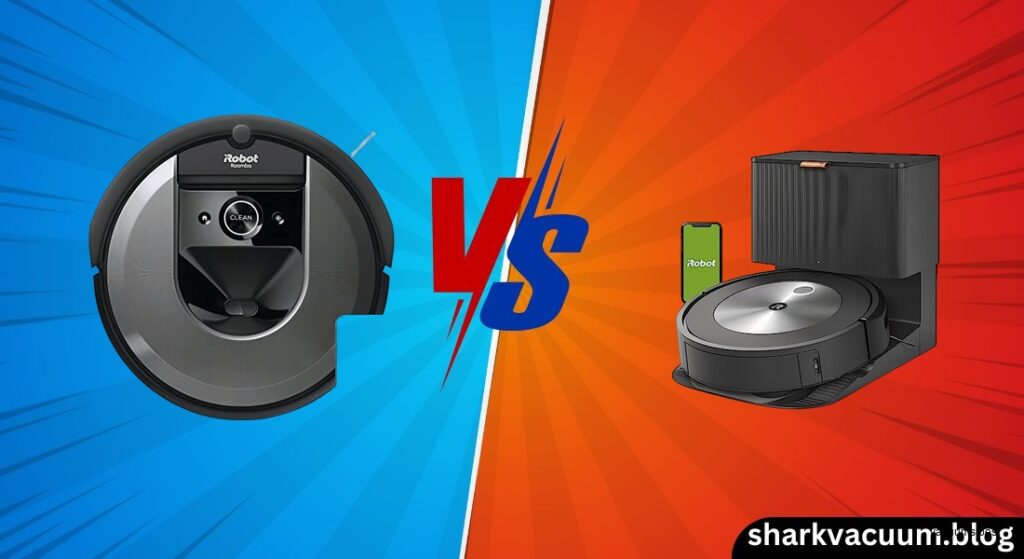
The battle between the Roomba i7 vs. j7 represents a pivotal decision point in the evolution of robotic vacuums: choosing between proven performance and next-generation intelligence. Both models come from iRobot’s premium line, offering self-emptying capabilities (in their “+” variants), smart mapping, and strong pet hair performance. But they serve different needs and lifestyles. The Roomba i7, launched as a trailblazer in smart navigation, brought room-by-room cleaning and automatic dirt disposal to the mainstream. The Roomba j7, its successor, doubles down on autonomy with AI-powered vision that avoids obstacles like cords, toys, and—critically—pet waste. For pet owners and households with cluttered floors, this shift from reactive bumping to proactive avoidance is transformative.
Yet, the i7 isn’t obsolete. It still delivers excellent suction, quiet operation, and reliable multi-floor mapping at a more accessible price point. If you maintain a tidy home and prioritize deep carpet cleaning, the i7 remains a compelling choice, especially when found on sale. This comparison will dissect every critical aspect—navigation, cleaning power, smart features, maintenance, and value—to answer the essential question: Is the j7’s advanced AI worth the upgrade, or does the i7 still offer the smarter buy? By the end, you’ll know exactly which robot fits your home, your habits, and your budget.
1. Introduction
The robotic vacuum market has evolved dramatically from its early days of random bump-and-go navigation. iRobot, a pioneer in the space, led this transformation with the introduction of smart mapping and room recognition. The Roomba i7 was a landmark model that brought Imprint Smart Mapping and the revolutionary Clean Base automatic emptying system to a wider audience, setting a new standard for convenience. It allowed users to direct the robot to clean specific rooms, schedule cleanings by zone, and forget about emptying the dustbin for weeks. For several years, the i7+ was the gold standard for hands-off cleaning.
Now, the Roomba j7 builds on that legacy with a quantum leap in intelligence: Precision Vision Navigation (P.V.N.). Instead of relying solely on mapping and bumping into obstacles, the j7 uses a front-facing camera and artificial intelligence to see and identify common household items—like phone chargers, socks, and pet waste—then actively steers clear of them. This isn’t just an incremental upgrade; it’s a fundamental shift toward true autonomy. iRobot even backs it with the P.O.O.P. (Pet Owner Official Promise) Guarantee, promising a free replacement if the robot smears pet waste.
So, which Roomba i7 vs. j7 is right for you? This article pits these two intelligent cleaners against each other across six key criteria. We’ll examine whether the j7’s advanced obstacle avoidance justifies its higher price, or if the i7’s proven reliability and stronger suction still make it the better value. Whether you’re a pet owner tired of cleaning up after accidents, a busy professional wanting a truly set-and-forget system, or someone with a multi-level home, this comparison will guide you to the ideal choice.
2. Product Overviews
Roomba i7 / i7+ (The Mapping Pioneer)
The Roomba i7 (model 7150) and its self-emptying sibling, the Roomba i7+ (model 7550), are defined by their Imprint Smart Mapping and iAdapt 3.0 with vSLAM navigation. This system uses a top-mounted camera to capture over 230,000 data points per second, creating a highly accurate map of your home. The key innovation is the ability to learn and remember different rooms, allowing for room-specific cleaning schedules and commands. For example, you can tell your voice assistant to “clean the kitchen” and the robot will know exactly where to go. This was a game-changer when it launched, moving robot vacuums from chaotic cleaning to a structured, intelligent routine.
The i7+ elevates this experience with the Clean Base Automatic Dirt Disposal. After every cleaning cycle, the robot docks itself, and a powerful suction mechanism inside the base empties the robot’s 250ml bin into a sealed bag that holds up to 60 days of dirt. This feature is a major selling point for anyone who dreads the chore of emptying a dusty bin. The i7 series also features Dirt Detect Technology, which uses acoustic and optical sensors to identify high-traffic, dirty areas and automatically increase suction power and make multiple passes. Its dual multi-surface rubber brushes are specially designed to be tangle-resistant, making them excellent for pet hair. On hard floors and low to high-pile carpets, it consistently removes over 99% of debris in tests.
However, the i7’s intelligence has limits. Its navigation is excellent for mapping, but it doesn’t “see” small obstacles. It will bump into cords, socks, and toys before navigating around them, which can lead to tangling and frustration in cluttered homes. Its round design also means it can’t clean perfectly into sharp corners. While it’s a powerful and reliable machine, it still requires a “robot-ready” home—meaning you should pick up floor clutter before running it. It supports multi-floor mapping, storing up to 10 different floor plans, making it ideal for townhouses or homes with basements.
Check the latest price of Roomba i7+ on Amazon [link]
Roomba j7 / j7+ (The Intelligent Navigator)
The Roomba j7 and j7+ (model 7150) represent the next generation of robotic cleaning, built on the foundation of the i7 but with a critical upgrade: Precision Vision Navigation (P.V.N.). This front-facing camera system, powered by AI, actively identifies and avoids over 100 common household objects. It can distinguish between a power cord, a shoe, a pet bowl, and even pet waste, then path around them. This is the defining difference. While the i7 bumps and retries, the j7 proactively avoids, drastically reducing the chance of getting stuck. iRobot stands behind this capability with the P.O.O.P. Guarantee, a unique promise to replace the robot if it fails to avoid solid pet waste—a bold statement of confidence.
Like the i7+, the j7+ includes the Clean Base, which has been refined. It holds the same 60 days of dirt but in a sleeker, narrower design that fits better in tight spaces. The cleaning system remains top-tier, using the same dual multi-surface rubber brushes and edge-sweeping brush as the i7, making it equally effective at grabbing pet hair and debris from carpets and hard floors. While its raw suction power is slightly lower than the i7’s (marketed at 1500 Pa vs. the j7’s unlisted but lower figure), its brushes and multiple passes compensate well in real-world use. The j7 is also quieter, operating at around 61 dB compared to the i7’s 68 dB.
The j7’s intelligence extends to the app. If it encounters an unknown obstacle, it can send you a photo and ask how to handle it in the future—like whether to avoid it or clean around it. It learns your home’s layout faster, often creating a complete map in a single run. It integrates with Alexa, Google Assistant, and Apple HomeKit (via Matter), allowing for seamless voice control. For homes with pets, kids, or frequent floor clutter, the j7’s ability to navigate autonomously, even when you’re not home, makes it a true “set and forget” device.
See current deals on Roomba j7+ here [link]
3. Comparison Criteria
To determine the winner in the Roomba i7 vs. j7 debate, we’ll evaluate both models across six critical metrics that matter most to real-world users. These criteria are designed to reflect actual daily use, not just spec sheets.
1. Navigation & Obstacle Avoidance: This is the j7’s battleground. We’ll compare the i7’s vSLAM mapping (which is excellent for layout but blind to small objects) against the j7’s Precision Vision Navigation (which sees and avoids specific items). How often does each get stuck? Can they handle a living room with toys and cords? Does the j7 truly avoid pet waste?
2. Cleaning Performance: Suction power, brush effectiveness, and edge cleaning are key. We’ll compare their 1500 Pa suction (i7) against the j7’s slightly lower but still capable performance. Both use the same tangle-resistant rubber brushes, so we’ll look at real-world results on pet hair, embedded carpet dirt, and hard floor debris. How do they handle corners and baseboards?
3. Smart Features & App Control: Both support room-specific cleaning and voice control, but the j7 goes further. We’ll examine Imprint Smart Mapping vs. the j7’s faster learning, the ability to create Keep Out Zones, and the j7’s unique obstacle photo notifications. How intuitive is the iRobot HOME app for both?
4. Maintenance & Convenience: This includes bin emptying, brush and filter care, and the Clean Base experience. We’ll compare the i7+’s 30-45 day bag capacity to the j7+’s 60-day bag, the size and design of the base stations, and the frequency of maintenance tasks like cleaning brushes and replacing filters.
5. Battery Life & Runtime: Both robots clean for about 75-90 minutes on a single charge. We’ll assess their recharge-and-resume functionality, which is crucial for larger homes. Does one manage its power more efficiently?
6. Value for Money: This is the ultimate question. The j7+ is more expensive. Does its advanced AI and obstacle avoidance justify the price premium? Or does the i7+ offer better value for those with tidy floors and a tighter budget? We’ll consider upfront cost, long-term consumable costs (bags, filters, brushes), and the overall convenience factor.
Each of these criteria will be analyzed with data from technical specs, performance tests, and user feedback to provide a clear, unbiased comparison.
4. Head-to-Head Comparison
Navigation: vSLAM vs. Precision Vision
The Roomba i7 relies on iAdapt 3.0 with vSLAM (visual Simultaneous Localization and Mapping). This system uses a camera on top of the robot to look at the ceiling and walls, building a precise, dynamic map of your home as it moves. It’s highly effective for understanding room layouts, remembering furniture positions, and cleaning in efficient, back-and-forth rows. After a few mapping runs, it can distinguish between your kitchen, living room, and bedrooms, allowing for targeted cleaning commands. However, its vision is upward and outward for mapping, not downward for obstacle detection. As a result, the i7 treats all floor-level objects as unknown “bumpers.” It will drive into phone chargers, socks, and pet toys, often getting tangled in cords or stuck under furniture. This requires users to perform a “pre-clean” by picking up floor clutter, which undermines the “set it and forget it” promise.
The Roomba j7 introduces Precision Vision Navigation (P.V.N.), a paradigm shift. It uses a front-facing camera and AI trained on a vast library of household objects. Instead of bumping, it identifies and avoids specific items in real-time. It can see a phone charger and steer around it, recognize a shoe and navigate past it, and most importantly, detect pet waste and give it a wide berth. This is not just convenient; it’s a necessity for pet owners. The technology requires good lighting to function optimally, as the camera needs to “see” clearly. In low-light conditions, its avoidance capabilities may be reduced. The trade-off is that the j7 learns your home’s map faster—often in a single run—because it doesn’t waste time getting stuck and retracing its path.
Verdict: 🏆 Section Winner: Roomba j7. The difference in navigation is stark. The i7’s vSLAM is excellent for mapping but blind to immediate hazards. The j7’s P.V.N. transforms it from a robot that needs supervision to one that can operate autonomously in a real, lived-in home. For any household with pets, kids, or floor clutter, the j7’s ability to avoid obstacles is a game-changer.
Cleaning Performance: Suction vs. Agitation
When it comes to raw power, the Roomba i7 holds a clear advantage. It boasts 1500 Pa of suction power, marketed as 10x the lifting power of the older 600 series. This strong suction is particularly effective on deep-pile carpets, where it can pull out more embedded dirt and debris in a single pass. In controlled tests, the i7 consistently achieves a 99% debris removal rate on low and high-pile carpets, as well as hardwood floors. Its dual rubber brushes work in opposition to agitate carpet fibers, while its edge-sweeping brush does a good job of pulling dirt from baseboards into the main path. The Dirt Detect Technology further enhances its performance by increasing suction and making multiple passes in high-traffic areas.
The Roomba j7 has slightly lower raw suction power, though iRobot does not publish an exact Pa figure. Independent testing suggests its suction and airflow are below average compared to some competitors. However, it compensates with its aggressive dual rubber brush system and intelligent cleaning logic. On carpets, it may make multiple passes over dirty areas to achieve a similar level of cleanliness. In a sand test on medium-pile carpet, the j7+ scored 91 out of 100, second only to the premium s9+ model. For pet hair, both robots are exceptional thanks to their tangle-resistant rubber brushes. On hard floors, both pick up cereal, rice, sugar, and kitty litter with near-flawless efficiency. Neither excels at cleaning into sharp 90-degree corners due to their round design, though the j7’s edge-cleaning algorithm is slightly more refined.
Verdict: 🏆 Section Winner: Roomba i7 (for deep carpet cleaning). If your home has thick, plush carpets and you prioritize maximum dirt extraction, the i7’s higher suction gives it a tangible edge. However, for general maintenance, daily pet hair pickup, and hard floor cleaning, the performance is a tie. The j7’s brushes and multiple passes close the gap significantly, making its lower suction a minor drawback for most users.
Smart Features & Intelligence
Both the i7 and j7 offer robust smart features through the iRobot HOME app, including room-specific scheduling, Keep Out Zones, and voice control with Alexa, Google Assistant, and Siri Shortcuts. You can command either robot to “clean the kitchen” or “clean under the table,” and it will comply. Both support multi-floor mapping, storing up to 10 different floor plans, which is perfect for multi-level homes.
Where the j7 pulls ahead is in its interactive intelligence. The i7’s navigation is sophisticated but silent. If it gets stuck, you might only find out when the cleaning job fails. The j7, however, is communicative. If its camera spots an obstacle it doesn’t recognize—like a new piece of furniture or a dropped item—it can send a photo to your phone via the app and ask how you’d like it handled in the future. This creates a learning loop, making the robot smarter over time. The j7 also integrates with Apple HomeKit via the Matter protocol, offering broader smart home compatibility than the i7. Setup is faster, as the j7 often completes its initial map in one run, while the i7 may need two or three. The app experience for both is intuitive, with cleaning history, performance reports, and maintenance reminders.
Verdict: 🏆 Section Winner: Roomba j7. While both are “smart,” the j7 is truly intelligent. Its ability to learn from its environment, communicate obstacles, and integrate with a wider range of smart home platforms makes it feel more advanced and user-friendly. The i7 is capable, but the j7 offers a more interactive and adaptive experience.
Maintenance & The Clean Base
Both the i7+ and j7+ feature the Clean Base Automatic Dirt Disposal, a major convenience feature. When the robot docks, a powerful suction in the base empties the 250ml robot bin into a sealed bag, minimizing user contact with dust and allergens.
There are key differences in the base design and capacity. The i7+ Clean Base holds debris for approximately 30 to 45 cleaning cycles, which translates to about 30-60 days for an average household. Its design is bulkier, taking up more space. The j7+ Clean Base is an evolution: it holds the same 60 days of dirt but in a narrower, more streamlined footprint, making it easier to fit in tight corners or against a wall. The emptying process for both is loud, so scheduling it during the day is advisable.
Routine maintenance is similar for both robots. The dual rubber brushes need to be checked monthly for wrapped hair, especially long human hair, which can still tangle around the brush axles despite the rubber design. The high-efficiency filter should be rinsed every few months and replaced every 2 months (or up to 6 months with light use). The j7 has one additional maintenance task: wiping the front camera lens with a dry cloth to ensure its vision system works properly. Failure to do so can lead to navigation errors.
Verdict: 🏆 Section Winner: Roomba j7+. The j7+’s Clean Base offers the same core functionality but with a larger effective capacity (60 days vs. 30-45) and a better, more compact design. The need to clean the camera lens is a minor extra step, but the overall convenience and space-saving design of the j7+ base give it the edge.
Battery Life
Both robots are equipped with lithium-ion batteries and feature recharge-and-resume functionality. The Roomba i7 has a runtime of 75 minutes on high power and up to 120 minutes on eco mode. The Roomba j7 has an average runtime of 75 to 90 minutes. In real-world use, this means both can handle homes up to approximately 1,500-2,000 square feet on a single charge, depending on floor type and cleaning intensity.
For larger homes, the recharge-and-resume feature is essential. When the battery runs low, the robot automatically returns to its base, recharges, and then resumes cleaning from the exact spot it left off. This ensures the entire job is completed, even if it takes multiple charging cycles. Neither robot has a significant advantage in battery longevity or efficiency. Long-term testing shows both maintain strong battery performance over 18+ months of daily use.
Verdict: 🏆 Section Winner: Tie. The battery performance is effectively identical for practical purposes. Both have sufficient runtime for most homes and the critical ability to resume cleaning after recharging, making them suitable for large or multi-room cleaning jobs.
5. Pros and Cons Summary
| Feature | Roomba i7 / i7+ | Roomba j7 / j7+ |
|---|---|---|
| Pros | • Stronger raw suction power (1500 Pa) • Proven reliability and performance • Often cheaper on the market, especially on sale • Excellent multi-floor mapping (up to 10 maps) • Quieter than older Roomba models |
• Superior obstacle avoidance with Precision Vision (avoids cords, toys, pet waste) • Pet Waste Guarantee (P.O.O.P.) – free replacement if it fails • Quieter operation (~61 dB vs. 68 dB) • Faster map learning (often one run) • Sleeker Clean Base with 60-day capacity and smaller footprint • Interactive app with obstacle photo notifications |
| Cons | • Cannot avoid small obstacles – gets stuck on cords and socks • No camera-based object recognition – requires a clean floor policy • Bulkier base station (i7+) • Louder cleaning cycle than the j7 |
• Lower raw suction power than the i7 • Requires decent lighting for camera navigation • Higher upfront cost • Camera lens needs occasional cleaning • Long human hair can still wrap around brush axles |
| Best For | Homes with a “clean floor” policy, budget-conscious buyers, carpet-heavy homes, users upgrading from older models. | Pet owners, homes with kids or clutter, users wanting true “set and forget” operation, those prioritizing smart navigation and convenience. |
View Roomba j7 on Amazon [link]
6. Best Use Case Recommendations
Choose the Roomba i7 / i7+ If:
- You have a “clean floor” policy: You’re willing and able to pick up socks, cords, and toys before starting a cleaning cycle. The i7’s inability to avoid these objects means it will get stuck if they’re left out.
- Budget is a priority: You want premium features like room-specific cleaning and a self-emptying base but are looking for a better deal. The i7+ is often discounted, especially as newer models like the j7+ are released, offering incredible value for the money.
- You have mostly carpets: The i7’s higher suction power gives it a noticeable advantage on deep-pile or heavily soiled carpets, pulling out more embedded dirt in a single pass.
- You have a multi-story home: It handles up to 10 floor plans efficiently, allowing you to move it between levels and have it automatically recognize and clean the correct layout.
Choose the Roomba j7 / j7+ If:
- You have pets: This is the primary reason to choose the j7+. The P.O.O.P. Guarantee provides peace of mind, and its ability to avoid pet bowls, toys, and waste is unmatched. It’s the most pet-friendly robot vacuum on the market.
- Your home is often cluttered: If you have kids who leave toys on the floor, or you tend to leave bags, shoes, or chargers out, the j7’s AI obstacle avoidance prevents it from getting tangled or stuck. You can run it while you’re away without worry.
- You want true “set and forget”: With its proactive avoidance and communication, the j7+ requires the least amount of user intervention. It can navigate a real-world, lived-in home with minimal supervision.
- Noise sensitivity matters: At 61 dB, it operates significantly quieter than the i7’s 68 dB, making it less disruptive during daytime cleaning in open-concept living spaces.
7. Conclusion
The choice between the Roomba i7 vs. j7 ultimately comes down to your home environment and what you value most in a robotic vacuum. The Roomba i7 remains a fantastic machine and a testament to iRobot’s engineering. Its strong suction, reliable Imprint Smart Mapping, and the convenience of the Clean Base (in the i7+ model) make it a powerful and effective cleaner. For users who maintain tidy floors and want to save money—especially if buying on sale or using a trade-in—the i7 offers outstanding value. It’s particularly well-suited for carpeted homes where its higher suction power can be fully utilized.
However, the Roomba j7 represents the future of robotic cleaning. Its Precision Vision Navigation is a transformative feature that moves the robot from being a simple cleaner to a truly intelligent home assistant. The ability to actively avoid cords, shoes, and pet waste eliminates the most common frustrations of robot vacuum ownership. For pet owners, the P.O.O.P. Guarantee is not just a marketing gimmick; it’s a bold promise that underscores the robot’s reliability and makes it the safest choice for homes with animals. The j7+’s quieter operation and sleeker Clean Base further enhance its appeal.
Final Verdict:
* Best Overall & For Pet Owners: Roomba j7+ – Its advanced AI, obstacle avoidance, and pet-specific features justify the higher price for most users seeking a hands-off experience.
* Best Value & For Carpet Focus: Roomba i7+ – If you prioritize deep carpet cleaning and want to save money, the i7+ is still a top-tier performer that delivers excellent results in a well-maintained home.