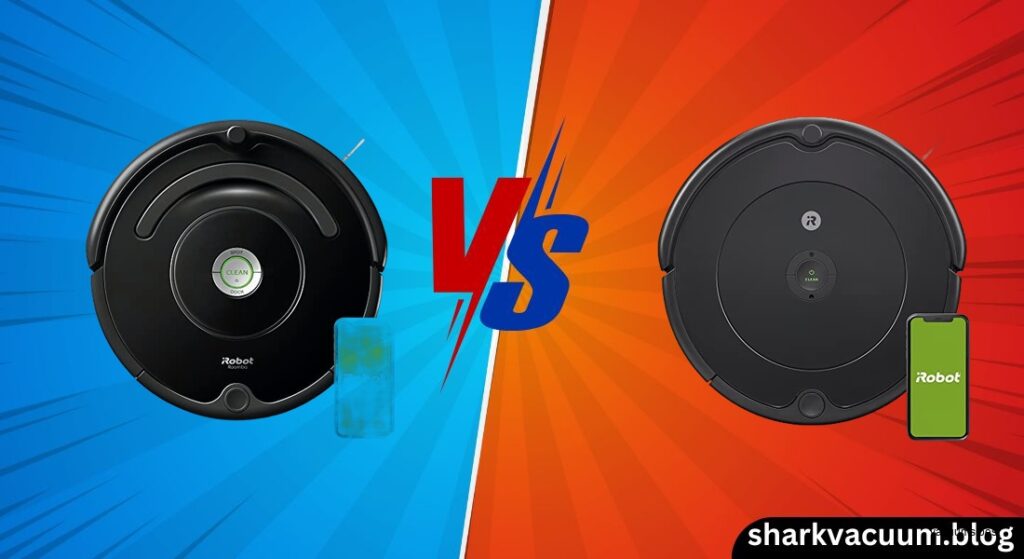
The decision between two budget-friendly robot vacuums from the same brand can be surprisingly tricky—especially when, on paper, they look nearly identical. That’s exactly the case with the Roomba 676 vs 694, two models in iRobot’s long-running 600 Series that promise automated cleaning for less than the price of a premium robot. Both are designed for homes with pets, hard floors, and mixed carpets, and both connect to the iRobot Home App for scheduling and voice control. But when you dig deeper, subtle differences in smart home integration, charging reliability, and software support begin to shape a clearer picture of which one might actually be the better long-term investment.
If you’re comparing the Roomba 676 vs 694, you’re likely looking for a cost-effective, no-fuss cleaning assistant that can handle daily messes without requiring constant supervision. You probably don’t need room-specific cleaning or advanced obstacle avoidance, but you do want something that integrates with your smart home, runs reliably, and won’t leave you frustrated with docking issues or outdated features. The Roomba 676 has built a reputation as a hardworking, no-nonsense cleaner—especially in pet-heavy homes—while the Roomba 694 is often positioned as the more modern, slightly refined version of that same concept. But is the difference meaningful? Or is one just a rebranded version of the other?
This comparison will go beyond the marketing fluff and examine real-world performance, user-reported issues, software capabilities, and long-term value to determine which of these two budget Roombas truly earns the title of “best value.” We’ll look at cleaning power, navigation quirks, smart features, build quality, battery performance, and ecosystem support to help you decide whether the 694’s subtle upgrades justify its typically higher price—or if the 676 remains the smarter buy for budget-focused shoppers.
2. Product Overviews
iRobot Roomba 676
The iRobot Roomba 676 is a straightforward, no-frills robot vacuum built for reliability and strong cleaning performance at an accessible price point. As part of the 600 Series, it’s designed for users who want the iRobot name and proven cleaning system without the premium cost of models with smart mapping or self-emptying bases. It features Wi-Fi connectivity, allowing integration with the iRobot HOME App for remote start, scheduling, and monitoring. Voice control is supported via Amazon Alexa and Google Assistant, making it a solid choice for Android or Google-centric smart homes.
Under the hood, the 676 uses iRobot’s 3-Stage Cleaning System, which combines a bristle brush, a rubber beater brush, and powerful suction to lift dirt, pet hair, and debris from both hard floors and carpets. A single side brush helps sweep dust from edges and corners, while cliff sensors prevent falls on stairs. The robot operates on a randomized “Bump and Continue” navigation pattern, meaning it moves around your home by bouncing off obstacles and changing direction, which can lead to inefficiencies but still covers most areas over time.
Despite its strengths in cleaning, the 676 has notable drawbacks. It lacks Apple HomeKit (Siri) support, limiting its appeal to iPhone users. More critically, users have reported charging contact sensitivity—a recurring issue where the robot fails to dock properly unless precisely aligned, sometimes requiring tape or repositioning of the charging base. It also lacks a carrying handle, making it awkward to move between floors or retrieve from under furniture. While it shares a broad parts ecosystem with other 500/600 series models (keeping maintenance costs low), its older design and app interface (with no visual map trace) make it feel slightly outdated compared to newer models.
Check the latest price of Roomba 676 on Amazon [link]
iRobot Roomba 694
The Roomba 694 represents the modernized evolution of the 600 Series, offering the same core cleaning technology as the 676 but with subtle refinements that improve usability and smart home compatibility. Externally, it features a Charcoal Grey faceplate and updated control layout, signaling its status as the current standard-bearer for iRobot’s budget lineup. Like the 676, it uses the proven 3-Stage Cleaning System with dual multi-surface brushes and a side brush for edge cleaning, delivering strong performance on hardwood, tile, and low-to-medium pile carpets.
Where the 694 pulls ahead is in smart integration. It supports Apple HomeKit and Siri, allowing iPhone users to control it via voice commands or include it in Home automations—a feature the 676 lacks. The iRobot Home App also offers personalized cleaning suggestions based on factors like pollen count and pet shedding seasons, providing a more tailored experience. Setup is generally reported as smoother, with better Wi-Fi pairing reliability and more intuitive app navigation.
Navigation remains randomized (“Bump and Continue”), so it doesn’t create maps or allow room-specific cleaning. However, user reports suggest the 694 has more reliable docking performance than the 676, with fewer complaints about charging contact issues. It also shares the same 300mL dustbin and bristle brush design, meaning maintenance is similar—brushes need regular cleaning to prevent hair tangles, and the bin should be emptied every one to two days depending on use.
While it doesn’t solve all the limitations of budget robot vacuums—no virtual walls, no mopping, no self-emptying—the 694 feels like the more polished, dependable version of the same formula. It’s ideal for users who want a reliable, app-connected robot that integrates well with modern smart homes without paying for features they don’t need.
View Roomba 694 on Amazon [link]
3. Comparison Criteria
To determine which robot offers the better value, we’ll evaluate the Roomba 676 vs 694 across six key criteria:
-
Cleaning Performance: How effectively do they pick up pet hair, dust, and debris on hard floors and carpets? Do they handle transitions well? Are there measurable differences in suction or brush efficiency?
-
Navigation & Intelligence: Both use randomized navigation, but do they differ in coverage consistency, obstacle handling, or tendency to get stuck? Can either adapt to complex layouts?
-
Smart Features & Connectivity: How do they compare in app functionality, voice assistant support, scheduling, and software updates? Does one offer better integration with modern smart home ecosystems?
-
Design & Build Quality: What are the differences in physical design, durability, ease of maintenance, and user ergonomics? Are there issues with charging contacts or dustbin access?
-
Battery & Runtime: Do they offer the same runtime? Is one more reliable in returning to and staying on the charging dock? How long does it take to recharge?
-
Value & Ecosystem: How do they compare in price, availability of replacement parts, long-term reliability, and trade-in eligibility? Does one offer better long-term cost of ownership?
These criteria will help us move beyond superficial similarities and identify which model delivers the most practical benefits for everyday users.
4. Head-to-Head Comparison
Cleaning Performance
When it comes to raw cleaning ability, both the Roomba 676 and Roomba 694 rely on the same core technology: iRobot’s 3-Stage Cleaning System with dual multi-surface brushes. This system combines a bristle brush for sweeping fine particles and a rubber beater brush for agitating carpet fibers and lifting embedded dirt and pet hair. A single side brush helps pull debris from edges and corners, while strong suction pulls everything into the dustbin.
In real-world use, both robots perform exceptionally well on hard floors like hardwood, tile, and vinyl plank. They’re highly effective at picking up cereal, rice, kitty litter, and pet hair, with users reporting visibly cleaner floors after the first few runs—even in homes that appeared already clean. On low-to-medium pile carpets, both models maintain strong performance, digging into fibers to remove daily tracked-in dirt and seasonal shedding.
Controlled testing data gives a slight edge to the Roomba 694, which captured 97% of debris by weight across test surfaces. It achieved 100% efficiency on hardwood and 97% on high-pile carpet, demonstrating consistent performance even on deeper fibers. The 676 lacks official test metrics in the provided data, but user reports consistently praise its “power-lifting” suction, especially in multi-pet households (e.g., 4 cats, 3 dogs), suggesting comparable real-world results.
Both robots struggle with very thick shag carpets and may get stuck on high thresholds or uneven flooring. Neither has advanced obstacle detection, so they can occasionally spin on rugs or bump repeatedly into furniture legs. The bristle brushes on both models are prone to hair tangling, requiring bi-weekly cleaning to prevent motor strain.
Pro Tip: For homes with heavy pet shedding, consider replacing the bristle brush with a rubberized one (compatible with both models) to reduce tangles and improve hair pickup.
Verdict: Tie. Mechanically, the cleaning systems are functionally identical. The 694’s slight edge in test data may reflect minor internal tuning, but the 676 delivers the same level of performance in everyday use. Both are excellent for hard floors and low-to-medium carpets but not ideal for deep-pile rugs.
Navigation & Intelligence
Neither the Roomba 676 nor the 694 features LiDAR, cameras, or smart mapping. Instead, both rely on iRobot’s “Bump and Continue” navigation system—a randomized algorithm that sends the robot moving outward from its dock, gently colliding with walls and furniture, then changing direction to cover new ground.
This method is effective for open-concept layouts or small apartments, where the robot can eventually clean every reachable area within its 90-minute runtime. However, it’s inherently inefficient. Users describe the movement as “aimless” or “random,” with the robot often cleaning the same spot multiple times while missing others—especially in cluttered rooms or homes with many doorways.
Both models can transition between different floor types (e.g., hardwood to carpet) and climb thresholds up to ⅝ inch (1.6 cm). Cliff sensors work reliably on stairs, preventing falls. However, some users report the 676 getting stuck more frequently during transitions, particularly between kitchen tile and dining room flooring, suggesting potential software or sensor calibration differences.
Neither robot supports virtual walls, no-go zones, or room-specific cleaning. You cannot tell either model to “clean the kitchen only” or block off a room via the app. If you need structured cleaning or precise control, neither of these is the right choice.
Verdict: Tie. The navigation systems are functionally identical. If you value efficiency, mapping, or room selection, you’ll need to step up to a model like the Roomba i3, i7, or j5. For basic whole-home cleaning in simple layouts, both the 676 and 694 will eventually get the job done.
Smart Features & Connectivity
This is where the Roomba 694 pulls ahead with a clear, meaningful advantage.
Both models connect to the iRobot Home App (iOS and Android), allowing you to schedule cleanings, start or stop cycles remotely, and receive maintenance alerts. The app also tracks cleaning history and offers personalized cleaning suggestions—for example, recommending extra runs during high pollen seasons or heavy pet shedding periods.
However, the 694 adds Apple HomeKit and Siri compatibility, a feature the 676 lacks. This means iPhone users can say, “Hey Siri, start cleaning,” or include the robot in Home automations like “When I leave home, start the Roomba.” For users invested in the Apple ecosystem, this is a significant quality-of-life upgrade.
The 676 only supports Amazon Alexa and Google Assistant, making it better suited for Android or Google Home users. While it can be controlled by voice, it’s excluded from the growing world of Apple-centric smart home routines.
App usability is similar on both, with no real-time map visualization (a limitation of the 600 Series). The interface shows a generic background rather than a floor plan, which some users find disappointing. However, the 694’s app is reported to have a more modern feel and smoother setup process.
Verdict: Roomba 694 Wins. The addition of Siri/HomeKit support and slightly refined app experience gives the 694 a clear edge for modern smart home users. If you use an iPhone, this alone may justify the upgrade.
Design & Build Quality
Both robots share the same circular 600 Series chassis, measuring 13.4 inches in diameter and 3.54 inches tall, allowing them to fit under most furniture. They weigh around 6.8 lbs and feature a front bumper, top-mounted controls, and a central dustbin.
Aesthetically, the Roomba 694 has a modernized Charcoal Grey faceplate, giving it a sleeker, more current look compared to the 676’s older black/grey design. However, both models lack a carrying handle—a notable downgrade from earlier 600 Series models like the 675, which included one. This makes it awkward to lift the robot from under beds or carry it between floors.
One of the most significant differences lies in charging reliability. The 676 has a well-documented issue with sensitive charging contacts. Users frequently report having to “fiddle” with the robot’s position on the dock to ensure a connection, sometimes resorting to taping the charging base to the floor for stability. This can lead to failed recharges and interrupted cleaning cycles.
In contrast, the 694 is reported to have more consistent docking success, with fewer user complaints about charging issues. While not perfect, it appears iRobot addressed some of the contact sensitivity problems in later revisions.
Both models use the same 300mL dustbin, which requires frequent emptying—especially in homes with pets. Filters and brushes are easily accessible but require a tool for removal, which may not be included in the box.
Verdict: Roomba 694 Wins (Slightly). While both lack the convenient handle, the 694’s improved docking reliability and more modern design make it the more user-friendly option.
Battery & Runtime
Both the Roomba 676 and 694 are rated for up to 90 minutes of runtime on a full charge, powered by a Lithium-Ion battery. In practice, actual runtime varies depending on floor type, debris load, and navigation obstacles, with some users reporting closer to 60 minutes per cycle.
Both robots feature automatic return-to-base functionality, meaning they’ll head back to the dock when the battery is low. If the cleaning area is small enough, they can complete a full clean without recharging.
The key difference lies in charging reliability. As noted earlier, the 676’s sensitive charging contacts can prevent a proper connection, leading to failed recharges and stranded robots. Some users have had to secure the dock with command strips or manually adjust the robot each time.
The 694, while not immune to docking issues, generally receives better reports for charging consistency. It takes about 3 hours to fully recharge, and most users don’t report the same level of frustration with contact alignment.
Verdict: Roomba 694 Wins. Runtime is similar, but the 694’s more reliable charging mechanism makes it a more dependable daily driver.
Value & Ecosystem
When it comes to long-term ownership, both models benefit from iRobot’s vast 600 Series parts ecosystem. Filters, brushes, side brushes, and other consumables are widely available and affordable, with comprehensive kits (2 brushes, 6 filters, 6 side brushes) priced around $18.51 with coupons.
Both are eligible for iRobot’s Trade-In Program under the 400–600 series tier, meaning you can receive credit toward a future upgrade regardless of which model you own.
Pricing is where the decision gets nuanced. The Roomba 676 is often found at deep discounts or in bundles with extra filters and brushes, making it a strong value if priced $50+ below the 694. However, if the price difference is under $30, the 694 offers better value due to its improved smart features and charging reliability.
The 694 is positioned as the current standard for iRobot’s budget line, while the 676 feels like a legacy model—still capable, but showing its age in design and software support.
Verdict: Depends on Price. If the 676 is significantly cheaper, it’s a great value. If prices are close, the 694 is the smarter buy.
5. Pros and Cons Table
| Feature | Roomba 676 | Roomba 694 |
|---|---|---|
| Navigation | Randomized (Bump & Continue) | Randomized (Bump & Continue) |
| Smart Mapping | No | No |
| Voice Control | Alexa, Google Assistant | Alexa, Google Assistant, Apple HomeKit (Siri) |
| Runtime | ~90 Minutes | ~90 Minutes |
| Brush Type | Dual Multi-Surface (Bristle + Rubber) | Dual Multi-Surface (Bristle + Rubber) |
| Carrying Handle | No | No |
| Charging Reliability | Mixed (Sensitive contacts reported) | Good |
| App Features | Scheduling, Remote Start | Scheduling, Remote Start, Cleaning Suggestions |
| Virtual Boundaries | No (Requires physical barriers) | No |
| Best For | Budget buyers needing raw suction | Smart home integration & reliability |
Roomba 676 Pros:
* Strong suction performance for pet hair.
* Extremely affordable parts ecosystem.
* Simple one-button operation.
* Often available at aggressive discount prices.
Roomba 676 Cons:
* Charging contact sensitivity issues.
* No Apple HomeKit support.
* “Aimless” navigation can miss spots.
* No carrying handle.
* Older app interface with no map visualization.
Roomba 694 Pros:
* Compatible with Siri/Apple HomeKit.
* More reliable docking mechanism.
* Modernized design and software suggestions.
* Proven 97% debris capture rate.
* Smoother app setup and integration.
Roomba 694 Cons:
* Still lacks mapping and virtual walls.
* Small dustbin (300mL) requires frequent emptying.
* Bristle brushes tangle with long hair.
* No carrying handle.
See current deals on Roomba 694 here [link]
6. Best Use Case Recommendation
Choose the Roomba 676 if:
- Budget is the absolute priority: You find it on a deep clearance sale or bundled with a year’s worth of filters and brushes.
- You have a simple layout: Your home is a studio apartment or a single-story open plan where random navigation will eventually cover everything.
- You are an Android/Google user: You don’t need Siri integration.
- You are handy: You don’t mind occasionally cleaning charging contacts or adjusting the dock position to ensure a charge.
Choose the Roomba 694 if:
- You use Apple HomeKit: You want to control your vacuum via Siri or include it in Apple Home automations.
- You want reliability: You want to avoid the charging contact frustrations reported with the 676.
- You have mixed flooring: The 694 has shown slightly better consistency in transitioning between hard floors and carpets in recent tests.
- You want the latest software: You prefer the updated app interface and personalized cleaning suggestions.
7. Conclusion
The battle between the Roomba 676 vs 694 isn’t about cleaning power—it’s about modernization and reliability. Both robots share the same DNA: a randomized navigation system that sacrifices efficiency for affordability, and a dual-brush cleaning system that excels at handling pet hair and daily debris on hard floors and low-to-medium pile carpets.
However, the Roomba 694 emerges as the clear recommendation for most buyers. Its addition of Apple HomeKit (Siri) support, combined with a more reliable charging mechanism and a refined app experience, makes it the better long-term investment. While the 676 delivers the same core cleaning performance, its tendency for docking issues and lack of modern smart home integration make it feel outdated.
If you find the 676 at a significant discount—$50 or more below the 694—it can still be a worthwhile purchase, especially for budget-focused users who don’t need Siri and are comfortable troubleshooting occasional charging quirks. But at similar price points, the Roomba 694 is the smarter choice.
Final Verdict: For a balance of smart features, reliability, and cleaning performance, the Roomba 694 is the recommended buy. It represents the current standard for what a budget robot vacuum should be, whereas the 676 feels like a legacy model waiting to be phased out.