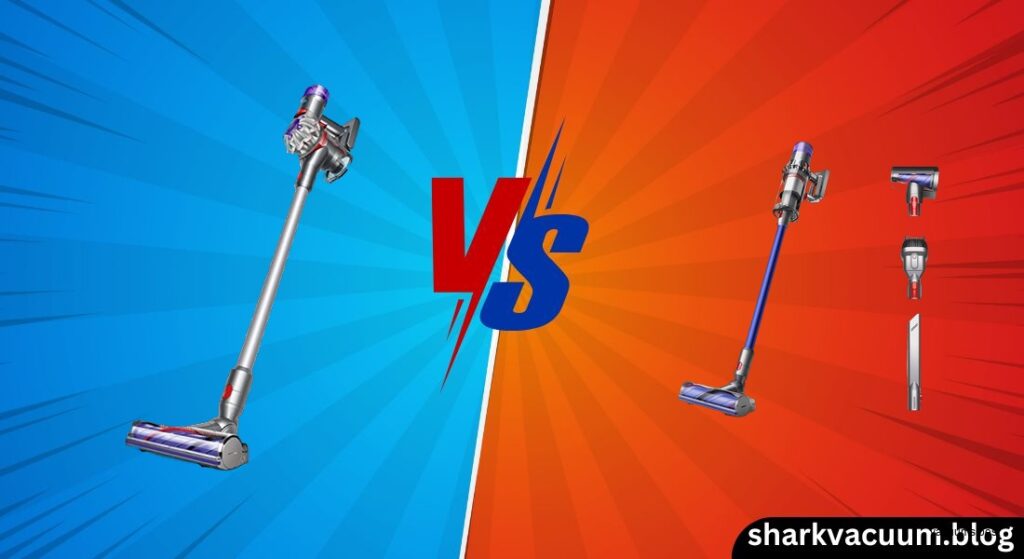
In the world of cordless vacuums, Dyson has long been a name synonymous with innovation and powerful suction. But when it comes to choosing between two of their most popular models—the Dyson V7 and the Dyson V11—the decision isn’t just about brand loyalty. It’s about understanding how each model fits your home, lifestyle, and cleaning priorities. The dyson vacuum v7 vs v11 debate is more than a simple upgrade path; it’s a choice between lightweight efficiency and smart, high-powered performance.
The Dyson V7 is often seen as the gateway into the Dyson ecosystem. It’s lighter, more affordable, and still delivers the brand’s signature cyclonic suction. It’s ideal for smaller spaces, quick cleanups, or those who want strong performance without paying a premium. On the other hand, the Dyson V11 is a full-featured powerhouse built for larger homes, deep carpet cleaning, and pet owners who need every bit of suction and intelligence the machine offers. With an LCD screen, auto-adjusting suction, and nearly double the battery life, the V11 represents a significant leap in technology.
But does that leap justify the price? And is the V7 really outdated, or is it still a smart buy in 2025? In this detailed comparison, we’ll break down every aspect—suction, battery, design, filtration, and real-world usability—to help you decide which Dyson vacuum truly belongs in your home. Whether you’re cleaning hardwood floors in a studio apartment or battling pet hair on wall-to-wall carpeting, we’ll show you which model delivers the best value and performance for your needs.
Product Overviews
Dyson V7: The Lightweight Contender
The Dyson V7 remains one of the most popular entry-level cordless vacuums in Dyson’s lineup, and for good reason. Built around the Dyson Digital Motor V7, it generates 115 Air Watts of suction power—enough to handle everyday messes on hard floors and low-to-medium pile carpets. What truly sets the V7 apart is its lightweight design, tipping the scales at just 5.58 lbs, making it one of the easiest Dyson models to maneuver, especially for cleaning stairs, ceilings, or tight spaces.
It operates with two manual power modes: Powerful mode (up to 30 minutes runtime) for general cleaning and MAX mode (6 minutes) for intensive tasks like deep-cleaning rugs or upholstery. Unlike newer models, it lacks automatic suction adjustment or an LCD display, relying instead on a simple trigger-based system. The Motorbar™ cleaner head comes standard, featuring 43 anti-tangle vanes that prevent pet hair from wrapping around the brush bar—a major plus for pet owners.
While the V7 excels in portability and value, it does come with trade-offs. The battery is not user-removable, meaning you can’t swap in a spare for extended cleaning. The bin-emptying mechanism uses a lever system that, while functional, feels outdated compared to the “point-and-shoot” designs on newer models. Still, for under $300 on sale, the V7 delivers reliable, fade-free suction and solid filtration—capturing 99.97% of particles down to 0.3 microns—making it a strong contender for allergy sufferers and small-space dwellers alike.
Check the latest price of Dyson V7 on Amazon [link]
Dyson V11: The Smart Performance Leader
The Dyson V11 is where Dyson’s cordless technology takes a major leap forward. Powered by the Hyperdymium™ motor spinning at 125,000 rpm, it delivers 60% more suction power than the V8—and significantly more than the V7. This makes it a true deep-cleaning machine, especially on carpets, where its stiff nylon bristles agitate fibers to extract deeply embedded dirt and pet hair.
What truly defines the V11 is its smart intelligence. The built-in LCD screen displays real-time battery life down to the second, alerts you to blockages, and tells you when the filter needs washing—removing the guesswork from maintenance. It also features Auto mode (on Torque Drive and Extra models), which uses a Dynamic Load Sensor to detect floor type and automatically adjust suction—boosting power on carpets and conserving battery on hard floors.
The V11 offers up to 60 minutes in Eco mode, 40 minutes in Auto/Medium, and 10–12 minutes in Boost mode, with a removable battery that allows for easy replacement or backup use. Its 0.2-gallon bin is larger than the V7’s, though users report it still fills quickly with pet hair or large debris. The filtration system is also superior, capturing 99.99% of particles in Boost mode, making it ideal for homes with allergies or pets.
However, this performance comes at a cost—both financial and physical. The V11 weighs 6.6 lbs, noticeably heavier than the V7, and its pull-and-hold trigger can cause hand fatigue during long cleaning sessions. Priced between $570 and $660, it’s a significant investment, and while it outperforms the V7 in almost every way, it’s not without flaws—particularly on hard floors, where the Motorbar head can sometimes push large debris instead of sucking it up.
See current deals on Dyson V11 here [link]
Comparison Criteria
To determine which vacuum is right for you, we’ll evaluate the Dyson V7 and V11 across five key areas that matter most to real-world users: suction power and cleaning performance, battery life and intelligence, design and ergonomics, filtration and maintenance, and value and reliability. These aren’t just specs on a box—they’re the factors that impact how easy, effective, and enjoyable your daily cleaning routine will be.
Suction power determines how well a vacuum lifts dirt from carpets and hard floors. Battery life affects whether you can clean your entire home in one go. Design and ergonomics influence how comfortable the vacuum is to use, especially on stairs or overhead. Filtration is crucial for allergy sufferers, and maintenance alerts can save you time and frustration. Finally, value and reliability help you decide whether the higher price of the V11 is justified—or if the V7 offers 90% of the performance for 60% of the cost.
Let’s dive into each of these categories to see how the V7 and V11 stack up.
Head-to-Head Comparison
1. Suction Power and Cleaning Performance
When it comes to raw cleaning ability, the Dyson V11 clearly outclasses the V7. The V11’s Hyperdymium™ motor produces significantly more airflow and suction, translating to superior deep-cleaning performance on carpets. In lab tests and real-world use, the V11 consistently pulls out more embedded dirt, flour, and pet dander from medium-to-high pile carpets thanks to its stiff nylon bristles and higher motor speed.
The V7, while capable, operates at 115 Air Watts in both Powerful and MAX modes—meaning there’s no actual increase in suction between the two, only a shorter runtime in MAX. It performs well on hard floors and low-pile rugs, and the Motorbar head does a good job preventing hair tangles. However, it lacks the power to deeply agitate carpet fibers, making it less effective for homes with thick or heavily soiled carpets.
On hard floors, both models use anti-static carbon fiber filaments to capture fine dust. The V7 handles this task competently, but the V11’s Auto mode gives it an edge by automatically reducing suction on hard surfaces to preserve battery. That said, some users report that the V11’s Motorbar head can push larger debris like cereal or crumbs instead of immediately sucking it up—a quirk less common in Dyson models with soft roller heads (like the V12 or V15).
For pet owners, the V11 is the better choice. It includes the Hair Screw Tool, a motorized conical brush specifically designed to remove long pet hair from upholstery and stairs without tangling. The V7 lacks this tool in its base model, though it can be purchased separately.
🏆 Section Winner: Dyson V11 – Superior suction, deeper carpet cleaning, and smart mode adjustments make it the clear performance leader.
2. Battery Life and Intelligence
Battery performance is where the gap between these two models becomes most apparent.
The Dyson V7 offers up to 30 minutes in Powerful mode and just 6 minutes in MAX mode. While sufficient for small apartments or quick cleanups, this runtime can be limiting for larger homes. The battery is internal and non-removable, so once it degrades or dies, the entire unit may become unusable unless repaired. There’s no smart battery management—the user must manually switch modes, and there’s no way to monitor remaining runtime.
In contrast, the Dyson V11 delivers up to 60 minutes in Eco mode, 40 minutes in Auto/Medium, and 10–12 minutes in Boost. This doubles the usable runtime for most cleaning tasks. More importantly, the V11 features a removable lithium-ion battery, allowing you to buy a spare and swap it mid-clean—ideal for multi-level homes or heavy-duty sessions.
The LCD screen is a game-changer. It shows a countdown timer, mode indicator, and real-time maintenance alerts. If there’s a blockage, the screen tells you exactly where it is and how to fix it. The battery algorithm even “learns” your usage over time to provide more accurate run time estimates.
🏆 Section Winner: Dyson V11 – Longer runtime, removable battery, and intelligent LCD feedback make it far more capable and user-friendly.
3. Design, Build Quality, and Ergonomics
Design is where personal preference plays a bigger role.
The Dyson V7 wins hands-down for lightweight maneuverability. At 5.58 lbs, it’s easy to lift, carry up stairs, or use overhead for cleaning ceiling corners and blinds. The matte finish feels durable, and the overall build, while not as premium as newer models, is solid for its price point. It converts to a handheld vacuum in one click, making it versatile for cars and furniture.
However, the bin-emptying mechanism is a weak point. It uses a lever system that requires pulling a red tab to open the bin, but you must then press the cyclone down to reset it—a process that can be messy and awkward. The trigger is also a simple on/off, with no lock, so you must hold it the entire time.
The Dyson V11 feels more substantial at 6.6 lbs. This added weight makes it less ideal for extended handheld use, and some users report hand fatigue from the pull-and-hold trigger, which lacks a lock feature. Still, the build quality feels more robust, and the docking station allows for sleek wall mounting and tool storage.
The bin-emptying system is slightly improved over the V7 but still relies on the same lever mechanism. Newer Dyson models (like the V15) have moved to a “point-and-shoot” system, making the V11 feel a bit outdated in this regard.
🏆 Section Winner: Dyson V7 – Lighter, easier to handle, and more comfortable for daily use, especially in smaller homes.
4. Filtration and Maintenance
Both vacuums offer strong, whole-machine filtration, but the V11 pulls ahead with smarter maintenance features.
The Dyson V7 captures 99.97% of particles as small as 0.3 microns, which is excellent for a budget model. The filter is washable and should be cleaned monthly, then dried for at least 24 hours before reinserting. However, there’s no alert system—you have to remember to clean it or risk reduced suction. Troubleshooting blockages relies on listening for motor pulsing, which isn’t always reliable.
The Dyson V11 matches that filtration in Eco and Auto modes (99.97%) and improves to 99.99% in Boost mode, making it slightly better for allergy sufferers. More importantly, the LCD screen actively monitors the system, alerting you when the filter needs washing, when there’s a blockage, or when the bin is full. This proactive feedback makes maintenance much easier and prevents performance issues before they happen.
Both models require regular filter washing and bin emptying, but the V11’s intelligence removes the guesswork.
🏆 Section Winner: Dyson V11 – Superior filtration in Boost mode and real-time diagnostic alerts make maintenance simpler and more effective.
5. Value and Reliability
This is where the decision gets tricky.
The Dyson V7 typically sells for $300–$350, often dropping below $300 during sales. For that price, you get a lightweight, effective vacuum that handles daily cleaning, pet hair, and hard floors well. It’s a fantastic value for apartments, small homes, or as a secondary vacuum. However, its older design, non-removable battery, and lack of smart features mean it may feel outdated in a few years.
The Dyson V11, priced between $570 and $660, is a premium product. You’re paying for 60% more suction, double the runtime, removable battery, and the LCD screen. For large homes with carpeting or heavy pet shedding, it’s worth the investment. But long-term reliability is a concern. Consumer Reports and user data suggest Dyson stick vacuums have a higher failure rate—nearly 50% within five years—compared to more reliable (and cheaper) competitors like Shark.
Additionally, newer Dyson models like the V12 Detect Slim or V15 Detect offer features the V11 lacks—like laser dust detection and better hard floor performance—for only slightly more money.
So while the V11 is more capable, the V7 offers better value for most average users.
🏆 Section Winner: Dyson V7 – Lower price, solid performance, and lower risk make it the smarter buy for budget-conscious shoppers.
Pros and Cons Table
| Feature | Dyson V7 | Dyson V11 |
|---|---|---|
| Pros | • Extremely lightweight (5.58 lbs) • Excellent value (often < $300) • Effective anti-tangle brush • Simple, intuitive operation |
• 60% more suction power • LCD screen with countdown & diagnostics • Removable battery • Auto mode adjusts to floor type • Superior carpet deep-cleaning |
| Cons | • Short runtime (6 mins on MAX) • Non-removable battery • No smart features or display • Dated bin-emptying mechanism • Manual mode switching only |
• Heavy for handheld use (6.6 lbs) • Expensive ($570+) • “Pull-and-hold” trigger causes fatigue • Can struggle with large debris on hard floors • Reliability concerns long-term |
| Best For | Apartments, hard floors, budget buyers, secondary vacuums. | Large homes, heavy carpet users, pet owners, tech enthusiasts. |
Best Use Case Recommendation
Choose the Dyson V7 if:
- You live in an apartment or small home (under 1,000 sq ft): The 30-minute runtime is more than enough for quick, daily cleanups.
- You’re on a tight budget: The V7 delivers genuine Dyson performance at a fraction of the cost, especially on sale.
- You have mostly hard floors: Its suction is more than adequate for wood, tile, or laminate.
- You need a lightweight, easy-to-store vacuum: At 5.58 lbs, it’s perfect for stairs, cars, or overhead cleaning.
- You want a secondary or backup vacuum: Its simplicity and low cost make it ideal for guest rooms or vacation homes.
View Dyson V7 on Amazon [link]
Choose the Dyson V11 if:
- You have a large, carpeted home: The deep-cleaning power and 60-minute Eco mode make it ideal for whole-house cleaning.
- You’re a pet owner with heavy shedding: The Hair Screw Tool and superior suction tackle pet hair better than almost any other model.
- You want smart, real-time feedback: The LCD screen tells you exactly how much battery is left and where a blockage is—no guessing.
- You need flexibility and extended runtime: The removable battery lets you swap in a spare for uninterrupted cleaning.
- You’re willing to pay more for top-tier performance: If budget isn’t a concern and you want the best Dyson has to offer in this generation, the V11 delivers.
See current deals on Dyson V11 here [link]
Conclusion
The dyson vacuum v7 vs v11 showdown ultimately comes down to what kind of cleaner you are and what your home demands.
The Dyson V7 is the value champion. It’s lightweight, affordable, and capable enough for everyday messes. For apartment dwellers, pet owners on a budget, or anyone who just wants a reliable, no-frills cordless vacuum, the V7 remains a top choice in 2025. It may lack the bells and whistles, but it gets the job done without breaking the bank.
The Dyson V11, on the other hand, is the performance leader. With 60% more suction, an intelligent LCD screen, removable battery, and superior carpet cleaning, it’s built for serious cleaning tasks. If you have a large, carpeted home, multiple pets, or simply want the most advanced Dyson experience short of the V15, the V11 justifies its higher price—assuming you’re okay with the weight and reliability concerns.
Final Verdict: Buy the V7 if you want 90% of Dyson’s cleaning power for 60% of the price. Buy the V11 if you need every ounce of suction, intelligence, and runtime the brand offers. Both are excellent machines—just designed for different kinds of homes and users.