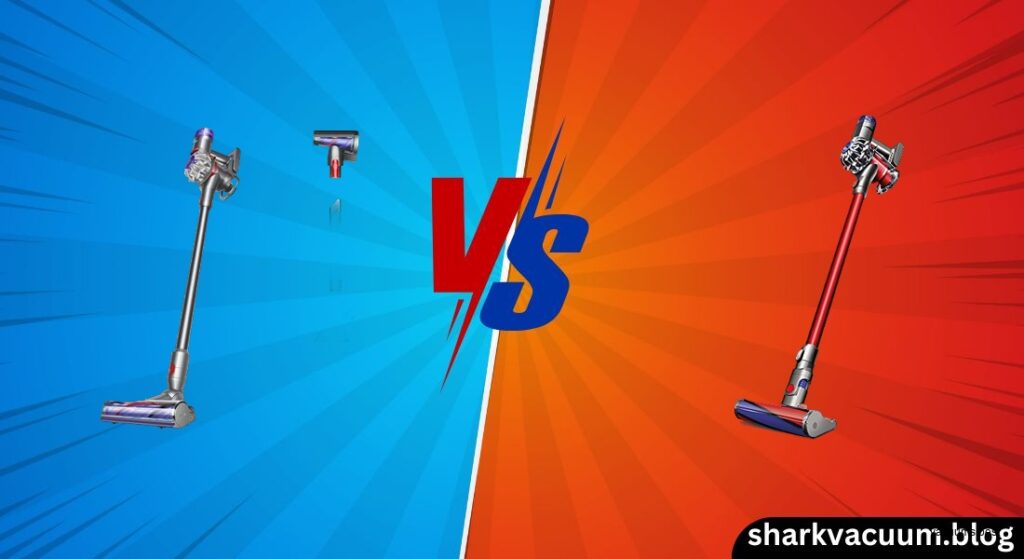
The Dyson DC59 and Dyson V6 are often spoken of as separate models, but in reality, they represent different naming conventions for the same groundbreaking generation of cordless vacuums. Released in 2013, this platform was one of the first to prove that a cordless vacuum could deliver suction power rivaling corded machines—100 Air Watts, to be exact. Today, over a decade later, these units still hold a cult following, especially in the refurbished and secondhand markets, where they offer a budget-friendly entry into the Dyson ecosystem. The confusion arises because “DC59” typically refers to the base model (often sold as the V6 Animal), while “V6” is used more broadly to describe the entire family of configurations, including upgraded versions like the V6 Absolute or V6 HEPA. So when comparing the Dyson DC59 vs. V6, you’re not comparing two distinct machines, but rather evaluating which configuration of this legacy platform delivers the best value and performance for your specific cleaning needs. In 2025, with newer models like the V15 and V18 dominating headlines, the DC59/V6 generation remains relevant thanks to its robust build, powerful motor, and surprisingly competitive suction—especially when found at a discount. But it also carries well-known flaws: short battery life, loud operation, and a notoriously messy bin-emptying process. This article dives deep into the nuances between these model variations to help you decide whether the base DC59 is sufficient or if upgrading to a V6 HEPA or Absolute variant is worth the extra cost.
1. Introduction
Dyson’s 6th-generation cordless vacuum platform, most commonly known today as the Dyson V6, marked a turning point in home cleaning technology. Originally released as the Dyson DC59 Digital Slim, this machine was engineered to challenge the performance of full-sized corded vacuums while offering the freedom of cordless operation. At its core, it introduced the Dyson Digital Motor V6, spinning at 110,000 RPM and delivering 100 Air Watts of suction—three times more powerful than any other handheld vacuum at the time. Over the years, Dyson marketed this same core platform under multiple names and configurations, leading to widespread confusion. The DC59 is essentially the base model number, often found in the “Animal” trim level, while V6 is the broader product line that includes enhanced versions like the V6 Absolute, V6 Motorhead, and V6 HEPA. Despite their different labels, all these models share the same motor, battery chemistry, and fundamental design. The real differences lie in the included accessories, filtration systems, and minor engineering tweaks.
This comparison isn’t about choosing between two competing products, but rather about understanding which version of this legacy platform best suits your home. For many buyers in 2025, these vacuums represent the most affordable way to own a genuine Dyson with proven suction power. Refurbished or used units can be found for well under $200, making them an attractive option for apartment dwellers, pet owners, or anyone needing a reliable secondary vacuum. However, they come with trade-offs: the battery only lasts about 20 minutes in standard mode, the noise level is significantly higher than newer models, and the bin emptying mechanism is widely criticized for leaving dust and hair stuck inside. Yet, their durability remains impressive—many units from 2013 are still in daily use, a testament to Dyson’s build quality.
The purpose of this article is to cut through the naming confusion and provide a clear, side-by-side evaluation of the DC59 and V6 configurations. We’ll focus on real-world performance, maintenance quirks, and current market value to help you determine whether the budget-friendly DC59 is all you need, or if spending more on a V6 HEPA or Absolute model is justified by better filtration, improved tools, or long-term usability. While newer Dyson models offer longer runtimes and quieter operation, the V6 generation still holds its own in suction power and versatility—especially for those who prioritize performance over modern conveniences.
2. Product Overviews
Product A: The Dyson DC59 (Base / “Animal” Configuration)
The Dyson DC59, often sold as the V6 Animal, is the foundational model of this entire generation. It was the first to bring Dyson’s digital motor technology into a lightweight, cordless form factor that could transition seamlessly from floor cleaning to handheld use. At its heart is the Dyson Digital Motor V6, a brushless motor that spins at an astonishing 110,000 RPM, generating 100 Air Watts of suction—on par with many modern budget vacuums. The machine operates in two modes: standard mode offers fade-free suction for up to 20 minutes, while “Max” mode boosts power by 50% for tough messes but cuts runtime down to just 6 minutes. It runs on a 21.6V NiMnCo lithium-ion battery that takes about 3.5 hours to fully charge.
The DC59 features a belt-driven motorized cleaner head with dual bristles—stiff purple nylon for carpets and soft carbon fiber filaments for hard floors. This head is effective on low-to-medium pile carpets and gently lifts fine dust from hardwood without scattering debris. A standout feature for pet owners is the included Mini Motorized Tool, a powerful attachment designed specifically for removing embedded pet hair from stairs, upholstery, and car interiors. The tool has a self-adjusting head and a rotating brush bar, making it one of the best pet hair removers in Dyson’s accessory lineup. Other standard tools typically include the Crevice Tool, Combination Tool, and sometimes a Stiff Bristle Brush, depending on the bundle.
Despite its strengths, the DC59 has notable limitations. It uses only a washable pre-motor foam filter, which captures larger particles but allows fine dust to pass through the motor and be expelled back into the air. This makes it less suitable for allergy sufferers. The bin emptying process is also a persistent pain point: pressing the red release button opens a trapdoor, but dust and hair often cling to the internal shroud, requiring manual cleaning. The motor is loud, especially in Max mode, and the lack of sound dampening makes it one of the noisiest Dyson models still in circulation. However, its build quality is excellent—many units from 2013 are still operational today, thanks to durable plastics and a robust motor. Replacement parts like batteries, filters, and brush bars remain widely available, ensuring long-term serviceability.
Check the latest price of [Dyson DC59 Animal] on Amazon [link]
Product B: The Dyson V6 “Absolute” / “HEPA” Variants
The Dyson V6 Absolute and V6 HEPA represent upgraded configurations of the same core platform used in the DC59. Mechanically, they are identical: same 100 Air Watts of suction, same 21.6V battery, and same 20-minute runtime in standard mode. The key differences lie in the included accessories and filtration upgrades. The V6 HEPA model adds a post-motor HEPA filter that captures 99.97% of particles as small as 0.3 microns, including pollen, mold spores, and fine dust. This is a major upgrade for users with asthma or allergies, as it prevents the vacuum from recirculating allergens into the air—a significant limitation of the base DC59.
The V6 Absolute typically includes not only the standard motorized cleaner head but also the Soft Roller Cleaner Head (Fluffy), a specialized tool designed for hard floors. Unlike the bristle-based head, the Soft Roller uses anti-static carbon fiber filaments that pick up large debris without scattering it, a common issue with the DC59’s head on hardwood. The soft roller also polishes the floor as it cleans, leaving a streak-free finish. This dual-head setup makes the Absolute far more versatile, especially in homes with mixed flooring. Some Absolute bundles may also include extended tools like a longer crevice tool or a mattress tool, enhancing its utility for deep cleaning.
While these upgrades improve performance and air quality, they come at a higher price point—especially when purchased new. On the used or refurbished market, however, the price gap narrows, making the Absolute and HEPA variants more compelling. The core weaknesses remain: short battery life, loud operation, and the same problematic bin emptying mechanism. The belt-driven brush bar is also prone to hair wrap, requiring regular maintenance. However, for users who prioritize air quality or hard floor performance, the V6 HEPA and Absolute configurations offer meaningful advantages over the base DC59. They represent a more complete cleaning solution, even if the underlying technology is the same.
See current deals on [Dyson V6 Absolute] here [link]
3. Comparison Criteria
To fairly evaluate the DC59 and V6 variants, we’ll assess them across six key criteria that matter most to real-world users: Suction & Cleaning Performance, Filtration & Air Quality, Battery Life & Charging, Build Quality & Ergonomics, Maintenance & Hygiene, and Value & Ecosystem. These factors determine not just how well the vacuum cleans, but how convenient, durable, and cost-effective it is over time.
Suction & Cleaning Performance will examine how effectively each model picks up different types of debris—fine dust, cereal, pet hair—on both carpets and hard floors. Since both models share the same motor and suction power, differences will come down to brush head design and airflow efficiency.
Filtration & Air Quality is a critical differentiator. The base DC59 lacks true HEPA filtration, which can be a dealbreaker for allergy sufferers. We’ll compare the standard foam filter to the HEPA-equipped V6 models and assess the real-world impact on indoor air quality.
Battery Life & Charging will look at real-world runtime in both standard and Max modes, as well as charge times. Battery degradation is a major concern for these older units, so we’ll also consider how easily the battery can be replaced.
Build Quality & Ergonomics covers weight, balance, noise level, and overall durability. The DC59/V6 platform is known for its maneuverability thanks to the ball-swivel head, but its loud motor and trigger-based power system can affect user comfort.
Maintenance & Hygiene focuses on the most common complaints: bin emptying, filter cleaning, and brush bar maintenance. The “shroud” issue—where dust sticks inside the bin—is a shared flaw, but we’ll evaluate how manageable it is across models.
Finally, Value & Ecosystem considers current pricing, availability of replacement parts, and long-term ownership costs. Even if a model is cheaper upfront, frequent part replacements or poor accessory support can make it less economical over time. These criteria will help us determine which configuration offers the best balance of performance, usability, and value in 2025.
4. Head-to-Head Comparison
Suction and Surface Performance
When it comes to raw suction power, there is no difference between the Dyson DC59 and the V6 Absolute or HEPA models. All use the same Dyson Digital Motor V6, producing 100 Air Watts of suction, making them equally powerful in both standard and Max modes. On low-to-medium pile carpets, both models perform exceptionally well, lifting embedded dust, pet hair, and larger debris like cereal or kitty litter with ease. The motorized cleaner head’s dual bristles—nylon for agitation, carbon fiber for fine dust—work efficiently across carpeted surfaces. However, both struggle slightly on high-pile or shaggy carpets, where the low-profile brush bar lacks the torque of newer direct-drive heads.
The real performance gap emerges on hard floors. The base DC59, with its standard motorized head, tends to scatter large debris like cereal or popcorn instead of ingesting it. This is due to the narrow airflow path and the aggressive brush bar, which can push rather than pull. In contrast, the V6 Absolute, when equipped with the Soft Roller (Fluffy) head, excels on hard surfaces. The soft roller gently lifts large particles without scattering them, capturing everything from dust to crumbs in a single pass. This makes the Absolute far more effective in homes with hardwood, tile, or laminate flooring.
Both models share a known design flaw: the narrow wand and airflow path are prone to clogging when large debris like cereal gets stuck. This can cause the vacuum to shut off or lose suction, requiring users to disassemble the wand to clear the blockage. The Mini Motorized Tool, included with both configurations, performs identically and is excellent for pet hair removal on stairs and furniture.
🏆 Section Winner: V6 Absolute
The inclusion of the Soft Roller head gives the V6 Absolute a decisive edge on hard floors, where the DC59’s standard head falls short.
Filtration System Showdown
This is where the most significant difference lies. The Dyson DC59 uses only a washable pre-motor foam filter. While this filter captures larger particles and protects the motor, it does not trap fine dust, allergens, or microscopic particles. As a result, these contaminants pass through the motor and are expelled back into the air. For users with allergies or asthma, this is a major drawback. Independent testing and user reports confirm that the DC59 can worsen indoor air quality during use, making it unsuitable for sensitive individuals.
In contrast, the V6 HEPA model includes a post-motor HEPA filter that captures 99.97% of particles down to 0.3 microns. This includes pollen, dust mites, mold spores, and other common allergens. The HEPA filter sits behind the motor, ensuring that the air expelled from the vacuum is clean and safe to breathe. This upgrade transforms the machine from a basic cleaner to a health-conscious appliance. Even the V6 Absolute, if it includes the HEPA filter (not all do), benefits from this improved air quality.
While both models require monthly filter washing and 24-hour drying, the HEPA variant adds a second filter to maintain. However, the health benefits far outweigh the extra maintenance. For any household with allergy sufferers, the HEPA model is not just an upgrade—it’s a necessity.
🏆 Section Winner: V6 HEPA
The addition of true HEPA filtration makes the V6 HEPA variant vastly superior for air quality and allergy management.
Battery and Runtime
There is no difference in battery performance between the DC59 and V6 models. Both use the same 21.6V, 2200 mAh NiMnCo lithium-ion battery, delivering up to 20 minutes of runtime in standard mode and 6 minutes in Max mode. Real-world usage typically sees 17–18 minutes with the motorized head attached. Charging takes a full 3.5 hours, which is slow by today’s standards but was standard for its time.
The key variable today is battery health. Since these units are over a decade old, original batteries may have degraded significantly, offering only 10–12 minutes of runtime. However, replacement batteries are readily available (Part No. 967810-23) and user-replaceable, restoring full performance. A refurbished unit with a new battery will outperform an aging DC59 with an original battery, regardless of model name.
Both models feature a trigger-based power system, which prevents accidental battery drain. The motor automatically shuts off if the brush bar jams, protecting the battery and motor from overheating. While neither model offers modern features like runtime indicators or fast charging, their power delivery remains consistent and reliable when the battery is healthy.
🏆 Section Winner: Tie
Battery performance is identical across all V6-generation models.
Build Quality and Ergonomics
Both the DC59 and V6 models share the same 4.5-pound body, sleek metallic gray finish, and ball-swivel cleaner head that allows for effortless 90-degree turns. The click-in attachment system is secure and intuitive, and the trigger-based power switch ensures battery is only used during active cleaning.
However, both are notably loud, especially in Max mode, where the motor emits a high-pitched whine. This is due to the lack of sound-dampening materials found in newer V8 and V10 models. The noise level—around 76 decibels—is comparable to a loud conversation, which can be disruptive in small homes or apartments.
The belt-driven brush bar is a shared weakness. While Dyson markets it as having a “lifetime belt,” the drive spindle is prone to hair wrap, requiring regular manual cleaning. The belt itself rarely breaks, but tangled hair can reduce cleaning efficiency and increase motor strain.
Ergonomically, the vacuum is well-balanced and easy to maneuver, but the need to hold the trigger continuously can cause hand fatigue during longer cleaning sessions. The wand is detachable for handheld use, making it effective for stairs, car interiors, and overhead cleaning.
🏆 Section Winner: Tie
Build quality and ergonomics are identical across models.
Maintenance and Bin Emptying
Both models suffer from the same bin emptying flaw. Pressing the red release button opens the trapdoor, but dust and hair often stick to the internal shroud, requiring users to manually wipe or brush it clean. This defeats the purpose of a “hygienic” emptying system and can be messy, especially with fine dust.
Filter maintenance is similar: both require the pre-motor filter to be rinsed monthly and dried for 24 hours before reinsertion. The V6 HEPA model adds a second filter to clean, increasing maintenance time slightly.
The motorized cleaner head and Mini Motorized Tool both have blockage inspection ports, accessible with a coin, allowing users to clear clogs. Brush bars are removable for cleaning, and some users apply WD-40 to the sleeve for smoother rotation.
🏆 Section Winner: Tie
Maintenance challenges are identical across the platform.
5. Pros and Cons Table
| Feature | Dyson DC59 (Base/Animal) | Dyson V6 (Absolute/HEPA Variant) |
|---|---|---|
| Suction Power | 100 Air Watts (Strong) | 100 Air Watts (Strong) |
| Filtration | Standard Foam (Poor for allergies) | HEPA Available (Excellent for allergies) |
| Floor Heads | Standard Motorized Head | Often includes Soft Roller (Fluffy) + Motorized |
| Battery Runtime | ~20 min (Std) / 6 min (Max) | ~20 min (Std) / 6 min (Max) |
| Bin Emptying | Messy (Shroud trapping) | Messy (Shroud trapping) |
| Noise Level | Loud | Loud |
| Best For | Budget buyers, Pet owners (Animal ver.), Small apartments | Allergy sufferers, Mixed flooring homes |
| Current Value | High (Cheapest entry point) | Moderate (Premium for HEPA/Tools) |
6. Best Use Case Recommendation
Choose the Dyson DC59 (Base/Animal) If:
- You are on a strict budget: It offers the core Dyson suction experience at the lowest possible price point.
- You have pets but no allergies: The included Mini Motorized Tool is excellent for pet hair on stairs and upholstery, and the lack of HEPA won’t matter if you aren’t sensitive to fine dust.
- You need a secondary vacuum: Perfect for quick cleanups in a small apartment or car where you don’t need the full runtime or advanced filtration of a primary vacuum.
Choose the Dyson V6 (Absolute/HEPA) If:
- You have allergies or asthma: The HEPA filter is the single most important differentiator. Do not buy the base DC59 if air quality is a concern.
- You have mostly hard floors: The Soft Roller (Fluffy) head included in the Absolute package prevents debris scattering and polishes hard floors better than the standard bristle head.
- You want maximum versatility: Having both the soft roller and the standard motorized head covers 100% of floor types effectively.
7. Conclusion
The battle between the Dyson DC59 and the V6 variants isn’t about superior engineering—it’s about configuration and filtration. Both models share the same powerful 100 Air Watt motor, 20-minute battery life, and maneuverable ball-swivel design, making them equally capable on carpets and in handheld mode. However, the V6 HEPA and Absolute models offer critical upgrades: true HEPA filtration for allergy sufferers and the Soft Roller (Fluffy) head for superior hard floor performance. These enhancements justify their higher price, especially in homes with mixed flooring or health concerns.
The Dyson DC59 Animal remains a budget powerhouse, delivering unmatched value for pet owners and apartment dwellers who prioritize suction and portability over air quality and advanced tools. But for most users, the Dyson V6 HEPA or Absolute is the better long-term investment. The jump from a standard filter to HEPA filtration is significant, and the inclusion of a soft roller head eliminates the DC59’s biggest flaw on hard floors.
Final Verdict:
* Overall Winner: Dyson V6 HEPA/Absolute
The addition of HEPA filtration and the Soft Roller head makes it a more complete, health-conscious cleaning solution.
* Budget Pick: Dyson DC59 Animal
If HEPA and hard floor performance aren’t priorities, the DC59 offers unbeatable value in the refurbished market.
While newer Dyson models offer longer runtimes, quieter operation, and better bin emptying, the V6 generation remains a testament to durable, high-performance design. With readily available replacement parts, these vacuums will continue to deliver reliable service for years to come—proving that great engineering never truly goes out of style.