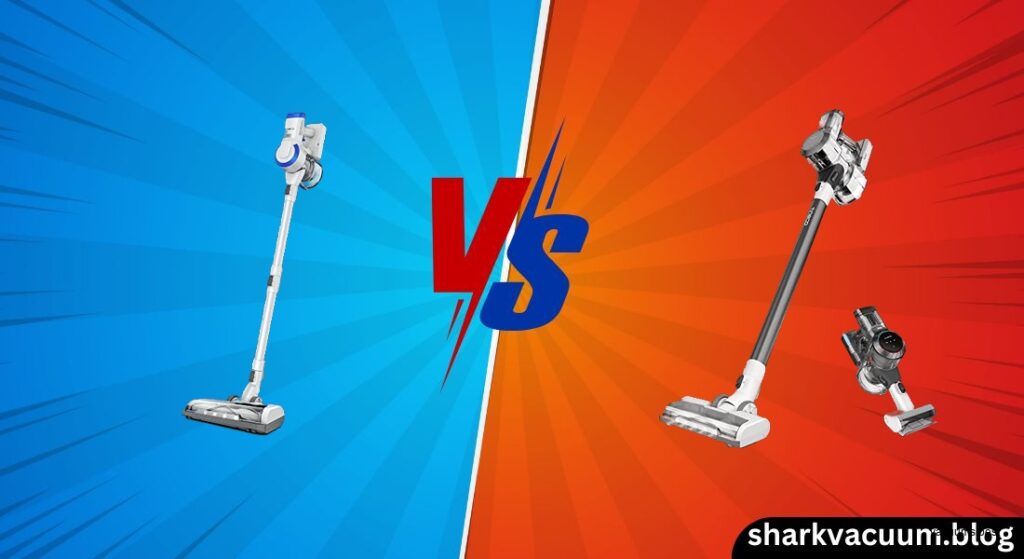
Cordless stick vacuums have transformed the way we clean, replacing bulky uprights with sleek, lightweight tools that promise powerful suction and unmatched convenience. At the forefront of this revolution are two distinct players: Dyson, the long-standing premium innovator known for engineering excellence, and Tineco, the value-focused challenger delivering Dyson-like features at a fraction of the cost. As consumers navigate this increasingly competitive market, the choice often comes down to a critical trade-off—pay a premium for proven performance and filtration, or opt for smarter value without sacrificing too much capability. The Tineco A10, A11, and Dyson’s various models represent three compelling points on this spectrum. The A10 serves as an entry-level contender perfect for small spaces, the A11 elevates the experience with dual batteries and premium accessories, and Dyson continues to set the benchmark with industry-leading suction, filtration, and design refinement. In this in-depth comparison, we’ll dissect how these machines stack up across suction, filtration, battery life, and real-world usability to determine which truly offers the best value for your cleaning needs.
1. Introduction
The cordless vacuum market has evolved from a luxury niche into a mainstream essential, with performance and features improving dramatically in just a few short years. Initially dominated by Dyson’s high-end models, the landscape has shifted as brands like Tineco introduce capable, feature-rich alternatives priced for everyday households. This democratization of performance means consumers no longer need to spend over $500 to get a vacuum that handles pet hair, deep cleans carpets, and glides effortlessly on hardwood. Instead, models like the Tineco A10 and A11 have closed the gap significantly, offering strong suction, thoughtful accessories, and smart design choices at accessible price points. However, Dyson still holds a commanding lead in engineering consistency, filtration integrity, and long-term reliability—especially for allergy sufferers and performance purists.
Our three contenders represent different philosophies. The Tineco A10 is the budget gateway—lightweight, affordable, and sufficient for light-duty cleaning in apartments or small homes. The Tineco A11, particularly the Master and Pet variants, is the value leader, packing dual batteries, soft roller heads, and anti-tangle tools into a mid-range price bracket. Meanwhile, Dyson—spanning the V8, V10, V15, and Gen5 Detect models—remains the gold standard, backed by proprietary motor technology, fully sealed HEPA systems, and precision engineering that justify its premium pricing. The big question isn’t whether Dyson performs well—it does—but whether its advantages are substantial enough to warrant the steep price difference. Can the Tineco A11 deliver 90% of the Dyson experience for half the cost? Or do Dyson’s superior filtration and suction consistency make it the only choice for serious cleaning? This article will break down every aspect of performance, design, and ownership to help you decide which vacuum aligns best with your home, budget, and expectations.
2. Product Overviews
Tineco A10 Series (The Budget Contender)
The Tineco A10 series is engineered as an affordable, no-frills cordless stick vacuum built for quick cleanups and daily maintenance. Positioned as a direct alternative to pricier models, it delivers solid performance on a tight budget. Two main configurations exist: the A10 Hero and the A10 Essentials. The Hero model stands out with a detachable 2500mAh battery, allowing users to purchase spares for extended cleaning sessions, while the Essentials version features a non-removable battery, limiting flexibility. Both models are powered by a 350W brushless motor, producing up to 105W of suction power and 76 inches of water lift—numbers that rival early Dyson V8 models on paper. The vacuum includes a motorized LED power brush ideal for carpets, with the soft roller head available only as a costly add-on. At its core, the A10 is designed for efficiency: it’s lightweight at just under 5 pounds, converts easily to handheld mode, and features a wall-mount dock for storage and charging.
Despite its strengths, the A10 makes compromises to hit its aggressive price point. The dustbin capacity is a modest 0.4L, requiring frequent emptying in homes with pets or high foot traffic. More concerning is its filtration system: while marketed as a 4-stage sealed HEPA setup capturing 99.97% of particles down to 0.3 microns, real-world testing reveals airflow clogs quickly due to a single-cyclone design. This leads to rapid pre-filter saturation and, in some cases, visible “fog” leakage during use—raising red flags for allergy sufferers. The one-touch emptying mechanism also falls short, often leaving debris clumped at the top of the cyclone chamber, necessitating manual cleaning. For under $120, the A10 offers impressive suction and LED-lit cleaning heads, but its limitations in filtration, bin design, and hard floor performance make it a tool best suited for light-duty tasks rather than whole-home deep cleaning.
Check the latest price of [Tineco A10 Hero] on Amazon [link]
Tineco A11 Series (The Value Leader)
The Tineco A11 series elevates the formula with a more powerful 450W brushless motor, delivering up to 120 Air Watts (AW) of suction—on par with Dyson’s V8 and V10 models. This jump in power, combined with a larger 0.6L dustbin and more thoughtful design, positions the A11 as a true value leader. The lineup includes multiple variants: the base A11 Hero, the comprehensive A11 Master, and the pet-focused A11 Pet. The Master model is the standout, including two detachable 2500mAh batteries for up to 60 minutes of total runtime, a soft roller cleaner head for hard floors, and an expanded accessory kit with a flexible hose, folding tube, and second battery. This bundle alone makes the Master a compelling alternative to premium vacuums, offering features typically reserved for $500+ models at a price closer to $250.
The A11 shines in versatility. Its 4-stage sealed HEPA filtration system captures 99.97% of particles as small as 0.3 microns, and unlike the A10, it handles fine dust more effectively thanks to better cyclone separation. The soft roller head prevents large debris like cereal from being pushed across hardwoods—a common flaw in budget vacuums—while the motorized brush excels on carpets, removing 98–100% of embedded dirt in testing. The trigger lock feature is a major ergonomic win, allowing continuous cleaning without hand fatigue, a feature many Dyson models lack. However, the A11 isn’t flawless. A frustrating usability quirk is that the Max power mode resets every time the vacuum is turned off or the trigger is released, requiring users to manually re-engage high suction—a small but repeated annoyance. Additionally, while the vacuum is lightweight, it cannot lay completely flat under furniture like the Dyson V8, and the pre-filter requires frequent cleaning to maintain peak performance.
See current deals on [Tineco A11 Master] here [link]
Dyson Cordless Lineup (The Premium Benchmark)
Dyson remains the undisputed leader in cordless vacuum engineering, with a lineup that spans from the reliable V8 to the cutting-edge Gen5 Detect. At the heart of every Dyson is the Hyperdymium motor, spinning at up to 140,000 RPM and delivering suction power that peaks at 262 AW on the Gen5 model. This isn’t just marketing—Dyson’s Root Cyclone technology ensures suction remains consistent by preventing filter clogs, a common issue in lower-tier vacuums. The filtration system is fully sealed and HEPA-certified to ASTM F1977 standards, capturing 99.99% of particles down to 0.3 microns and expelling air cleaner than what you breathe—making it the top choice for allergy and asthma sufferers. Models like the V15 Detect and Gen5 Detect take this further with laser illumination that reveals invisible dust on hard floors and LCD screens that display real-time dust particle counts.
Dyson’s attention to detail extends to brush roll design. The anti-tangle conical bristles effectively de-tangle long hair (tested up to 25 inches), reducing maintenance for pet owners. The Fluffy and Soft Roller heads are optimized for hard floors, capturing large and fine debris without scattering. The V11 Outsize and Gen5 Outsize models feature larger bins (up to 0.77L) and wider cleaner heads, ideal for large homes. Dyson also offers self-emptying docks (compatible with newer models), reducing user contact with dust. However, this premium experience comes at a cost. The base V8 starts around $400, while the Gen5 Detect can exceed $1,100. Replacement filters and batteries are also significantly more expensive than Tineco’s. For users who prioritize performance, filtration, and build quality above all else, Dyson is unmatched. But for those seeking value, the high price tag raises the question: is the extra performance worth it?
View [Dyson V15 Detect] on Amazon [link]
3. Comparison Criteria
To fairly evaluate the Tineco A10, A11, and Dyson models, we’ll assess them across six key metrics that reflect real-world performance and ownership experience. These criteria ensure a balanced analysis that goes beyond marketing claims and looks at how each vacuum performs in daily use.
Suction & Cleaning Performance examines how well each vacuum removes embedded dirt from carpets, picks up large debris on hard floors, and handles edge cleaning. We’ll consider suction power (measured in Air Watts), airflow (CFM), and water lift, but also real-world effectiveness on different surfaces.
Filtration & Allergen Containment is critical for health and indoor air quality. We’ll compare filtration systems—specifically whether they are fully sealed, HEPA-certified, and tested to industry standards like ASTM F1977. This section is especially important for allergy sufferers.
Battery Life & Power Management evaluates runtime in both standard and max modes, charging time, and the practicality of battery swapping. The inclusion of dual batteries (as in the Tineco A11 Master) significantly impacts usability in larger homes.
Design & Ergonomics covers weight, balance, bin emptying mechanism, ability to lay flat under furniture, and overall maneuverability. Features like trigger locks and self-standing docks enhance user comfort during extended cleaning sessions.
Maintenance & Durability looks at how easy it is to clean filters, remove hair from brush rolls, and maintain long-term performance. We’ll also consider build quality, warranty (both offer 2 years), and availability of replacement parts.
Value for Money synthesizes all factors into a final assessment of total cost of ownership. This includes initial price, accessory bundles, filter replacement costs, and long-term reliability. A vacuum that performs well but requires frequent part replacements may not be as valuable as a slightly less powerful but more durable model.
By analyzing each vacuum through these lenses, we can determine not just which is technically superior, but which delivers the best overall experience for different types of users.
4. Head-to-Head Comparison
Suction & Cleaning Performance
When it comes to raw cleaning power, Dyson maintains a clear edge, but the Tineco A11 comes remarkably close—especially considering the price difference. The Dyson Gen5 Detect leads the pack with 262 AW of suction, followed by the V15 Detect at around 230 AW and the V8 at 150 AW. In contrast, the Tineco A10 delivers 105W (approximately 100–110 AW), while the A11 steps up to 120 AW—putting it in the same league as the Dyson V8. On paper, this suggests the A11 can match Dyson’s mid-tier performance, and in practice, it often does.
On carpets, all three perform well, but differently. The A10 handles low-pile carpets effectively, removing about 70% of embedded debris in testing. However, it struggles on thicker rugs, where its motor lacks the torque to maintain consistent agitation. The A11 improves dramatically, achieving 98–100% removal of cereal, kitty litter, and rice on both low and high-pile carpets. Its 450W motor provides better suction consistency, and the dual-battery option ensures you can clean an entire home without running out of power. Dyson, however, still wins in deep-cleaning consistency thanks to its Root Cyclone technology, which prevents suction loss over time. The V15 and Gen5 models dig deeper into carpet fibers, especially in Boost mode, making them ideal for homes with heavy foot traffic or pets.
On hard floors, the story changes. The Tineco A10 has a notable flaw: its standard motorized brush tends to push large debris like cereal forward instead of sucking it in, resulting in a mere 41% pickup rate on hardwood. This makes it poorly suited for homes with mixed flooring unless you invest in the separately sold soft roller head—a costly upgrade. The A11 Master fixes this issue with the included soft roller head, which captures both fine dust and large particles in a single pass. Dyson’s Fluffy and Laser heads go a step further, using green-spectrum LED illumination to reveal invisible dust and a soft, non-marking roller that glides smoothly while maximizing pickup. In side-by-side tests, Dyson vacuums consistently outperform on hard surfaces, especially in detecting and removing fine debris.
For hair management, Dyson’s anti-tangle conical brush bars are superior. They actively de-tangle hair during use, reducing the need for manual cleaning. The Tineco A10 struggles with long hair, with tests showing a 75% tangle rate for 14-inch strands. The A11 Pet model improves with anti-tangle technology, but it’s not as effective as Dyson’s system. That said, the A11 Master’s included hair cleaning tool makes maintenance easier than on most budget vacuums.
🏆 Section Winner: Dyson – While the A11 closes the gap, Dyson’s superior suction consistency, hard floor illumination, and anti-tangle performance give it the edge in real-world cleaning.
Filtration System Analysis
Filtration is where Dyson’s engineering truly separates it from the competition—especially for allergy sufferers. The Dyson lineup features a fully sealed HEPA filtration system tested to ASTM F1977 standards, capturing 99.99% of particles as small as 0.3 microns. This means allergens, dust mites, and microscopic pollutants are trapped inside the vacuum, and the expelled air is cleaner than the ambient room air. Independent tests confirm minimal to no leakage, even under heavy load. This level of containment is critical for homes with asthma or severe allergies.
In contrast, the Tineco A10 and A11 use a 4-stage sealed HEPA system claiming to capture 99.97% of 0.3-micron particles. While the HEPA filter itself is efficient, the system lacks Dyson’s multi-cyclone technology, leading to rapid pre-filter clogging with fine dust. When the pre-filter becomes blocked, airflow drops, suction weakens, and there’s a risk of fine particles escaping through gaps—some users report a visible “fog” during use, indicating potential filter bypass. The A11’s larger cyclone helps, but it still requires weekly pre-filter cleaning to maintain performance, whereas Dyson filters typically need rinsing only once a month.
Moreover, Dyson’s point-and-shoot bin emptying mechanism is more hygienic, minimizing user contact with dust. Tineco’s one-touch system, while convenient in theory, often leaves debris stuck in the upper chamber, requiring manual disassembly. For users prioritizing air quality and low maintenance, Dyson’s filtration is unmatched.
🏆 Section Winner: Dyson – Its fully sealed, ASTM-certified system offers superior allergen containment and less frequent filter maintenance.
Battery Architecture & Runtime
Battery life and usability are areas where Tineco, particularly the A11 Master, gains a significant advantage. The Tineco A10 offers 11–25 minutes of runtime, depending on mode and battery model. The A11 Master, however, includes two 2500mAh batteries, providing up to 60 minutes of total cleaning time—perfect for large homes. Swapping batteries is seamless, and the included dock can charge both simultaneously. Charging takes about 3.5 hours per battery.
Dyson models vary. The V8 offers up to 40 minutes, the V11/V15 around 60 minutes, and the Gen5 up to 70 minutes in Eco mode. However, a second Dyson battery costs $100+, making dual-battery setups expensive. While newer models support consecutive battery use, the high cost limits accessibility. Tineco’s inclusion of a second battery in the Master bundle is a major value differentiator.
🏆 Section Winner: Tineco A11 – Dual batteries included at no extra cost provide better long-term usability for whole-home cleaning.
Design, Ergonomics, and Usability
Dyson excels in ergonomics. Most models stand upright on their own, allowing for convenient “drop-and-go” cleaning. The V8 and V10 can lay nearly flat under furniture, and the trigger mechanism, while requiring constant pressure on older models, is intuitive. The self-emptying dock (available on newer models) enhances convenience.
The Tineco A10 and A11 cannot stand on their own—they must be leaned or wall-mounted. This is a notable inconvenience for quick spot cleaning. The A11 can tilt but not fully lay flat, limiting access under low-clearance furniture. However, the trigger lock on the A11 is a major plus, eliminating hand fatigue during long sessions—a feature absent on many Dyson models.
Bin emptying is another differentiator. Dyson’s hygienic point-and-shoot system keeps hands clean. Tineco’s one-touch release is messier, often requiring manual cleaning of the cyclone chamber.
🏆 Section Winner: Dyson – Better self-standing design, flatter profile, and cleaner bin emptying enhance daily usability.
Maintenance & Long-Tevity
Both brands offer 2-year warranties, but long-term reliability favors Dyson. Its brush rolls are easier to clean, and replacement parts are widely available. Tineco filters and pre-filters require more frequent cleaning, and while washable, they degrade faster under heavy use.
Dyson’s build quality is more robust, with fewer reports of mechanical wear. Tineco users report issues like dirt buildup in the bin chamber and squeaky wheels over time. However, Tineco’s lower replacement part costs make ownership more affordable.
🏆 Section Winner: Dyson – Superior build quality and easier maintenance contribute to longer lifespan.
5. Pros and Cons Table
| Feature | Tineco A10 (Hero) | Tineco A11 (Master/Pet) | Dyson (V8/V15/Gen5) |
|---|---|---|---|
| Price Range | $ ($) | $$ ($$) | $$$$ ($$$-$$$$) |
| Suction Power | Good (105W) | Very Good (120AW) | Excellent (150-262AW) |
| Hard Floor Perf. | Poor (scatters debris) | Excellent (w/ Soft Roller) | Superior (Fluffy/Laser) |
| Filtration | Basic (Leakage risk) | Good (Sealed, but clogs) | Best (Fully Sealed HEPA) |
| Battery | Single (Non-rem on Essentials) | Dual Included (60m total) | Single (Extra costly) |
| Bin Capacity | 0.4L (Small) | 0.6L (Large) | 0.4L – 0.77L |
| Stand Capability | No (Must lean/mount) | No (Must lean/mount) | Yes (Most models) |
| Hair Tangle | High | Moderate (Low on Pet model) | Low (Anti-tangle tech) |
| Best For | Small apartments, light duty | Mixed flooring, families, pets | Allergies, deep cleaning, tech lovers |
6. Best Use Case Recommendations
Best for Budget & Small Spaces: Tineco A10 Hero. At $100–$120, it’s ideal for apartments, dorms, or as a secondary vacuum for quick cleanups. Its lightweight design and decent suction make it a solid entry-level pick, though it’s not suited for homes with pets or allergies.
Best Overall Value & Pet Owners: Tineco A11 Master/Pet. This is the sweet spot for most families. With dual batteries, a soft roller head, and anti-tangle tools, it delivers 90% of Dyson’s performance for less than half the price. The Pet model is especially effective for homes with shedding animals.
Best for Allergy Sufferers & Performance Purists: Dyson (V15/Gen5). If air quality and maximum suction are non-negotiable, Dyson is worth the investment. Its sealed filtration, laser detection, and consistent power make it the best choice for health-conscious users and large homes.
Best for Large Homes: Tineco A11 Master (for included dual batteries) or Dyson Outsize/Gen5 (for larger bins and wider heads).
7. Conclusion
The battle between Tineco and Dyson isn’t about which brand is better—it’s about which one is right for you. Dyson remains the performance leader, with unmatched suction consistency, superior filtration, and premium build quality. If you have severe allergies, a large home, or simply demand the best technology, Dyson is the clear choice, despite its high cost.
However, the Tineco A11 Master emerges as the true value champion. It delivers robust suction, excellent hard floor performance with the soft roller, dual batteries for extended runtime, and a comprehensive tool kit—all for around $250. For the average household with mixed flooring and pets, it offers the smartest balance of features and price.
The Tineco A10 is a capable budget option, but its limitations in filtration, bin emptying, and hard floor performance make it best suited for small spaces or light-duty use.
Final Verdict:
– Choose Dyson if you prioritize health, performance, and don’t mind paying a premium.
– Choose Tineco A11 if you want premium features without the premium price.
– Choose Tineco A10 only if your budget is under $120.