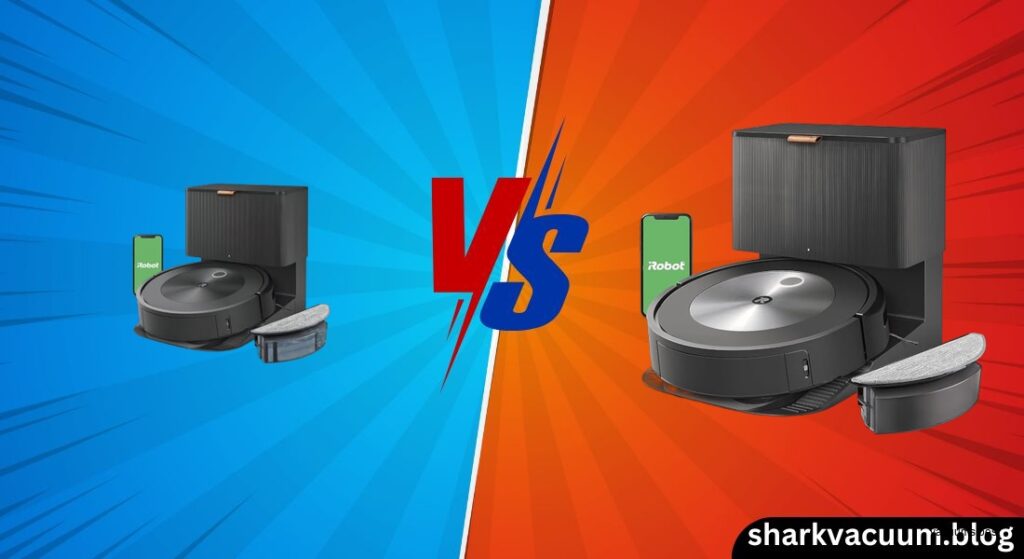
The robotic vacuum market has evolved rapidly, but iRobot’s J-series remains a top contender for homes seeking smart navigation and pet-friendly cleaning. Among the latest offerings, the Roomba j8+ and Roomba Combo j5+ stand out—but they cater to very different priorities. While both boast iRobot’s advanced camera-based obstacle avoidance and self-emptying bases, their core functions diverge significantly: one is a vacuum-only powerhouse built for endurance, and the other is a hybrid vacuum-mop with budget-friendly compromises.
Understanding which robot suits your home means looking beyond marketing claims and focusing on real-world performance, software behavior, and long-term ownership. Do you need a robot that can clean a sprawling 2,000+ sq ft house without recharging? Or are you better served by a machine that can lightly mop your kitchen tile while avoiding your area rugs—provided you’re willing to swap bins and set digital boundaries? This Roomba j8+ vs. j5+ comparison breaks down every critical factor, from battery life and navigation quirks to mopping limitations and battery replaceability, so you can make a confident, informed decision.
Product Overviews
iRobot Roomba j8+ (Model 8550)
The Roomba j8+ is essentially a high-capacity variant of the popular j7+, designed for one key purpose: uninterrupted cleaning of large homes. It shares the same sleek black design, PrecisionVision Navigation, and dual rubber brushes as its predecessor but introduces a massive battery upgrade—from ~60 minutes to 150+ minutes of runtime. This makes it one of the longest-lasting robotic vacuums in iRobot’s lineup, capable of cleaning multi-level or expansive single-floor homes on a single charge.
Beyond battery life, the j8+ includes three dustbins total (one installed, two extras) and four debris bags, enhancing convenience for frequent cleaners. It’s fully compatible with the Clean Base Automatic Dirt Disposal, ensuring hands-free emptying after every vacuum cycle. However, it’s strictly a vacuum-only robot—there’s no mopping capability, and no option to add it.
Despite its performance strengths, the j8+ has notable drawbacks. Most critically, no replacement battery is currently available, raising concerns about long-term sustainability. Once the battery degrades (typically after 2–4 years), the robot may become unusable. Additionally, some users have reported mapping regressions, particularly in homes with split-level floors, where the j8+ fails to distinguish elevation changes that the older j7+ handled correctly.
Check the latest price of Roomba j8+ on Amazon [link]
iRobot Roomba Combo j5+
The Roomba Combo j5+ brings iRobot’s smart navigation and self-emptying tech to a more accessible price point, with the added benefit of 2-in-1 vacuum and mop functionality. It uses the same PrecisionVision Navigation as the j7+ and j8+, giving it a 9/12 obstacle avoidance score and the ability to avoid pet waste, cords, and socks with high reliability.
The standout feature is its mop-vac combo system, but it comes with significant manual steps. To mop, you must physically swap the dustbin for a water-filled mop bin. Once installed, the robot vacuums and mops simultaneously. However, the mop pad does not lift automatically when transitioning to carpets, so you must use the app to set “No-Mop Zones” over all carpeted areas—otherwise, you risk wetting your rugs.
Another major limitation: the self-emptying base does not work when the mop bin is installed. After mopping, you must manually remove and empty the bin. There’s also no drip tray, so leaving the wet bin on the dock can lead to water leakage. Still, for users who want light mopping without buying a $1,000+ robot, the j5+ offers a compelling entry point.
See current deals on Roomba Combo j5+ here [link]
Comparison Criteria
To determine which robot is right for your home, we’ll evaluate both models across six key criteria:
- Battery Life & Runtime: How long can each robot clean on a single charge, and how does that impact real-world usability?
- Cleaning Performance (Vacuuming): How effective are they on carpets, hard floors, and edges? Do they handle pet hair and embedded debris well?
- Navigation & Mapping: How accurate are their floor plans? Do they avoid obstacles reliably? How do they handle multi-floor or split-level homes?
- Mopping Capability: How automated is the mopping? Is it safe for carpets? Does it deliver meaningful cleaning?
- Maintenance & Durability: How easy is it to maintain? Can the battery be replaced? What’s the long-term ownership experience?
- Value for Money: Does the price match the features? Are there better alternatives at similar price points?
Let’s dive into each category with a direct head-to-head comparison.
Head-to-Head Comparison
Battery Life and Runtime
When it comes to battery life, the Roomba j8+ is in a league of its own within the iRobot lineup.
The j8+ features a 14.4V, 4.46Ah battery, delivering 150+ minutes of continuous runtime—more than double the ~60-minute runtime of the j7+. In real-world testing, this translated to cleaning a 2,000-square-foot home without needing to recharge, finishing with 50% battery remaining. For large or multi-story homes, this eliminates the frustrating mid-clean return-to-dock behavior that plagues shorter-lived robots.
The Roomba j5+, while also rated for up to 150 minutes in Auto-Adjust mode, tends to perform closer to 90–100 minutes in mixed-floor environments. It does support recharge and resume, meaning it can return to the dock, charge, and continue cleaning—making it viable for larger spaces, though less seamless than the j8+’s uninterrupted run.
That said, the j5+’s battery is standard and replaceable, a major advantage over the j8+’s sealed, non-replaceable unit. This means the j5+ can potentially outlive the j8+ by years if maintained properly.
🏆 Section Winner: Roomba j8+
Reason: 150+ minute runtime enables full-home cleaning without interruption—ideal for large spaces.
Cleaning Performance (Vacuuming)
When it comes to core vacuuming performance, both robots are virtually identical.
Both the j8+ and j5+ use iRobot’s dual multi-surface rubber brushes, which excel at picking up pet hair, preventing tangles, and maintaining consistent suction across carpets and hard floors. They also share the same 4-Stage Cleaning System, including powerful suction and edge-cleaning side brushes.
In deep-cleaning tests involving embedded sand and dust bunnies, both models performed above average, but neither could fully clear debris in a single pass. Two cleaning passes were typically required for a truly deep clean, especially in high-traffic areas. This is a known limitation across the J-series—neither model includes the “Dirt Detective” feature found on the j9+, which automatically prioritizes dirtier zones.
Edge cleaning is handled well by both, thanks to spinning side brushes, though neither reaches perfectly into 90-degree corners. For homes with pets, both are excellent at daily maintenance, easily handling loose hair, kibble, and tracked-in dirt.
🏆 Section Winner: Tie
Reason: Identical brush systems, suction power, and cleaning performance—both require two passes for deep cleaning.
Navigation and Mapping
Both robots use PrecisionVision Navigation, a camera-based system that allows them to visually identify and avoid obstacles in real time. This gives them a 9/12 obstacle avoidance score, matching the flagship j9+, and includes iRobot’s pet waste avoidance guarantee (90% success rate).
They both support multi-floor mapping, allowing you to save floor plans for different levels and switch between them in the app. You can also label rooms, set cleaning schedules by zone, and define No-Go Zones to keep the robot out of certain areas.
However, there’s a surprising software regression with the j8+. Despite being a newer model, it has struggled to map split-level homes correctly. In one documented test, the j8+ repeatedly failed to distinguish a sunken living room from the main floor, merging them into a single map—whereas the older j7+ handled the same layout flawlessly.
The j5+, while not immune to mapping quirks, has shown more consistent behavior in complex layouts. It relies heavily on user-defined zones for mopping, but its base navigation is reliable.
🏆 Section Winner: Roomba Combo j5+
Reason: More consistent mapping performance, especially in homes with split levels or elevation changes.
Mopping Capabilities
This is where the two robots diverge most dramatically.
The Roomba j8+ has no mopping capability whatsoever. It is a vacuum-only unit. If you want mopping, you’ll need a separate device.
The Roomba Combo j5+, on the other hand, includes a manual mop-vac system. To use it, you must:
– Remove the dustbin.
– Insert the water-filled mop bin.
– Set No-Mop Zones in the app for all carpets.
– Start the cleaning cycle.
Once running, the robot vacuums and mops simultaneously, but the mop pad stays in constant contact with the floor—there’s no downward pressure or scrubbing action. This makes it effective for light maintenance mopping, such as dried spills or light footprints, but ineffective for sticky messes or deep cleaning.
Worse, the self-emptying base does not work with the mop bin installed. After mopping, you must manually remove and empty the bin. There’s also no drip tray, so leaving the wet bin on the dock risks water leakage.
In short, the j5+’s mopping is functional but far from hands-free.
🏆 Section Winner: Roomba Combo j5+ (by default)
Reason: It offers mopping at all—though users must accept significant manual steps and limitations.
Maintenance and Long-Term Durability
Long-term ownership is where the j5+ pulls ahead decisively.
The Roomba j8+ uses a solid, proprietary battery with no replacement available on the market. Once it degrades beyond usability (typically 2–4 years), the robot may become e-waste. This is a major drawback for sustainability-minded users.
In contrast, the j5+ uses a standard iRobot battery that is widely available for replacement. This extends the robot’s usable life significantly and reduces long-term cost of ownership.
For daily maintenance:
– The j8+ wins for vacuum-only use, thanks to extra dustbins and consistent auto-emptying.
– The j5+ requires manual bin swaps and manual emptying after mopping, reducing convenience.
Both require regular filter cleaning (rinse and air dry for 24 hours) and brush maintenance, especially in pet homes.
🏆 Section Winner: Roomba Combo j5+
Reason: Replaceable battery ensures long-term usability and reduces e-waste risk.
Value for Money
Pricing plays a crucial role in this decision.
The Roomba j8+ typically retails for $599–$659, often found at $599 (e.g., at Costco). You’re paying a premium for the larger battery and extra bins, but you get no mopping and a non-replaceable battery. At full price, its value is questionable—especially when compared to a discounted j7+.
The Roomba Combo j5+, meanwhile, has a list price of $799.99, but is frequently discounted. It can be found refurbished for as low as $149.99 or new for $300–$400 during sales. At those prices, it offers exceptional value, delivering flagship-level obstacle avoidance, self-emptying, and mopping in one package.
Even at $400, the j5+ provides more features per dollar than the j8+—especially if you value mopping or long-term repairability.
🏆 Section Winner: Roomba Combo j5+
Reason: Lower price (especially on sale) + mopping + replaceable battery = better long-term value.
Pros and Cons Table
| Feature | Roomba j8+ | Roomba Combo j5+ |
|---|---|---|
| Pros | ✅ 150+ min battery (Best in class) ✅ Includes 3 dustbins & 4 bags ✅ Consistent auto-empty function ✅ Excellent pet hair pickup |
✅ Vacuum & Mop capability ✅ Replaceable battery (Long-term viability) ✅ Lower price point (Great value) ✅ Same obstacle avoidance as flagship |
| Cons | ❌ No mopping capability ❌ Non-replaceable battery (Major con) ❌ Mapping glitches on split-level floors ❌ Higher price for vacuum-only |
❌ Manual bin swap required for mopping ❌ No auto-lift for mops (Risk to carpets) ❌ No auto-empty when mopping ❌ Mop pad can leak on dock |
View Roomba Combo j5+ on Amazon [link]
Best Use Case Recommendation
Choose the Roomba j8+ if:
- You have a large home (2,000+ sq ft): The extended 150-minute battery is the only reason to buy this over the j5+ or j7+. It’s the only J-series model that can clean a big house uninterrupted.
- You strictly need vacuuming: You have no interest in mopping or already use a dedicated mop.
- You want maximum convenience: You prefer swapping bins and never thinking about the robot, and you plan to upgrade before the battery dies (3–4 years).
- You have a single-level or standard multi-story home: Avoid if you have split-level floors where the robot might get confused.
Choose the Roomba Combo j5+ if:
- You want mopping on a budget: You want the ability to lightly mop hard floors without buying a $1,000+ robot.
- You are cost-conscious: You want premium obstacle avoidance and self-emptying but can’t justify the flagship price.
- You care about device longevity: You want the option to replace the battery yourself in a few years.
- You don’t mind manual intervention: You’re willing to swap bins and set up “No-Mop Zones” to protect carpets.
Conclusion
The choice between the Roomba j8+ and the Roomba Combo j5+ ultimately comes down to battery endurance versus versatility and sustainability.
The Roomba j8+ is a specialized tool for large spaces. Its doubled battery life is a genuine game-changer for big homes, eliminating the frustration of mid-clean recharges. However, the inability to replace the battery and the reported mapping regression in split-level homes make it a risky long-term investment at its current price point.
The Roomba Combo j5+, while compromised by its manual mopping system and lack of auto-empty during mop cycles, offers a more balanced package for the average household. It provides the essential “smart” features—obstacle avoidance, self-emptying, and mapping—plus light mopping, all while maintaining a replaceable battery and a more attractive price tag.
Final Verdict: For most users, the Roomba Combo j5+ represents the smarter buy, offering greater versatility and long-term repairability. The j8+ is recommended only for owners of large, single-level homes who prioritize runtime above all else and accept the device as a semi-disposable asset.