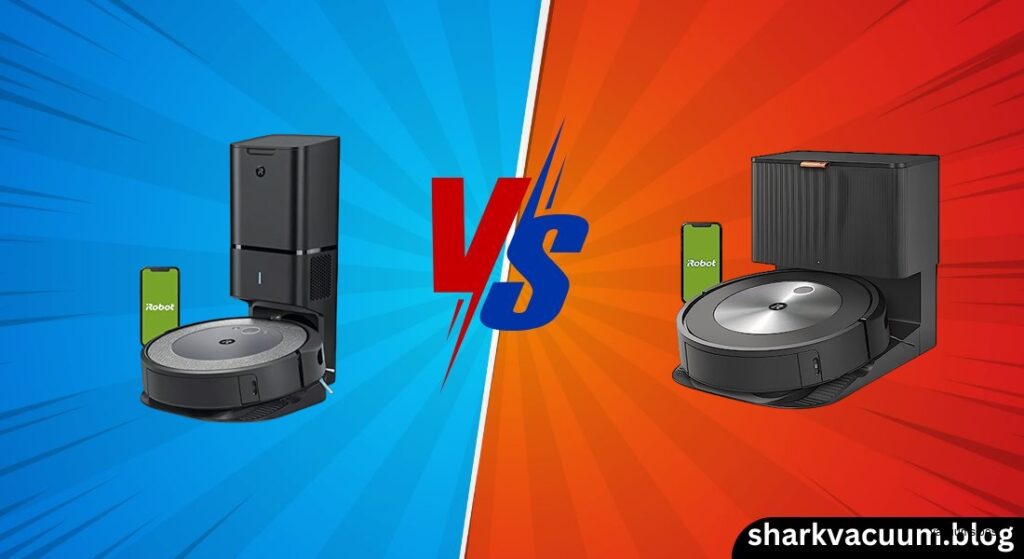
The evolution of robot vacuums from simple bump-and-run models to intelligent, map-aware machines has transformed how we think about home cleaning. No longer just a novelty, today’s smart vacuums offer real convenience—especially when they can empty their own bins. Two of iRobot’s most popular self-emptying models, the Roomba i3+ and Roomba j7+, sit at opposite ends of the intelligence spectrum. Both promise hands-off cleaning with the Clean Base® automatic dirt disposal, but their approach to navigation, obstacle avoidance, and overall smarts couldn’t be more different.
For buyers trying to decide between them, the choice often comes down to one key question: Is your home a clutter-free, open layout where basic mapping is enough, or is it a pet-filled, cord-strewn environment that demands a robot that can “see” and avoid messes before they happen? The i3+ delivers solid cleaning at a lower price, while the j7+ brings AI-powered avoidance and modern app features that solve the biggest pain points of robot vacuums—getting stuck and spreading pet waste. With the j7+ frequently on sale or available refurbished for under $400, and the i3+ often discounted below $300, the price gap is narrowing. This makes the decision more nuanced than ever: is the j7+’s intelligence worth the premium, or can the i3+ still hold its own? Let’s break it down.
Product Overviews
iRobot Roomba i3+ (The Value Workhorse)
Launched in 2020, the Roomba i3+ was designed as an affordable entry point into iRobot’s self-emptying ecosystem. It brought the convenience of the Clean Base® to a more budget-conscious audience, making automated cleaning accessible without the $800 price tag of the i7+ or s9+. While it lacks the high-end navigation of its siblings, it retains core iRobot strengths: strong suction, tangle-resistant rubber brushes, and excellent allergen filtration.
The i3+ uses vSLAM (Visual Simultaneous Localization and Mapping) for navigation, combining camera input with wheel encoders and bump sensors. This allows it to create a basic map of your home, but it requires 2–3 cleaning runs to stabilize and doesn’t update in real time. Once mapped, it cleans in logical rows, but it still relies on physically bumping into objects to detect them. This reactive approach means it can’t avoid obstacles—it just learns where they are after repeated collisions.
Its cleaning system features a 3-Stage Cleaning Process with dual multi-surface rubber brushes and what iRobot calls “10x Power-Lifting Suction” compared to the older 600 series. While not the most powerful on paper, it’s effective on both hard floors and carpets, especially for pet hair. The AllergenLock™ bags in the Clean Base® trap 99% of pollen, mold, and pet allergens, making it a solid choice for allergy sufferers.
Smart features are limited. It supports Recharge and Resume, so it can finish cleaning after recharging, and Dirt Detect™ helps it focus on high-traffic areas. You can select specific rooms to clean once the map is stable, but you can’t set virtual No-Go Zones in the app—a major limitation. Instead, you must buy physical Virtual Wall barriers to block off areas.
Check the latest price of Roomba i3+ on Amazon [link]
iRobot Roomba j7+ (The Intelligent Navigator)
The Roomba j7+, introduced as a smarter alternative for pet owners and cluttered homes, represents a significant leap in navigation technology. Instead of relying on bump-and-map logic, it uses Precision Vision Navigation—a front-facing camera with LED illumination and AI-powered object recognition. This allows it to “see” obstacles before contact and actively avoid them, including the notorious pet waste that can ruin other robots.
Its standout feature is the P.O.O.P. (Pet Owner Official Promise) Guarantee, which promises it will avoid solid pet waste. Independent testing confirms it successfully identifies and steers clear of simulated and real feces, a huge win for dog and cat owners. It also avoids cords, socks, shoes, and toys—common trip hazards for older models.
The j7+ shares the same dual rubber brush system and Clean Base® as the i3+, but its navigation makes it far more efficient. It maps faster, supports multi-floor mapping, and allows full virtual boundary control in the app. You can draw No-Go Zones to keep it out of certain areas (like under a desk or near a pet bowl) or Clean Zones to target high-traffic spots.
It integrates seamlessly with Amazon Alexa, Google Assistant, and Siri, allowing for voice commands like “Clean the kitchen.” The iRobot Home app provides a visual history of cleaning runs, showing photos of obstacles it encountered and avoided. While its battery life (75–90 minutes) is shorter than some competitors, Recharge and Resume ensures full coverage.
See current deals on Roomba j7+ here [link]
Comparison Criteria
To determine which robot is right for you, we’ll evaluate the i3+ and j7+ across six key areas:
- Navigation & Mapping Intelligence: How well do they create and use maps? Is their pathing efficient and adaptive?
- Obstacle Avoidance: Can they handle real-world obstacles like cords, toys, and pet waste without getting stuck or making a mess?
- Cleaning Performance: How effective are they on carpets and hard floors? Does suction power or brush design matter more?
- App Control & Smart Features: Can you set boundaries, schedule cleanings, and control it with your voice? Does it support multi-floor homes?
- Maintenance & Self-Emptying: How easy is it to maintain? Do both models offer the same level of hands-off cleaning?
- Value for Money: Considering current pricing, does the j7+’s intelligence justify its higher cost, or is the i3+ the better deal?
Let’s dive into each.
Head-to-Head Comparison
Navigation: Bumping vs. Seeing
The core difference between these two models lies in how they understand your home.
The i3+ uses vSLAM + bump sensors. It takes visual cues from the ceiling and room features while tracking wheel movement to estimate position. But it doesn’t “see” obstacles—it bumps into them. This means its first few runs are chaotic, and it can take 2–3 cleaning sessions over several days to build a stable map. Once mapped, it cleans in efficient rows, but it can’t adapt to new obstacles. If you move a chair, it may not recognize the change until it bumps into it again. It also only supports single-floor mapping—you can’t save maps for upstairs and downstairs.
The j7+, on the other hand, uses Precision Vision Navigation—a front-facing camera that scans the floor ahead. It identifies objects using AI and calculates a path around them in real time. This allows it to map quickly and accurately, often completing a full, detailed map in just one run. It supports multi-floor mapping, so it can remember different layouts for different levels of your home. The app even lets you rotate and name rooms for better clarity.
🏆 Section Winner: Roomba j7+
It’s not even close. The j7+’s camera-driven navigation is fundamentally smarter, faster, and more adaptable than the i3+’s reactive bump-and-map approach.
Obstacle Avoidance: The Dealbreaker Factor
This is where the j7+ truly shines—and where the i3+ falls short.
The i3+ has no obstacle avoidance. It will happily run over power cords, get tangled in socks, and potentially spread pet waste across your floor. If you have pets or kids, you’ll need to “pre-clean” the floor before every run—picking up toys, cords, and any potential messes. Its only option for blocking areas is the physical Virtual Wall, which emits an invisible beam the robot won’t cross. But you need to buy these separately, and they’re limited in range and flexibility.
The j7+ is built for chaotic homes. Its AI is trained to recognize and avoid over 100 common household objects, including cords, shoes, pet waste, and toys. If it encounters something it doesn’t recognize, it takes a photo and asks you to label it in the app. Once labeled, it learns to avoid it in the future. This proactive approach means you don’t need to prep the floor—just press clean and walk away.
🏆 Section Winner: Roomba j7+
For pet owners or anyone with a cluttered home, this is a dealbreaker. The j7+ avoids messes; the i3+ risks creating them.
Cleaning Performance: Suction vs. Agitation
On paper, the i3+ claims “10x Power-Lifting Suction” compared to the 600 series, while the j7+ doesn’t advertise specific suction numbers. Independent tests suggest the j7+ has lower suction power than some competitors, but its cleaning performance is still excellent.
Why? Because navigation matters more than raw suction. The i3+ is great on carpets thanks to its strong agitation from the dual rubber brushes. It picks up pet hair and embedded dirt effectively. But if it gets stuck on a cord or can’t reach a corner due to poor pathing, that power doesn’t matter.
The j7+, while rated lower on suction, cleans more thoroughly because it covers more ground without getting stuck. It uses a “perimeter-first” strategy, cleaning edges and corners before moving inward. On hard floors, it excels at picking up cereal, coffee grounds, and kitty litter. On medium-pile carpet, it scored 91 out of 100 in embedded sand tests—second only to the flagship s9+.
Both use tangle-free rubber brushes, though long human hair can still wrap around the axles on both models, requiring occasional manual cleaning.
🏆 Section Winner: Roomba j7+
While the i3+ has stronger suction, the j7+’s superior navigation ensures more consistent, complete cleaning. You can’t clean what you can’t reach.
Software & Boundaries: The Virtual Wall Problem
This is one of the i3+’s biggest limitations.
The i3+ does not support virtual No-Go Zones in the app. You cannot draw a boundary to keep it out of a specific area. If you want to block off a space—like under a dining table with chair legs or near a pet’s water bowl—you must buy a physical Virtual Wall barrier. This adds cost and complexity, and the beam can be disrupted by furniture or sunlight.
The j7+ offers full app-based boundary control. You can draw Keep Out Zones and Clean Zones directly on the map. Need it to skip the area around your charging cables? Draw a box. Want extra cleaning in the kitchen after dinner? Set a Clean Zone. It also supports voice commands for specific rooms (“Hey Google, clean the living room”) and integrates with geofencing to start cleaning when you leave home.
It also supports multi-floor maps, so you can switch between upstairs and downstairs layouts with a tap.
🏆 Section Winner: Roomba j7+
The ability to set virtual boundaries in the app is a modern standard—and the i3+ doesn’t meet it. The j7+ offers a frictionless, fully digital experience.
Maintenance & Self-Emptying
Here, both models are nearly identical—and excellent.
Both use the Clean Base® Automatic Dirt Disposal system, which empties the robot’s bin into a sealed, allergen-trapping bag after each run. The bag holds up to 60 days of debris, depending on your home size and pet ownership. This is the core convenience feature both share.
Both have dual rubber brushes that resist tangling (though long hair still needs occasional attention), high-efficiency filters (replace every 2–3 months), and easy-to-empty bins (if not using the base).
The j7+ has a slight edge in software: its app provides visual maintenance alerts, shows obstacle history, and tracks filter and brush life more precisely.
But in real-world use, both deliver the same “set it and forget it” experience when it comes to emptying.
🏆 Section Winner: Tie
The self-emptying system is identical in function and convenience. Both are excellent in this regard.
Pros and Cons Table
| Feature | iRobot Roomba i3+ | iRobot Roomba j7+ |
|---|---|---|
| Best For | Simple layouts, tight budgets, allergy sufferers. | Pet owners, cluttered homes, multi-story houses. |
| Navigation | vSLAM + Bump Sensors (Reactive) | Precision Vision Camera (Proactive AI) |
| Obstacle Avoidance | Poor (Bumps into things) | Excellent (Avoids cords, waste, toys) |
| Virtual Boundaries | No (Requires physical barriers) | Yes (App-based No-Go Zones) |
| Multi-Floor Map | No | Yes |
| Suction/Brushes | High Suction / Dual Rubber | Moderate Suction / Dual Rubber |
| Battery Life | ~90 mins (Recharge & Resume) | ~75–90 mins (Recharge & Resume) |
| Self-Emptying | Yes (60 Days) | Yes (60 Days) |
| Price Tier | Budget / Entry-Level | Mid-Range / Premium |
| Major Con | No virtual walls; gets stuck easily. | Higher cost; shorter battery than some rivals. |
Best Use Case Recommendation
Choose the Roomba i3+ if:
- You have a simple, clutter-free home with open floor plans, minimal cords, and no pets. If your floor is usually clear, the i3+ can clean effectively without getting stuck.
- Budget is your top priority and you can find the i3+ on deep discount (under $250). At that price, it’s a solid value for self-emptying.
- You don’t mind prepping the floor before each run—picking up toys, cords, and pet messes.
- You have allergies and prioritize the AllergenLock™ filtration system over smart navigation.
- You only need single-floor cleaning and don’t require room-specific commands or voice control.
View Roomba i3+ on Amazon [link]
Choose the Roomba j7+ if:
- You have pets, especially dogs or cats that may leave waste. The P.O.O.P. guarantee and cord avoidance are game-changers.
- Your home has clutter—footwear, toys, charging cables, or area rugs. The j7+ will navigate around them, not through them.
- You want virtual boundaries without buying extra hardware. Being able to block off areas in the app is essential for many users.
- You have multiple floors and need the robot to remember different maps.
- You value smart home integration and want to use voice commands, geofencing, or app-based scheduling with full control.
View Roomba j7+ on Amazon [link]
Conclusion
The Roomba i3+ is a capable vacuum with excellent self-emptying and strong suction, but it’s held back by outdated navigation. Its reliance on bump sensors, lack of virtual boundaries, and single-floor mapping make it feel like a product from an earlier generation. While it’s a good deal at deep discounts, at full price, it’s hard to recommend—especially when LiDAR-equipped competitors like the Roborock Q5 or Shark AI offer better navigation for less.
The Roomba j7+, in contrast, represents the current standard for intelligent cleaning. Its camera-driven avoidance, app-based boundaries, and multi-floor support solve the biggest frustrations of robot vacuums. The P.O.O.P. guarantee alone is worth the premium for pet owners.
Final Verdict:
For most people, especially those with pets or cluttered homes, the Roomba j7+ is the clear winner. The extra cost buys real peace of mind and automation. The i3+ is only recommended if you have a very simple layout, a strict budget, and can find it significantly discounted. In the battle of i3 vs j7, intelligence wins. The j7+ isn’t just a better vacuum—it’s a smarter one.